Table of Contents
This guide answers "Why Is Cupid the Symbol of Valentine's Day?" with a clear explanation, practical context, and the details that matter most.
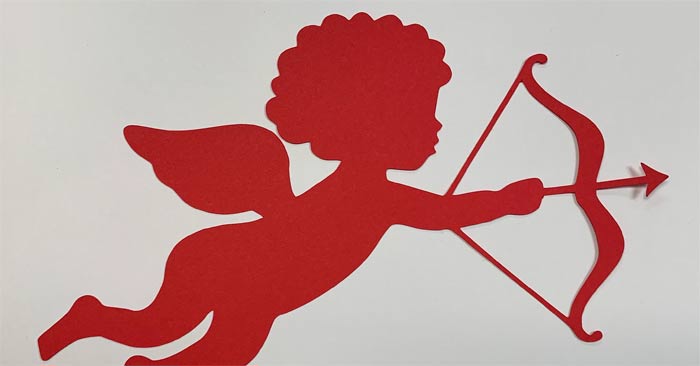
Every February, Valentine seems to be everywhere. From greeting cards to party decorations, this adorable little angel is the ultimate ambassador of love. But have you ever wondered where this winged wonder came from or why he is depicted as a baby?
This article will tell you the fascinating history of Cupid, the God of Love, the symbol of Valentine's Day , including his origins & how he became forever associated with love and romance.
Why is Cupid a baby?
The Valentine-Cupid symbol you might remember is an interpretation of Eros, the Greek god of love. He appeared as a handsome young man in early art and poetry, but by the Hellenistic period—which lasted from 323 BC to 31 BC—he had transformed into the chubby winged child we know and love today. " Depicting Eros as a child and obedient to his mother was a way to restrain or limit the power that love was supposed to have over humans, " says Connors, a professor of classics at the University of Washington.
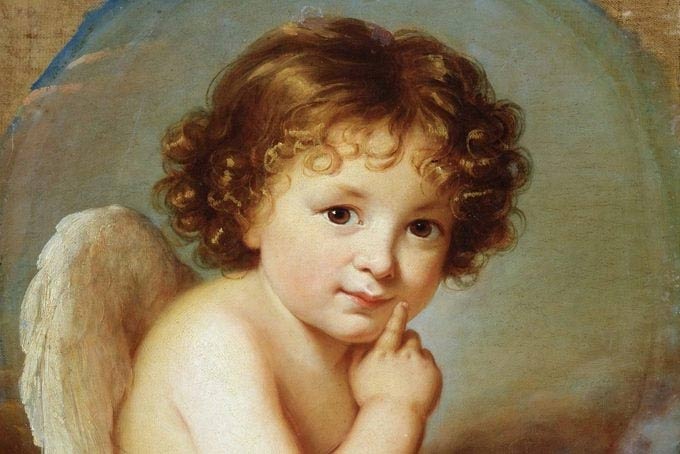
So what does Eros have to do with Cupid? Actually, a lot. The Romans reinterpreted many Greek myths, and Eros was no exception. Once adopted by Roman culture, he was renamed Cupid, from the word 'desire.'
Although the name of the god may have changed, the Romans retained the closest Greek version of Cupid as a chubby child. Modern depictions often combine Eros and Cupid in the Valentine's Day version of Cupid saying 'Happy Valentine's Day'.
Who is Cupid?
According to Roman mythology, Cupid was born from Mercury, the messenger of the gods, and Venus, the goddess of love. Armed with a bow and arrow, he traded love and passion, impaling his victims with arrows.
The Greek counterpart of the god has a more obscure origin. Some early stories suggest that Eros was a primordial god who was said to be the son of Chaos. Later, Greek mythology identified him as the son of Aphrodite, the goddess of love and beauty. Although the identity of his father is unclear, Eros is often said to be the son of Ares, the god of war.
Like the Roman god Cupid, Eros is concerned with love and passion, causing mischief & playing with life by piercing both humans and gods with his enchanted arrows.
Is Cupid always associated with romance?
The answer is no. Today, Cupid is considered one of the most popular Valentine's Day characters (including Galentine's Day!). Cupid is a symbol of love and romance, but his journey to becoming the poster boy for Valentine's Day is a long and bumpy one.
In the original Greek myths, Eros toyed with the emotions of gods and mortals, and not always in the best of ways. In one story, he made the god Apollo fall in love with the nymph Daphne—then made sure that love was unrequited. In other stories, love turns dangerous.
The story may have originated with Eros' mother. In some variations of the myth, Aphrodite became jealous of the human woman (Psyche) with whom Eros fell in love and tricked Eros into bewitching her. Unsurprisingly, the story ends badly.
Why does Cupid have wings?
Historians consider Cupid's wings to be iconic. And they're not exclusive to Cupid. Eros was also depicted as a winged creature in Greek mythology. " It's probably these ideas of fleeting or capricious love that led to the depiction of Eros with wings, which dates back to ancient times, " says Connors.
Cupid's Day is a celebration of both the classical gods and Eros' lover, Psyche. " Eros is sometimes depicted as a winged female figure; that's Psyche ," says Connors. " The Greek word for 'soul' also means 'butterfly,' so we know they saw the soul as a winged creature. The image of Eros and Psyche in love is a way of expressing the idea that love transforms us as human beings ."
How did Cupid become the symbol of Valentine?
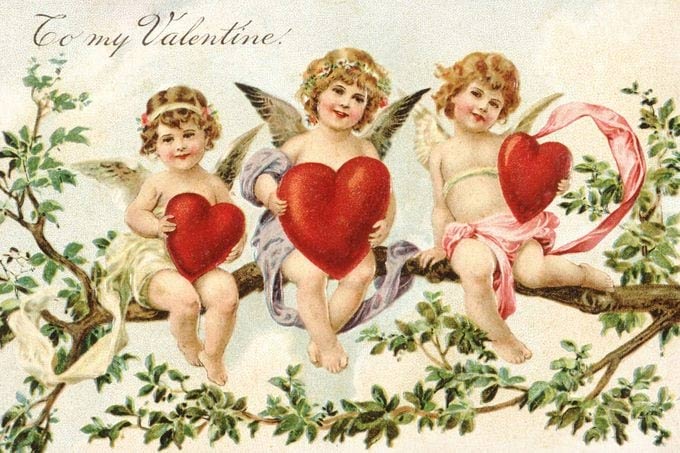
You can't celebrate Valentine's Day without Cupid as your mascot. For centuries, February 14 has been considered a day of romance. Cupid seemed like a natural choice to represent the holiday.
" In a poem about birds, the poet Chaucer associated Valentine's Day with love and may have drawn on earlier folk traditions ," Connors said. "In terms of imagery, the long artistic tradition of depicting Eros/Cupid with his mother, the goddess of love, was alive and well when Valentine's cards began to be printed for sale in the mid-19th century."
Despite Cupid's colorful and complicated past, romantics everywhere enjoy the idea of a mischievous but well-meaning child swooping around and pairing up destined soul mates. That certainly contributes to Cupid's "staying power" on Valentine's Day.
The Role of Cupid in Literature and Folklore
It's no surprise to see a few people dressed as Cupid on Valentine's Day. This little angel has left a bigger mark than you might think. Sure, the little guy has become a symbol of February 14 and Valentine's Day cards, but his origin story has also inspired some of the most beloved tales of all time.
Cupid has appeared in romantic movies, as has Eros. But believe it or not, Cupid has been the star (or at least co-star) of longer, more serious works of literature. "The most widely depicted image of Cupid in literature is in a Latin novel written around 160 AD by Apuleius, a North African," says Connors.
Where does Cupid appear today?
Now that Cupid has become a fixture of Valentine's Day, you'll see him everywhere as the romantic holiday approaches. He's on both romantic and humorous Valentine's Day cards, and he's also featured on decorations and in bouquets of roses. Cupid may have been around for thousands of years, but he's just as popular today as he was in ancient Rome, and you'll have a hard time going February 14 without seeing his kind face.
FAQ
Why is Cupid a baby?
The Valentine-Cupid symbol you might remember is an interpretation of Eros, the Greek god of love. He appeared as a handsome young man in early art and poetry, but by the Hellenistic period—which lasted from 323 BC to 31 BC—he had transformed into the chubby winged child we know and love today. " Depicting Eros as a child and.
Who is Cupid?
According to Roman mythology, Cupid was born from Mercury, the messenger of the gods, and Venus, the goddess of love. Armed with a bow and arrow, he traded love and passion, impaling his victims with arrows.
Is Cupid always associated with romance?
The answer is no. Today, Cupid is considered one of the most popular Valentine's Day characters (including Galentine's Day!). Cupid is a symbol of love and romance, but his journey to becoming the poster boy for Valentine's Day is a long and bumpy one.
Why does Cupid have wings?
Historians consider Cupid's wings to be iconic. And they're not exclusive to Cupid. Eros was also depicted as a winged creature in Greek mythology. " It's probably these ideas of fleeting or capricious love that led to the depiction of Eros with wings, which dates back to ancient times, " says Connors.
Related Articles
 A Symbol of a Cuff: What Does the Symbol @@@@ Mean?3 minutes read
 Photos of Valentine Wishes, Romantic, Sweet, Beautiful and Most7 minutes read
 How to Write a Degree Symbol in a Computer or Phone5 minutes read
 How to Add and Insert Non-symbols in Word (Ø Symbol in Word)3 minutes read
 How to Insert Square Root Symbol in PowerPoint4 minutes read
 How to Insert the Euro Symbol (€) in Google Sheets3 minutes read
Reader Comments 0
Sign in with email or Google to join the discussion.