Table of Contents
Discover why do clothes shrink when washed? how can this be resolved and explore the main causes, risks, practical effects, and recommended actions.
Common plant-based fibers like cotton and linen aren't as "straight" as we might think. At the microscopic level, they are made up of long chains of cellulose molecules, existing in a naturally twisted and wavy state. During production, these fibers are stretched, twisted, and rearranged to create smooth, even threads. Chemical bonds called hydrogen bonds hold the molecular chains together, providing strength and stability to the fabric. Once woven or knitted, the fibers are "locked" under tension.
However, fabric fibers possess what experts call 'memory'. When exposed to high temperatures, humidity, or mechanical stress, they tend to stretch and return to their original wavy state. This is why some fabrics wrinkle easily and also why clothes shrink after washing.
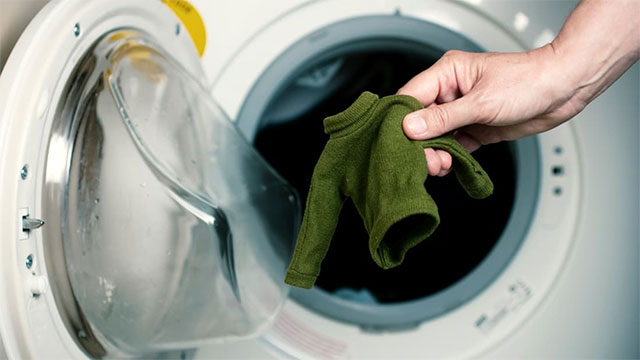
Hot water plays a particularly important role in this process. High temperatures increase the energy of the fabric fibers, causing them to vibrate more violently and break hydrogen bonds. Loosely woven fabrics are more susceptible to this, as the loose loops allow for more movement, while tightly woven fabrics are more resistant to shrinkage because they restrict fiber movement. Cellulose is also hydrophilic, meaning it absorbs water very strongly. When water penetrates it, the fibers swell and become more pliable. Combined with the continuous tumbling motion of the washing machine, the fibers will shrink back to their original natural shape, causing the clothes to shrink.
It's not just hot water that causes shrinkage. Many families have experienced rayon shrinking even when washed in cold water. While less severe, the mechanical agitation is still enough to cause the fibers to swell and deform. To minimize this risk, experts recommend using cold water, a low spin speed, and a gentle wash cycle. Labels often don't clearly state the effect of tumbling, so choosing the 'delicate' setting is usually the safest option.
Each type of fiber shrinks in a different way. Wool, an animal-derived fiber made from keratin protein, has a surface covered with overlapping layers of tiny scales called epidermal cells. When washed, these scales open up and snag together, causing the fiber to tangle – a phenomenon known as 'felting'. As a result, clothing becomes thicker but smaller. Synthetic fibers, on the other hand, behave quite differently. Made from petroleum-derived polymers, they contain crystalline regions that act as an internal framework, preventing the fiber from bunching and thus reducing shrinkage.
To address this problem, researchers are experimenting with new materials. One approach is to use blended fibers, combining natural and synthetic fibers. Another is using polymers with 'shape memory' capabilities, which can change or return to their original shape when exposed to heat or water. These materials differ from the elastic fibers in stretch fabrics, which simply spring back after being stretched.
For items that have shrunk, there's a simple 'rescue' method you can try. Soaking the clothes in warm water mixed with hair conditioner or baby shampoo, at a ratio of about one tablespoon per liter of water, can help soften the fabric temporarily. Then, gently pull the fabric back into its original shape and hang it flat or stretch it slightly to help restore some of its size. As scientists explain, ' conditioners contain chemicals called surfactants that carry a positive charge. These help lubricate the fabric fibers for a short time, making them more flexible and allowing you to pull them back into place .' While not a complete reversal, this method is sufficient to make the clothes wearable again.
Final Thoughts
Understanding why do clothes shrink when washed? how can this be resolved makes it easier to evaluate the information and apply the most relevant recommendations. Focus on the key points above and verify details that may change over time.
FAQ
What is why do clothes shrink when washed? how can this be resolved?
Discover why do clothes shrink when washed? how can this be resolved and explore the main causes, risks, practical effects, and recommended actions.
What key points does this article cover?
The article explains the core concept, important considerations, and practical details readers should understand.
How can you use this information in practice?
Use the explanations to compare options, verify important details, and make a more informed decision. Apply the recommendations that best match your goals and situation.
Related Articles
 Why Do Your Clothes Shrink When You Wash Them: Key Reasons Explained5 minutes read
 3 Reasons You Should Wash New Clothes Before Wearing to3 minutes read
 Items Should Be Turned Inside Out When Washing4 minutes read
 5+ Best Clothes Dryers to Cope with Drizzle and Humid Weather10 minutes read
 Distinguish Clothes Dryer and Clothes Dryer5 minutes read
 How to Refresh Clothes After Each Wash: Step-by-Step Guide5 minutes read
Reader Comments 0
Sign in with email or Google to join the discussion.