Table of Contents
Clothes can shrink when water, heat, and mechanical movement change the arrangement of their fibers and yarns. Cotton and linen may relax from the tension introduced during manufacturing, while wool can become smaller and denser through felting. The fabric's construction and finish also matter.
Hot water can increase the risk, but cold washing does not guarantee that a garment will keep its size. Drying temperature and the care instructions deserve as much attention as the wash cycle.
Why cotton and linen can become smaller
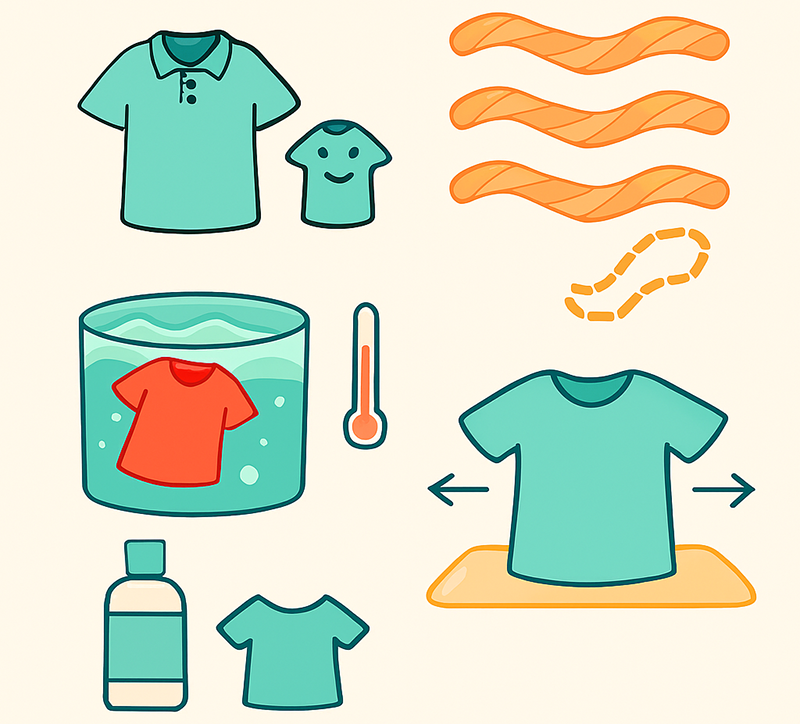
During manufacturing, fibers are stretched and arranged into yarns, then woven or knitted into fabric. Wetting and washing can allow some of that structure to relax. Cellulose-based fibers attract water, swell, and become more mobile, so the fabric can settle into a different shape.
The effect is not simply a matter of hot water permanently breaking every molecular bond. Moisture, temperature, and movement work together. A loose knit can change dimensions more readily than a tightly woven fabric, though fiber blends and shrink-resistant finishes can alter the result.
| Factor | How it can contribute |
|---|---|
| Heat | Can increase shrinkage risk during washing or drying; follow the garment's temperature limits. |
| Water | Can swell cellulose-based fibers and allow the fabric structure to relax. |
| Agitation | Moves fibers and yarns; vigorous action is especially relevant to wool felting. |
| Fabric construction | Open loops in knitted fabric allow more movement than many tightly woven structures. |
Why wool behaves differently
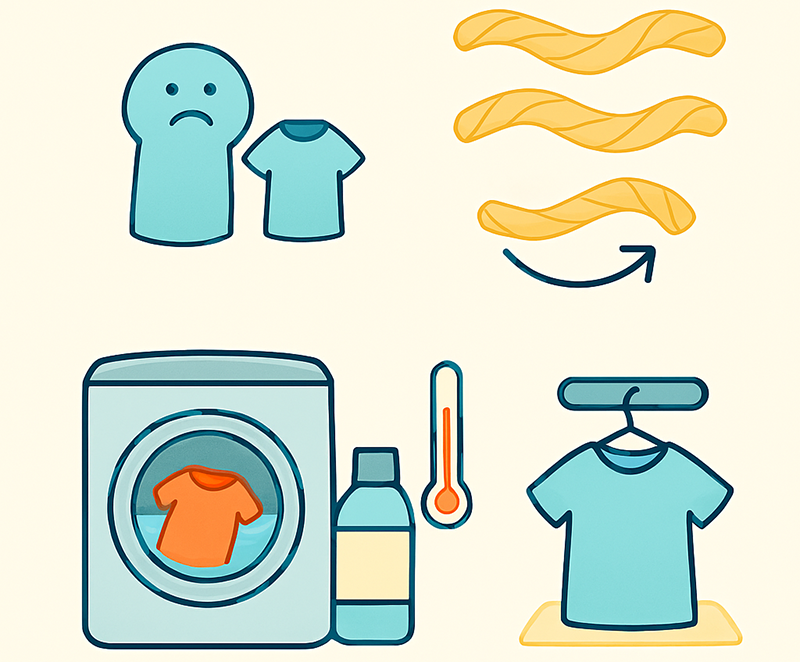
Wool fibers have a scaly surface. Under unsuitable washing conditions, fibers can interlock and tangle, producing felting. A felted sweater may feel thicker and less flexible as well as smaller.
This is different from ordinary relaxation shrinkage and is generally irreversible. Some wool receives treatments that improve washability, so follow the specific garment label rather than assuming every wool item must be cleaned the same way. Woolmark's care-symbol guide explains the distinction.
Polyester and nylon usually resist this kind of shrinkage better than many natural fibers, but they are not immune to heat damage or changes in fit. Blended garments should still be cared for according to their label.
How to reduce shrinkage
- Check washing and drying instructions before choosing a cycle. On a compatible iPhone, this guide to reading clothing labels with Visual Look Up can help interpret symbols; verify unclear results against the label.
- Use a gentler cycle and lower temperature when the garment's instructions permit them.
- Avoid vigorous rubbing or wringing of delicate items.
- Respect any restriction on tumble drying. Reshape items that require flat drying and support them while damp.
If air drying is slow, improve ventilation and spacing rather than applying extra heat to a sensitive fabric. These tips for drying clothes in humid conditions provide options.
Can a shrunken garment be restored?

Gentle reshaping may recover some size from a mildly shrunken, washable item. It will not reliably restore a badly felted wool garment or reverse all heat damage.
A Swinburne textile scientist's explanation describes soaking in lukewarm water with about one tablespoon of hair conditioner or baby shampoo per liter, then carefully reshaping and drying flat. This is a possible rescue method, not a guaranteed repair or a substitute for the care label.
Do not soak an item labeled “do not wash.” For a washable garment, handle it gently, support its weight, and stop if seams or fabric begin to distort. Seek professional advice for valuable or structured clothing.
Related Articles
 Clothes Shrunk After Washing? Causes and What You Can Try
 3 reasons you should wash new clothes before wearing to protect your health
 How to refresh clothes after each wash
 Tips for washing and keeping wool and felt coats new
 Instructions on how to properly wash warm clothes and winter jackets
 Things You Should Wash Weekly
Reader Comments 0
Sign in with email or Google to join the discussion.