Table of Contents
This updated guide answers the question 'What Is an Orange Cat? Why Are Some Cats Orange' with clear explanations and practical context. Orange cats are everywhere, from the iconic character Garfield to the tabby cat lounging in the sun. But what makes an orange cat 's color so distinctive? For decades, the answer has remained a mystery to scientists.
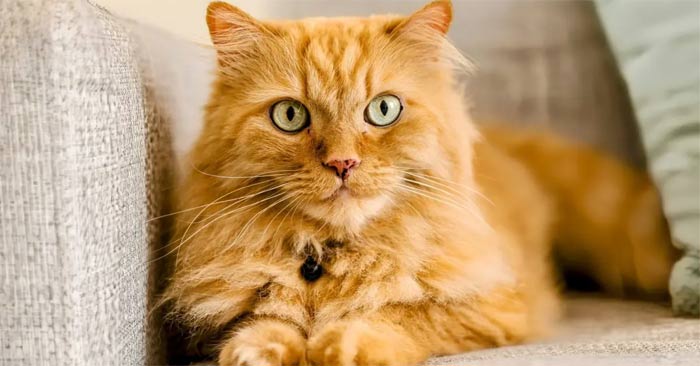
Now, researchers at Stanford University School of Medicine and Kyushu University have solved this mystery. The answer lies in a gene called Arhgap36. This gene acts strangely in orange cats, turning their fur a brilliant orange.
Why Are Orange Cats Rare?
Scientists have known for years that the orange color trait in cats is linked to the X chromosome. Male cats, with a single X chromosome, only need one copy of this gene to sport their ginger coat.
Still, female cats need two copies to have a completely orange coat. Otherwise, they will become calico or tortoiseshell cats, whose coats are a combination of orange, black, and white.
" In some species with yellow or orange pigmentation, those mutations are almost exclusively in one of two genes, and neither of those genes is sex-linked, " explains Christopher Kaelin, a senior scientist in genetics and lead author of the study.
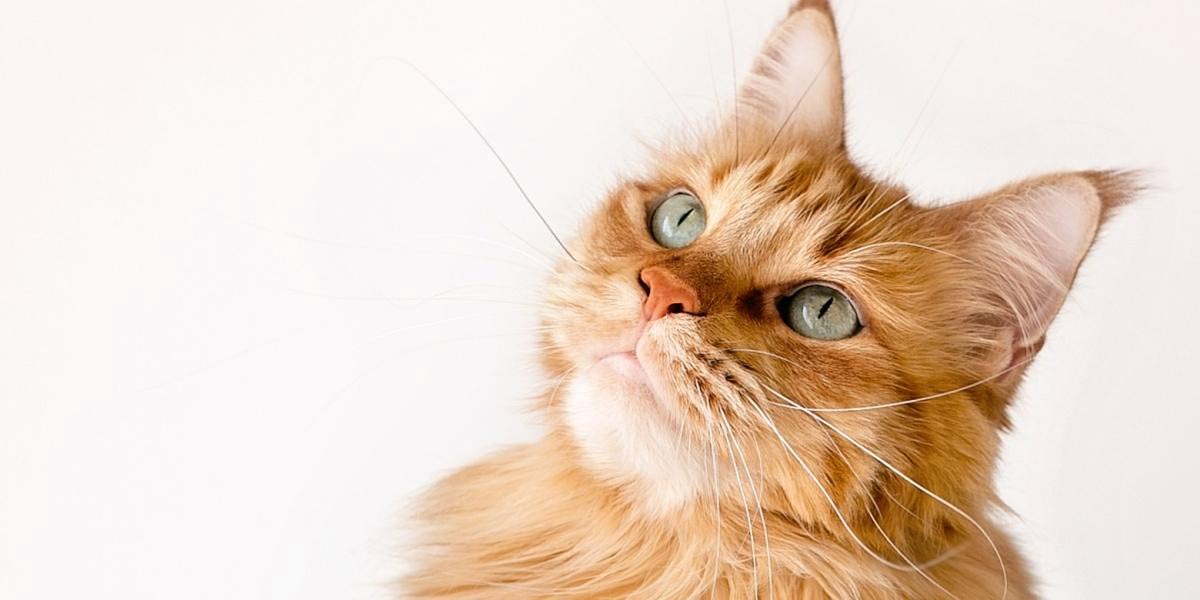
The Genetic Mystery of Cat Color
Kaelin and his team had a hunch that the answer had to do with the X chromosome. But which gene? They collected DNA samples from spaying and neutering clinics, comparing orange cats to non-orange cats.
After analyzing the genome, the researchers found 51 genetic variants that could explain the orange trait. They narrowed it down to three.
One variant stood out: Arhgap36 . A small deletion in this gene increased its activity in melanocytes. Normally, Arhgap36 is low-key, active mainly in nerve tissue and cancer cells. But in orange cats, it was bigger than a kitten begging for breakfast.
" Arhgap36 is not expressed in mouse melanocytes, in human melanocytes, or in cat melanocytes from non-orange cats ," Kaelin said.
" The mutation in orange cats appears to activate Arhgap36 expression in a cell type, melanocytes, where it is not normally expressed ."
Orange Cats Are Usually Male.
Orange cats are mostly male, and it all comes down to the X chromosome. Male cats have one X chromosome and one Y chromosome. If that X carries the orange gene, they are completely orange.
Female cats, with two X chromosomes, need the orange gene on both XXs to be sure of having ginger fur. If female cats inherit only one copy of this gene, they will become an orange and black "mosaic".
This randomness creates the striking tortoiseshell and calico patterns. Some cells activate the orange gene, while others activate the black gene. The result? A coat as unpredictable as a cat's mood.
A Genetic Breakthrough Alike
While the Stanford team focused on Arhgap36, researchers at Kyushu University conducted a parallel investigation. Professor Hiroyuki Sasaki and his team examined DNA from 18 cats, including 10 orange cats. The findings matched the Stanford study.
' This is such strong evidence that even at this stage we still believe that Arhgap36 is the orange gene ,' Sasaki said.
They expanded their study, analyzing DNA from 49 more cats, and the same pattern emerged. The Arhgap36 deletion was consistently present in the orange cats but not in the others.
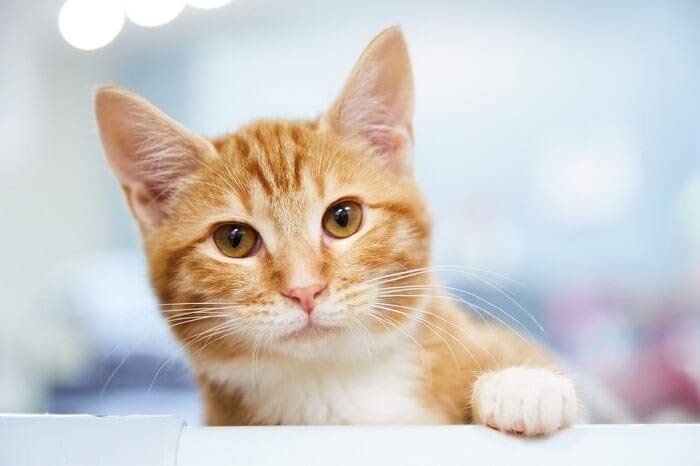
Origin of Orange Fur
Where did this mutation come from? Kaelin believes it appeared early in the domestication process. Ancient paintings dating back to the 12th century depict calico cats, suggesting the mutation was present centuries ago.
' This is something that appeared in domestic cats, probably in the early stages of domestication ,' Kaelin says.
Sasaki wants to dig deeper. He plans to study ancient Egyptian cat mummies, searching for the orange gene. The goal? To determine exactly when and where the mutation first appeared.
Arhgap36 isn't just associated with orange fur. In other animals, it is been linked to cancer and nerve development. Could this gene affect more than just a cat's coat? Sasaki thinks so.
' for instance, many cat owners believe that different coat colors and patterns are associated with different personalities,' Sasaki shares. 'There is no scientific evidence for this yet, but it is an interesting idea and one I would like to explore further.'
The gene may also influence brain and hormone function. Sasaki's team found that the Arhgap36 gene is active in a number of tissues, not just skin cells. Whether this activity changes behavior or health remains a mystery.
The discovery that Arhgap36 is an orange gene is just the beginning. Sasaki and Kaelin plan to study how this gene affects pigment production.
Experts are also exploring its role in cancer and skin conditions, hoping to discover broader implications for both cats and humans.
FAQ
What is an Orange Cat? Why Are Some Cats Orange?
an Orange Cat? Why Are Some Cats Orange refers to the concept, feature, product, or process explained in this guide. The main sections cover how it works and where it is useful.
Why is an Orange Cat? Why Are Some Cats Orange important?
Its value depends on the problem you are trying to solve. Understanding the benefits and limitations makes it easier to decide whether it fits your needs.
Is an Orange Cat? Why Are Some Cats Orange suitable for beginners?
Yes, beginners can start with the basic explanation and examples in this guide, then move to more advanced settings or techniques as their confidence grows.
Related Articles
 Infographic - the Grrr Benefit of Cats!3 minutes read
 Top 10 Most Beautiful Cats in the World5 minutes read
 25 Unexpected Facts About Orange Sure You Don't Know6 minutes read
 Why Are Cats Afraid of Water?7 minutes read
 Arabian Cat Cats Were Discovered After Ten Years of Searching4 minutes read
 What Kind of Orange Extractor Machine Philips, Braun, Steba?10 minutes read
Reader Comments 0
Sign in with email or Google to join the discussion.