Table of Contents
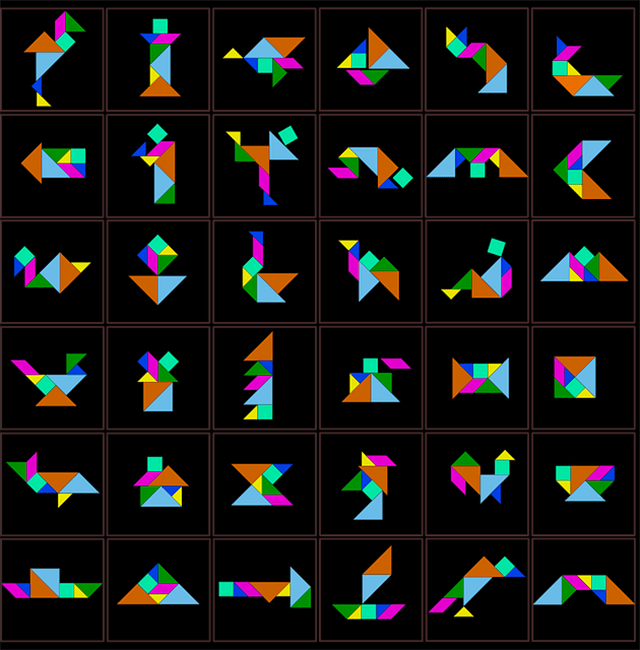
To solve a traditional tangram, arrange all seven pieces to match the target silhouette without overlapping them. Start with clear corners and large areas, then test the remaining pieces systematically. Rotating a piece—and sometimes turning the parallelogram over—can reveal a fit that was easy to miss.
Check the seven pieces and the rules
A standard set contains two large triangles, one medium triangle, two small triangles, one square and one parallelogram. All seven should lie flat and remain inside the target outline. A full-size outline lets you place pieces directly on it; for a smaller reference picture, reproduce the shape beside it instead.
1. Look for distinctive corners first
Study the outline before placing a piece. Sharp points, straight edges and isolated protrusions can constrain what fits. Try an obvious-looking feature, but keep the placement provisional: a visible triangular area may consist of several smaller pieces rather than one triangle.
2. Learn which pieces can make the same shape

The two small triangles can form a square, a medium-sized triangle or a parallelogram, depending on how they meet. Practice those combinations away from the puzzle. Recognizing a shape as a possible group of pieces prevents you from reserving it automatically for one particular piece.
3. Test the largest pieces in broad areas
Large triangles have fewer places to fit than small ones. Try them in wide parts of the silhouette, then inspect the gaps. If a remaining gap is too narrow or has an angle none of your unused pieces can fill, reconsider the large-piece placement instead of forcing the small pieces.
4. Rotate and flip deliberately

Move one piece at a time and rotate it through plausible orientations. The parallelogram deserves special attention: turning it over produces its mirror image, which cannot be obtained by rotation alone. On a digital tangram, look for a separate flip control.
5. Change one assumption at a time
Randomly moving every piece makes it hard to learn from a failed attempt. Keep the placements that fit well, test one uncertain area and note why it fails. If two small triangles work in one area, ask what that leaves for the rest of the silhouette before committing.
6. Use a small hint before the full solution

If you are stuck, reveal just one dividing line or one correctly placed piece, then continue unaided. When you do view a complete solution, cover it and rebuild the shape afterward. Compare the arrangement with your attempt to see which assumption blocked progress.
7. Increase difficulty gradually
Begin with patterns that show individual piece boundaries, then move to plain silhouettes. Try familiar objects and animals before tackling ambiguous outlines. Short, regular practice provides opportunities to recognize recurring combinations; there is no required number of puzzles per day.
Make a reusable practice set
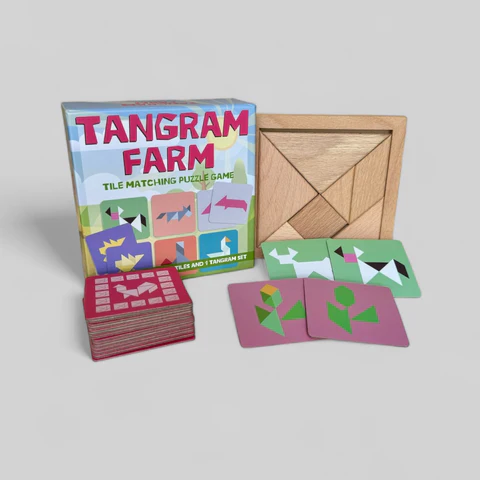
Print or trace a correctly proportioned tangram on sturdy card and cut carefully along the dividing lines. Keep the pieces together so one missing triangle does not make a puzzle impossible. If you color them, use both sides so flipping remains easy.
Creating your own silhouettes is a useful extra challenge. Combining multiple sets can also be enjoyable, but it changes the standard seven-piece puzzle. For the basic format and variations, see TipsMake's tangram rules and examples.
Related Articles
 Tangram: How to play, explanation, variations, origin
 Tips to know when playing horror game MADiSON
 Builda Fishing Guide: Catch, Sell, and Upgrade
 How to Play Agar.io: Controls, Viruses, Splits, and Survival Tips
 Among Us, Summary of advanced tips when playing Among US
 How to reduce lag, jerk game play on Windows 10?
Reader Comments 0
Sign in with email or Google to join the discussion.