Table of Contents
Sauna bathing may help some people relax and temporarily ease muscle soreness, but it is not a substitute for exercise or treatment. Research into longer-term benefits is promising in some areas and limited in others. Heat also puts stress on the body, so more frequent or longer sessions are not automatically better.

Saunas and steam rooms are different
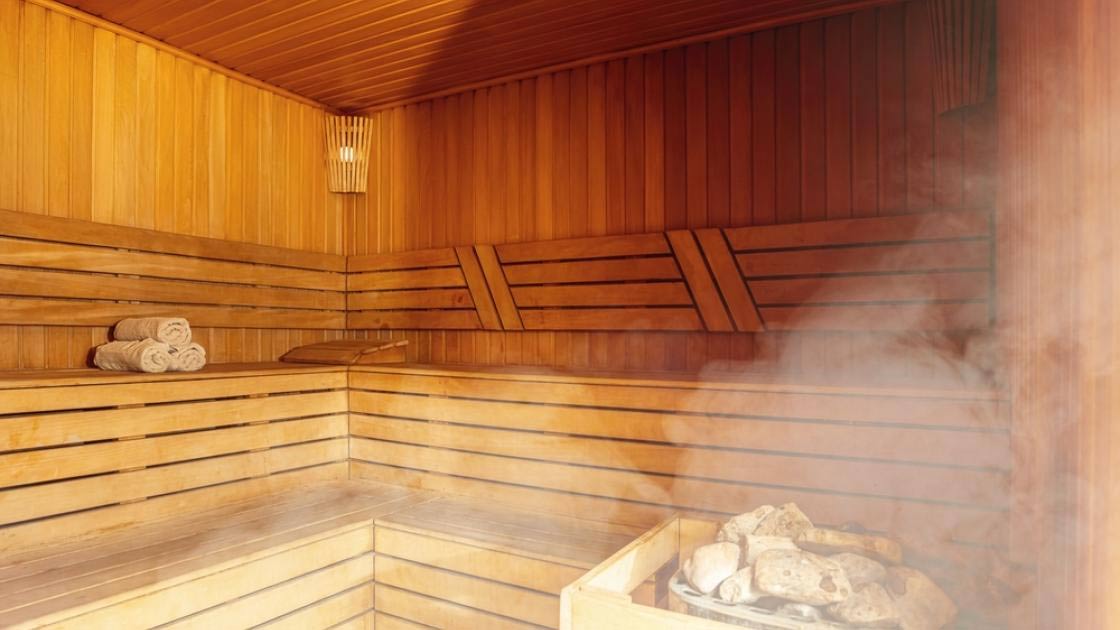
A traditional sauna mainly uses hot air, while a steam room uses high humidity. An infrared sauna heats the body using infrared energy. Findings from one type of heat exposure should not automatically be applied to all three.
Mayo Clinic's infrared sauna overview notes that larger, more rigorous studies are needed to establish proposed benefits for chronic conditions.
Relaxation and muscle comfort
A quiet session can offer time away from daily distractions, and heat may ease soreness or stiffness for some people. These effects are different from proving faster tissue repair, greater athletic performance, or treatment of a mental-health condition.
Do not use a sauna session to push through an injury or replace a recovery plan. If heat makes symptoms worse, leave rather than trying to reach a target duration.
What cardiovascular studies can and cannot show
Heat increases sweating and heart rate and can change blood pressure. Some studies associate regular sauna bathing with better cardiovascular outcomes, but an association does not prove that sauna use caused the difference.
Harvard Health's review explains that lifestyle and relaxation may help account for observed outcomes. These findings do not establish a universal schedule of four to seven sessions each week.
Be cautious about skin and “detox” claims
Temporary warmth or flushing is not evidence that acne has been treated or that the skin barrier has improved. This guide does not recommend sauna bathing as a skin treatment. Avoid treating sweating as proof that harmful substances have been removed.
If you have a skin condition or heat causes irritation, ask a qualified clinician about what is suitable for you rather than following a general beauty routine.

Reduce the risks of heat exposure
- Avoid alcohol and do not use a sauna while ill.
- Keep sessions short and leave immediately if you feel dizzy, weak, nauseated, uncomfortably hot, or short of breath.
- Cool down gradually and replace lost fluids, following any medical fluid restrictions.
- Ask your healthcare professional first if you are pregnant, have a heart or blood-pressure condition, or take medicines that affect heat tolerance.
Harvard's sauna precautions and Cleveland Clinic's overview explain the risks. A commonly cited upper duration is 15–20 minutes, but that is not a goal everyone should reach; individual tolerance and medical circumstances matter.
Related Articles
 Distinguish between saunas and steam rooms
 11 amazing benefits of coffee make you irresistible
 16 great benefits from lemon you may not know yet
 Unexpected benefits of plants and animals: Lighting, explosive detection, disaster prediction and many other great applications
 Unexpected benefits when you go swimming regularly
 10 great benefits of Matcha green tea you may not know yet
Reader Comments 0
Sign in with email or Google to join the discussion.