Table of Contents
Researchers led by Oregon State University reported that an experimental delivery system could carry genetic material to the lungs in mice. The findings give researchers a way to study potential therapies for lung disease. They do not establish a safe or effective treatment in people.
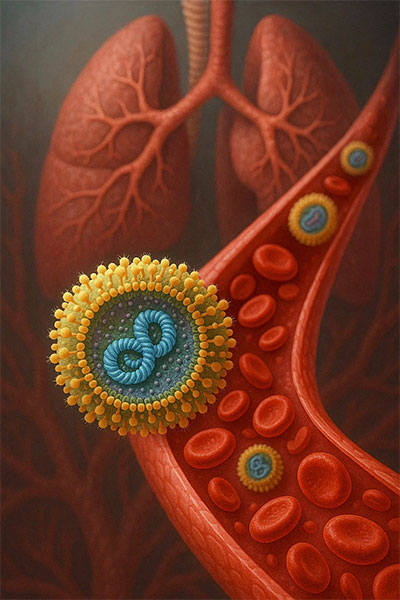
What the researchers reported
The studies address a challenge in genetic medicine: getting the intended material to the cells where it needs to act. The team studied nanoparticles as carriers for genetic material. In its research announcement, Oregon State described slower tumor growth in a mouse lung cancer study and improved function in a mouse model of cystic fibrosis. The findings appeared in two papers, in Nature Communications and the Journal of the American Chemical Society.
Why the results are preliminary
A delivery system is one part of a potential treatment. The material it carries has to produce the intended effect, and researchers also have to establish how long that effect lasts and what happens elsewhere in the body. Slower tumor growth in a mouse experiment doesn’t show that a treatment improves survival in patients. Likewise, a functional improvement in a cystic fibrosis model doesn’t show lasting benefit in people who have the disease.
The next evidence to look for is whether follow-up studies reproduce the effects and whether clinical studies eventually establish safety and benefit in humans.
Related Articles
 Do these to keep lung cancer away from you
 Five advances in cancer care: what is established and what is experimental
 Injecting Vitamin C into a vein may help treat cancer
 New drugs can prevent genes that cause cancer
 New research: People working in prisons have a risk of developing lung cancer
 Bowel bacteria help anti-cancer immunotherapy work better
Reader Comments 0
Sign in with email or Google to join the discussion.