Table of Contents
The following infamous prison breaks are clear proof that the saying 'Where there's a will, there's a way' is absolutely true.
The following infamous prison breaks are clear proof that the saying "Where there's a will, there's a way" is absolutely true.

Throughout history, prisoners have tried to escape, and they've come up with some truly incredible ways to do so. Whether it's a 17th-century Robin Hood staging a series of folklore-inspired escapes or a notorious drug lord tunneling out of a maximum-security federal prison, these escapees have risked it all to gain freedom.
The Daring Escapes of John Sheppard
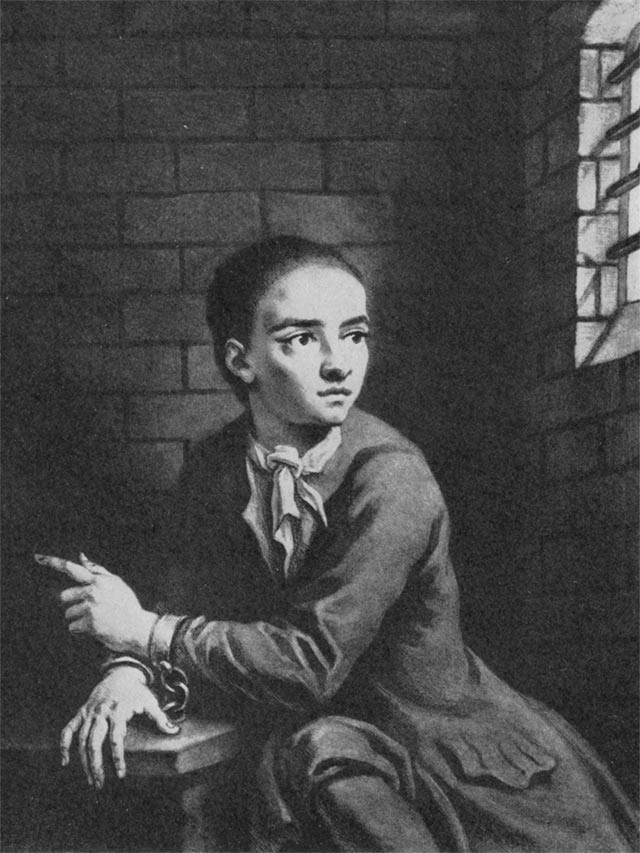
John Sheppard (later nicknamed Honest Jack because of his popularity among the working class) was a notorious thief who escaped from London prison four times in 1724. He was beloved for his charm, good looks, and the non-violent nature of his criminal activities; he was something of a Georgian Robin Hood. Sheppard's later escapes from prison have made him the subject of numerous works of art, including an opera, several stage plays, and three feature films.
Sheppard was a talented apprentice carpenter under the tutelage of William Kneebone. After falling in with a group of criminals and beginning a romantic relationship with a local prostitute named Elizabeth Lyon, Sheppard began burglarizing to supplement his income. He engaged in a number of petty burglaries, then began to professionally burglarize working houses.
After Sheppard, Lyon, and Sheppard's brother Tom were arrested for a burglary they had committed in early 1724, Sheppard was imprisoned in St. Giles' Roundhouse before escaping within hours, breaking through the ceiling of his cell and lowering himself to the ground using a rope made from a bedsheet. Just weeks later, Sheppard was arrested again, this time for pickpocketing, and imprisoned in the New Prison in central London with Lyon. Within days, the two were able to overcome their chains and escape from their cells using a rope made from a bedsheet – just like Sheppard's previous escape.
Sheppard continued his criminal activities before being recaptured in July 1724 at the behest of local crime boss Jonathan Wild. He was taken to Newgate Prison in London, convicted of theft on August 12, 1724, and sentenced to death. But just days before his scheduled execution on September 4, Sheppard loosened the bars on his cell window and slipped through the crack while Lyon and another accomplice distracted the guards.
Sheppard escaped for several weeks before being recaptured on September 9, 1724, and sent back to Newgate Prison. Despite increased security, Sheppard was able to escape by slipping out of the prison in handcuffs. He disguised himself as a beggar and returned to London—only to be arrested for the fifth and final time on November 1, 1724, after breaking into a pawn shop.
Sheppard was again sentenced to death and kept under 24-hour guard. After his final escape attempt was thwarted, Sheppard was hanged on November 16, 1724, in front of a crowd of nearly 200,000 Londoners.
The Prison Escapes of John Dillinger
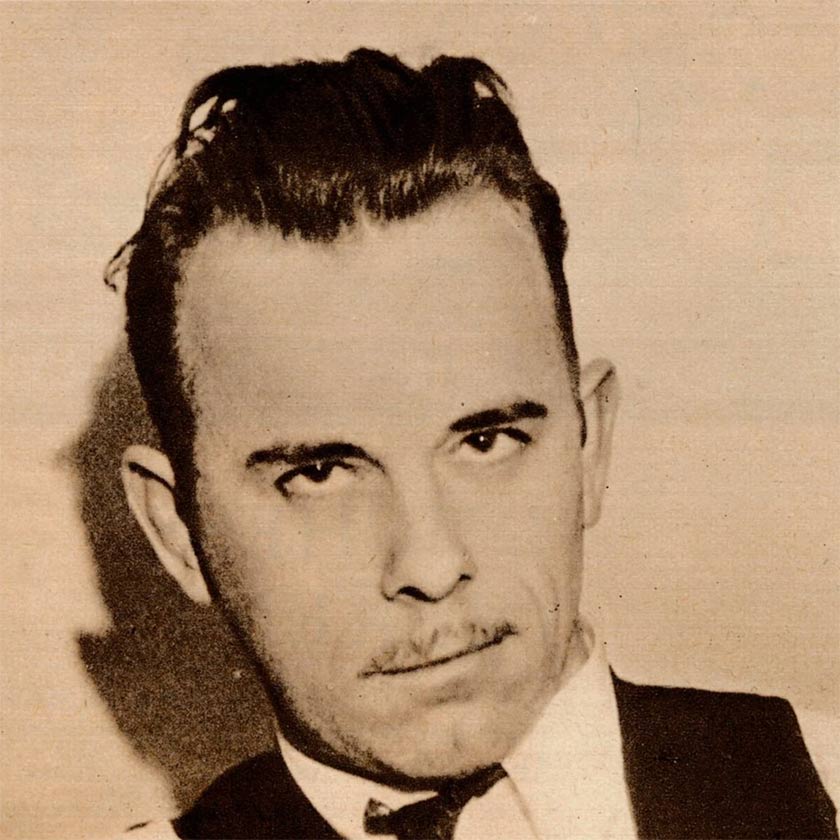
John Dillinger was a Depression-era crime boss responsible for a string of bank robberies across the Midwest; he was one of many gangsters admired by the mob during the Great Depression. Dillinger first went to prison after he and accomplice Ed Singleton were arrested for robbing a grocery store in Mooresville, Indiana, in early September 1924. The two got away with only $50 (equivalent to about $937 today)—but Dillinger remained in prison until he was paroled in May 1933 after serving more than eight years of a 10 to 20 year sentence.
Dillinger returned to criminal activity just weeks after his parole. After committing two bank robberies in June and August 1933, he was arrested in Dayton, Ohio, and sent to Lima, Ohio, to await trial. Guards discovered that Dillinger had a document outlining his escape plan, but he refused to confirm what it was.
He devised a plan for several of his acquaintances to escape from custody. This motley group of criminals, known as the "First Dillinger Gang," impersonated Indiana State Police officers in an attempt to rescue Dillinger under the pretense that he was being extradited to Indiana. When Sheriff Jess Sarber asked the "officers" for identification, one of the fake officers shot and killed him while the group escaped to Indiana with Dillinger.
Dillinger and his gang then committed a series of robberies before fleeing to Tucson, Arizona, where they sought refuge. Authorities later located and arrested Dillinger and his accomplices; Dillinger was sent back to Indiana to stand trial for the murder of a police officer during a robbery. Despite being held in an "escapable" prison, the notorious criminal was able to escape again in March 1934 by carving a fake gun out of wood and using it to threaten the prison guards. He then fled to Chicago.
A nationwide manhunt followed the escape. Dillinger went into hiding with his girlfriend, Billie Frechette, and formed a new gang. They committed robberies in South Dakota and Iowa just weeks after their escape. After a shootout with authorities and a near-capture at a rural Wisconsin resort, Dillinger returned to Chicago and underwent plastic surgery to alter his appearance and conceal his identity.
Romanian mobster Anna Sage later provided Dillinger's location to authorities to avoid deportation. On July 22, 1934, after watching a movie at the Biograph Cinema in Chicago, Dillinger was ambushed by federal agents before being shot dead while trying to escape through a nearby alley.
The Escape of Rédoine Faïd
Rédoine Faïd is a career criminal known for his dramatic escapes from French prisons in 2013 and again in 2018. Faïd's life of crime began as a teenager after joining his brothers in their criminal ring. After a series of armed robberies in the mid-1990s, he was arrested and spent the next decade in prison. He also published a memoir, " The Bandit - From the Projects to Organized Crime ", which chronicles his time in the criminal world, his time in prison, and his alleged rehabilitation.
Despite claiming to have renounced a life of crime, Faïd was imprisoned again in 2011. Faïd had violated his parole and authorities suspected him of involvement in a deadly armed robbery.
Faïd made a daring prison break in 2013 with the help of several accomplices who smuggled weapons and explosives into the prison. The group took several prison guards hostage and then used explosives to blow up a series of security doors, opening a path for Faïd to escape. Faïd made his way to a waiting getaway car, escaped the prison, and went into hiding.
His freedom lasted only a few weeks. Faïd was sentenced to an additional decade in prison for the escape, on top of his already lengthy sentence for the 2010 robbery.
But that didn't stop Faïd from escaping again in 2018—this time by helicopter. On July 1, 2018, a group of Faïd's accomplices hijacked a helicopter before flying it to the prison on the outskirts of Paris. They landed in the yard and set off smoke bombs to hide from the guards, while using an angle grinder to break into the visiting room where Faïd and his brother were waiting. The brothers escaped in the helicopter, sparking a months-long manhunt.
He was finally caught with his brother in October 2018, this time receiving an additional 14 years in prison for the movie-like prison break.
The 1983 Maze Prison Break
Irish republican supporters call it the Great Escape. The Maze Prison Break was a 1983 maximum security prison break orchestrated by the Irish Republican Army (IRA), a paramilitary group seeking to end British rule in Northern Ireland.
IRA prisoners Bobby Storey and Gerry Kelly facilitated the smuggling of six guns into the prison to aid in the escape. The guns were distributed to other IRA prisoners, who used them to overpower guards, take them hostage, and seize control of H7 prison block. They then used the guns to commandeer a food delivery van and smuggle nearly 40 prisoners out.
When guards at the main gate stopped the truck, a fight broke out between guards and prisoners, leaving one guard dead and several others seriously injured. Ultimately, 38 prisoners made their way through the main gate and escaped. Although 19 were recaptured within days, half of the escaped prisoners fled the barricade to Ireland, the United States, or mainland Europe.
The escape was a great humiliation for the British government and became an indispensable propaganda tool for the IRA in its campaign against the British occupation of Ireland.
The 1962 Alcatraz prison break
On the evening of June 11, 1962, Clarence Englin, John Englin, and Frank Morris escaped from the notorious maximum security federal prison located on Alcatraz Island in San Francisco Bay.
Morris, the Englin brothers, and fellow inmate Allen West began planning their escape in late 1961. Under Morris's direction, the gang spent months enlarging air vents in cells; they hid their escape from the guards with cardboard. Eventually, they were able to sneak through the air vents to access an empty floor of the prison building where they set up a makeshift shipyard.
They then used dozens of raincoats and other materials stolen from around the prison to build a raft. They boarded the raft around 10 p.m. on June 11, 1962, and set off for Angel Island.
The group's absence wasn't discovered until the next morning, when they had long since left. The FBI opened an investigation, and authorities concluded that the criminals had likely drowned. That hardly prevented the incident from becoming the subject of widespread conspiracy theories and speculation for years. Alcatraz Federal Prison officially closed less than a year later, although it remains open as a museum and macabre tourist attraction.
FAQ
What should you know about the most shocking prison breaks in history?
In practical terms, the following infamous prison breaks are clear proof that the saying 'Where there's a will, there's a way' is absolutely true.
Why does the most shocking prison breaks in history matter?
The article highlights that throughout history, prisoners have tried to escape, and they've come up with some truly incredible ways to do so.
What is the main takeaway?
The main takeaway is that whether it's a 17th-century Robin Hood staging a series of folklore-inspired escapes or a notorious drug lord tunneling out of a maximum-security federal prison , these escapees have risked it all to gain freedom.
Related Articles
 How to Use G Shock Watch from a - Z7 minutes read
 How to Create Page Breaks and Page Breaks in Excel3 minutes read
 Discover the Difference Between the Most Secure Prison in Norway6 minutes read
 How to Page Breaks and Page Breaks in Word5 minutes read
 Ddos Game Servers, Hackers Sentenced to Two Years in Prison4 minutes read
 The Same and Different When One Line Break in Excel3 minutes read
Reader Comments 0
Sign in with email or Google to join the discussion.