Table of Contents
Explore scientists have discovered a mysterious climate change phenomenon that is.
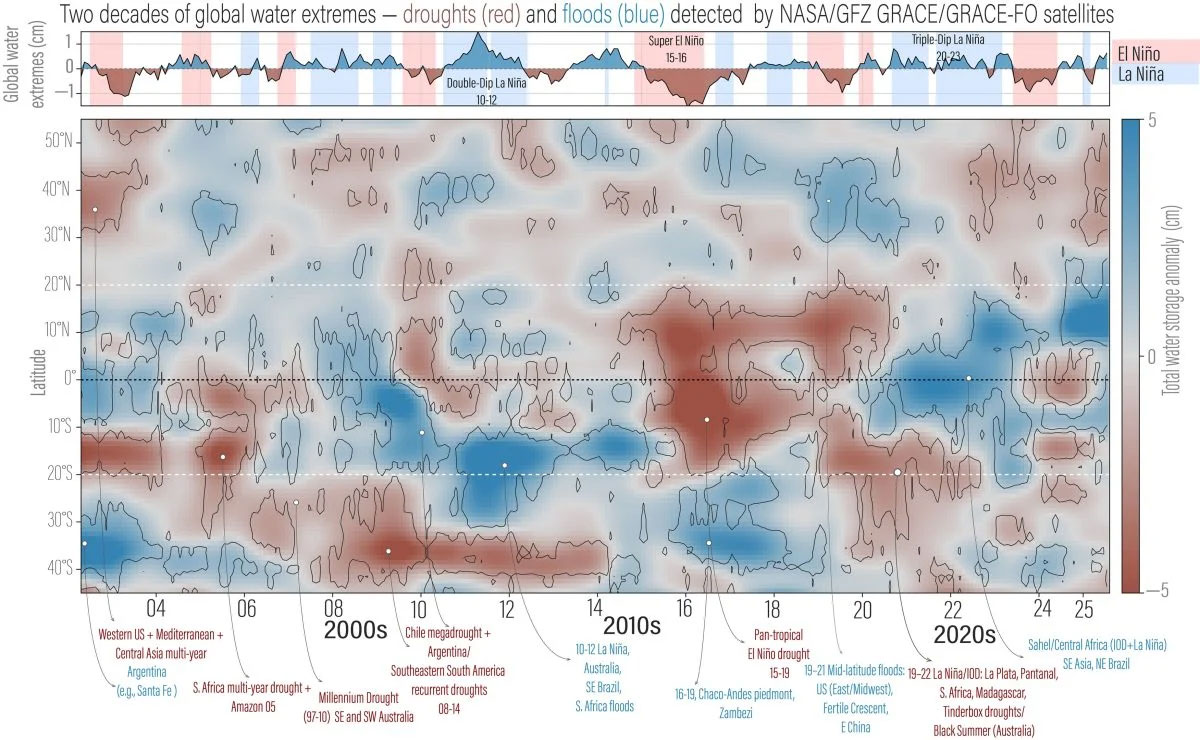
A study recently published in the journal AGU Advances indicates that over the past 20 years, ENSO – a recurring climate oscillation pattern in the equatorial Pacific, encompassing El Niño and La Niña – has been the primary driver of extreme fluctuations in global water availability. The research team also found that ENSO tends to 'synchronize' these extremes, allowing geographically distant regions to simultaneously experience unusually high humidity or severe drought conditions.
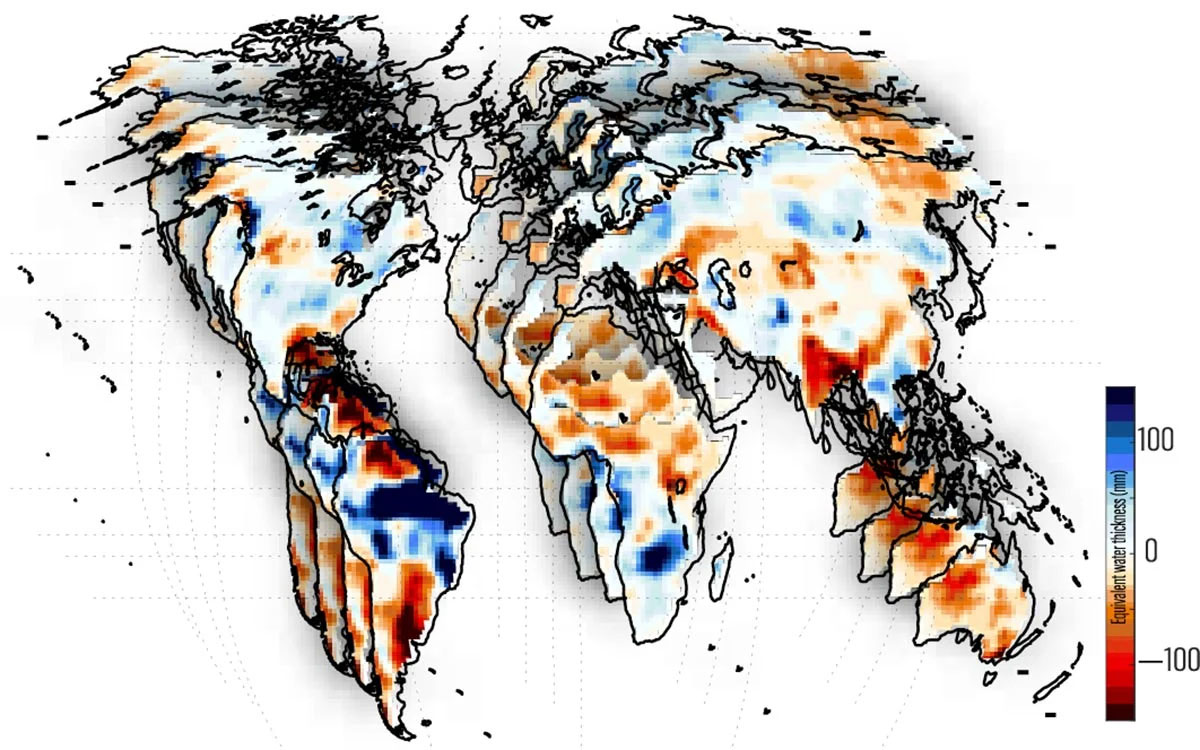
According to co-author Bridget Scanlon, a research professor in the Economic Geology Department at the UT Jackson School of Geosciences, recognizing water extremes on a global scale has significant implications for humanitarian work and policy planning.
She stated that, when observed on a global scale, scientists can identify areas that simultaneously have a surplus of water or a shortage of water. This directly impacts water supply, food production, food trade, and a host of other global issues.
When multiple regions simultaneously face extreme water conditions, the consequences extend beyond the local level, impacting food systems, supply chains, and even international cooperation.
'Total water reserves' is a comprehensive climate indicator that encompasses all forms of water within a given area. It takes into account surface water in rivers and lakes, snow accumulation, soil moisture, and groundwater levels deep beneath the surface. Considering this full picture helps scientists better understand how water systems respond to climate impacts.
This is one of the first studies to analyze extremes in total water availability in parallel with ENSO on a global scale. According to lead author Ashraf Rateb, this approach allows scientists to see the connections between extreme conditions in different regions.
Satellite Data Reveals Water Movement
Real-World Examples Around the World
Filling Gaps in the Data
According to him, the research has captured the 'rhythm' of major climate cycles like El Niño and La Niña, as well as how they impact floods and droughts – phenomena that people everywhere face. It's not just the Pacific Ocean that operates in its own way; what happens there ultimately affects life on land.
Scanlon argues that the research findings once again underscore the importance of viewing floods and droughts as natural components of the climate system, rather than simply as unusual disasters.
According to her, people often say we are 'running out of water,' but the core issue actually lies in managing extremes. And that's a completely different message, requiring a fresher approach to planning and response.
Final Thoughts
Understanding scientists have discovered a mysterious climate change phenomenon that is driving extreme floods and droughts globally makes it easier to evaluate the information and apply the most relevant recommendations. Focus on the key points above and verify details that may change over time.
FAQ
What is scientists have discovered a mysterious climate change phenomenon that is driving extreme floods and droughts globally?
Explore scientists have discovered a mysterious climate change phenomenon that is.
What key points does this article cover?
The article focuses on Satellite Data Reveals Water Movement, Real-World Examples Around the World, Filling Gaps in the Data, with practical explanations and examples.
How can you use this information in practice?
Use the explanations to compare options, verify important details, and make a more informed decision. Apply the recommendations that best match your goals and situation.
Related Articles
 Scientists Use AI to Predict Large-scale Wildfires5 minutes read
 Acid in the Arctic Ocean Increases Rapidly with Climate Change3 minutes read
 The Corpses Suddenly Heated up, the Mysterious Phenomenon4 minutes read
 Explaining the Mysterious Gravity Loss Phenomenon in Some Places4 minutes read
 Is Climate Change Really a Threat to Human Life?6 minutes read
 Climate Change Is Causing the Sea to Flow Faster, Scientists Are9 minutes read
Reader Comments 0
Sign in with email or Google to join the discussion.