Table of Contents
Explore the biggest scientific breakthroughs of the last 25 years —— and some.
' I think science has had an incredibly strong surge in the last 25 years ,' said France Córdova, an astrophysicist, current chair of the Science Philanthropy Alliance, and former director of the U.S. National Science Foundation. ' I really hope this pace will be accelerated even further by investment. We really need to create the conditions for thousands of ideas to flourish .'
Below are some of the most noteworthy scientific discoveries of the past 25 years, along with some fascinating mysteries that may be solved in the coming decades.
Life Sciences
Decoding the human genome and the emergence of synthetic life
Launched in 1990, the Human Genome Project first sequenced the complete human genome in 2003, creating a 'standard map' for the approximately 3 billion DNA base pairs that make up the genetic foundation of the human species. This was the largest collaborative biology project in history, and upon completion, it ushered in a new era of genetics, profoundly impacting forensic science, anthropology, DNA ancestry testing, and even therapies for genetic diseases like Huntington's disease.
Under the leadership of the U.S. National Institutes of Health (NIH), this project also contributed to the advancement of synthetic biology—a field focused on designing and creating new forms of life. When humans can read the genomes of all organisms, from nematodes to humans, the door to 'rewriting the code of life' is opened. As a result, the first synthetic cell was created in 2010, synthetic DNA in 2012, and the first synthetic chromosome in 2014.
CRISPR: The gene editing revolution
For decades, scientists have observed that some bacteria possess 'genetic immunity': when attacked by a virus, they retain a portion of the invader's DNA to better protect themselves in the future.
This natural system, called CRISPR (Clustered Regularly Interspaced Short Palindromic Repeats), has now been transformed into a revolutionary gene-editing tool. CRISPR allows for cutting and pasting DNA with unprecedented precision, from individual base pairs to entire gene groups, profoundly changing medicine, biotechnology, and agriculture.
Launched in 2012, CRISPR has led to a series of medical breakthroughs, including the first approved gene therapy to treat sickle cell anemia and beta thalassemia (Casgevy), as well as the birth of 'KJ baby' — a child born free of the once-fatal genetic disease. The two pioneering scientists behind CRISPR, Jennifer Doudna and Emmanuelle Charpentier, were awarded the 2020 Nobel Prize in Chemistry.
"The development that excites me the most has happened this year," Doudna said. Researchers designed and applied a personalized CRISPR therapy to a baby with a rare disease in just six months. "This is proof that on-demand gene editing for rare diseases is now possible," she said. "This will completely change what medicine can offer the thousands of children born each year with previously unknown diseases."
Beyond medicine, CRISPR is also driving biotechnology applications in climate and architecture, from disease-resistant crops to carbon-absorbing microorganisms.
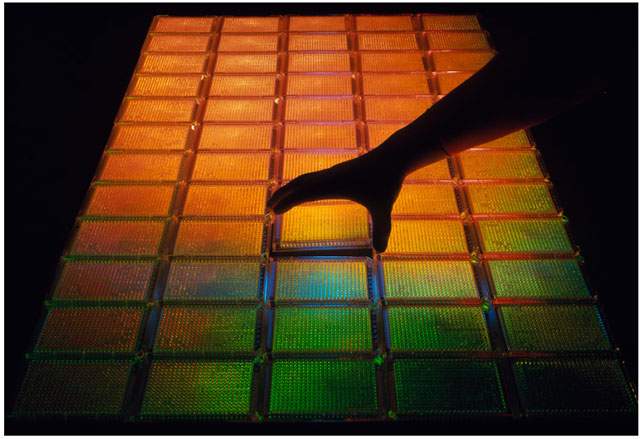
The baby has three parents
In 2016, the world recorded the first child to carry DNA from three people. The majority of the genome still comes from the father and mother, but a third donor provides healthy mitochondrial DNA. This technique, called mitochondrial replacement therapy, reduces the risk of transmitting rare mitochondrial diseases. As of 2025, babies born using this method are expected to remain healthy.
AlphaFold solves the protein folding problem
For decades, modern biology has struggled with predicting the 3D spatial shape of proteins solely from their chemical sequences. This shape determines the protein's function, much like the shape of a key determines which lock it can open. Solving the 'protein folding problem' would mean humans could design biological molecules faster, paving the way for new drugs.
AlphaFold, developed by DeepMind, has achieved this. This AI can predict protein structures with accuracy approaching that of real-world experiments, but much faster. This achievement has dramatically accelerated drug research and understanding of the fundamental mechanisms of life, and could earn the 2024 Nobel Prize in Chemistry.
Vaccines continue to save millions of lives
If the 20th century was the golden age of vaccines, the 21st century continues this progress. The HPV vaccine, approved in 2006, has helped reduce cervical cancer mortality by 62% and is estimated to prevent 1.4 million future deaths.
During the 2020 COVID-19 pandemic, RNA vaccines were developed and approved at record speed, helping to save millions of lives. Currently, RNA vaccine technology is being expanded to many other infectious diseases and even cancer.
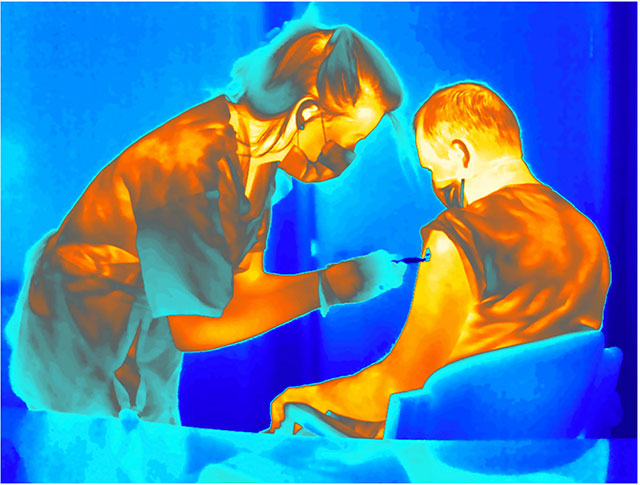
CAR T-cell immunotherapy in cancer treatment
In 2017, the first T-cell CAR therapy was approved. This method modifies the patient's own T cells to recognize and destroy cancer cells. T-cell CAR has shown outstanding effectiveness in many types of blood cancer such as lymphoma, leukemia, and multiple myeloma, with over 90% of patients achieving remission, saving tens of thousands of lives to date.
Physics & Space
Graphene – the ultra-thin, ultra-durable material has been created
Graphene is the thinnest and strongest material ever known, composed of carbon atoms arranged in a two-dimensional honeycomb lattice. Although theoretically predicted as early as 1947, it wasn't until 2004 that scientists first created graphene in the laboratory—an achievement that earned the 2010 Nobel Prize in Physics.
Graphene is not only thin and durable, but it is also a good conductor of electricity and transparent. These properties have helped graphene advance a range of new technologies, from highly efficient water filters and fast-charging batteries to more durable solar cells and ultra-precise biosensors.
The Higgs particle has been discovered
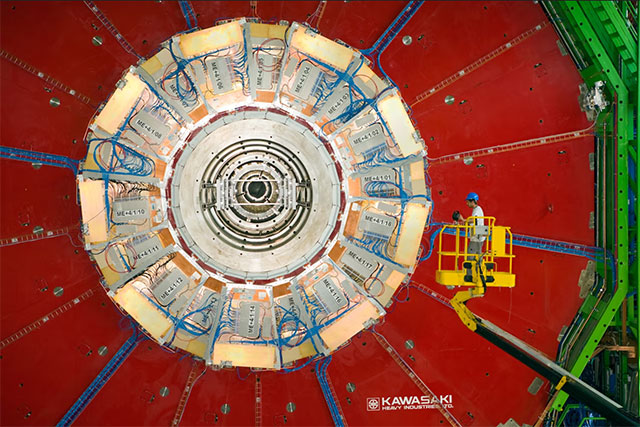
The Higgs particle is a subatomic particle with a mass only about 150 times that of a proton, but its scientific impact is immense. Predicted in 1964 by numerous physicists, including Peter Higgs, this particle was once the missing piece of the Standard Model—the theory describing the fundamental forces and particles of the universe.
The Higgs particle is associated with the Higgs field, a quantum field that pervades the universe and gives mass to fundamental particles. However, its detection was impossible until CERN built the Large Hadron Collider (LHC), the world's most powerful particle accelerator. In 2012, CERN confirmed the discovery of the Higgs particle, ending a decades-long search and solidifying the Standard Model. This achievement earned the 2013 Nobel Prize in Physics.
Gravitational waves were recorded for the first time
In 1916, Albert Einstein predicted the existence of gravitational waves—ripples in the fabric of spacetime. However, he himself doubted that humans would ever have equipment sensitive enough to detect them.
Nearly a century later, scientists at the Laser Interferometer Gravitational-Wave Observatory (LIGO) made that a reality by detecting the first gravitational wave signal, originating from the merger of two black holes located about 1.3 billion light-years from Earth.
By 2025, hundreds of gravitational wave events will have been recorded, opening up an entirely new 'observation window' into the universe.
"This is not just a different way of looking at the universe, but also a technology that no one could have imagined 100 years ago," France Córdova stated. "And we're only just beginning."
Thanks to gravitational waves, scientists have discovered unexpected mass mergers and confirmed many theories about black holes proposed by figures like Stephen Hawking and Roy Kerr. This achievement also earned the 2017 Nobel Prize in Physics.
Fusion energy first produced net energy
The Sun and stars produce light by the fusion of atoms in their cores—a process called nuclear fusion. If this process could be harnessed on Earth, humanity could possess a nearly limitless source of clean, abundant energy.
Although still a long way from practical application, fusion has reached a significant milestone. In 2022, scientists at Lawrence Livermore National Laboratory (USA) successfully created a fusion reaction that produced more energy than the energy directly input into the experiment. This success was repeated in 2023.
This is a breakthrough in physics, although the current experimental system still consumes more energy than the total energy obtained, making commercial fusion power plants still a distant goal.
The first interstellar objects were discovered
In 2017, astronomers discovered the first interstellar object ever recorded to pass through the Solar System. Named 'Oumuamua,' this object has many strange characteristics and has been the subject of debate for years (and no, it's not an alien spacecraft).
Subsequently, two other interstellar objects—both comets—were discovered: 2I/Borisov in 2019 and 3I/ATLAS in 2025. The Vera C. Rubin Observatory, scheduled to become operational in 2025, is expected to detect many more such 'interstellar visitors' in the future.
The first image of a black hole has been captured
Photographing a black hole is a nearly impossible task, but the Event Horizon Telescope (EHT) project accomplished it in 2019. By synchronizing radio telescopes across Earth, the EHT team created a 'planet-sized telescope' that allowed them to capture an image of the supermassive black hole at the center of the Messier 87 galaxy, located about 55 million light-years from us.
Robot explorer reaches the farthest edges of the solar system
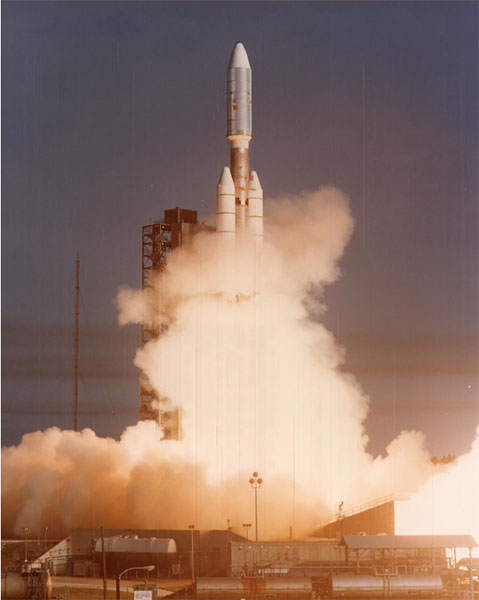
Over the past 25 years, humanity's robotic probes have reached unprecedented places. Voyager 1 became the first spacecraft to enter interstellar space in 2012, while the Parker Solar Probe flew closer to the Sun than any previous mission.
The New Horizons spacecraft flew past Pluto in 2015, and numerous other missions—from Japan's Hayabusa to NASA's OSIRIS-REx—have brought samples from asteroids back to Earth.
The James Webb Telescope looked deepest into the early universe
On December 25, 2021, the James Webb Space Telescope (JWST) was launched into space, becoming the most powerful observatory ever built. From a position approximately 1.6 million kilometers from Earth, the JWST has gazed deep into the early universe, studied the atmospheres of exoplanets, observed familiar celestial bodies in our solar system, and produced spectacular images never before seen.
With 100 times the power of Hubble, JWST is currently humanity's 'sharpest eyes' looking out into space — and it's only just beginning its journey.
Thousands of exoplanets have been discovered
Although the first exoplanets were discovered in the 1990s, it wasn't until the launch of the Kepler telescope in 2009 that the era of exoplanet hunting truly exploded. In nearly a decade of operation, Kepler has discovered more than 2,600 exoplanets, proving that planets are common in our galaxy.
After Kepler ceased operations in 2018, new generations of telescopes like TESS and JWST continued to expand this list. By 2025, humanity will have confirmed approximately 6,000 exoplanets — including worlds with metallic rain, potentially habitable planets, and even 'rogue' planets not belonging to any star system.
Earth Science
Climate change can be attributed to weather disasters
Scientists have long known that burning fossil fuels is warming the Earth and increasing extreme weather events. However, it wasn't until 2004 that they first identified the severity of a specific disaster—the deadly heatwave in Europe in 2003—that was directly linked to climate change.
From there, the field of 'climate attribution' emerged, helping to separate the role of humans in complex climate changes. Today, scientists can demonstrate that climate change increases the probability and intensity of disasters such as the 2019 European heatwave, the extreme rainfall of Hurricane Harvey, or the drought conditions that contributed to the large wildfires in Los Angeles in 2025.
The deep ocean reveals the origins of life
In 2000, scientists discovered Lost City—a hydrothermal vent system at the bottom of the ocean, similar to the environment where life may have originated on early Earth. Since then, humans have discovered more underwater mountains, bizarre seabed ecosystems, and countless previously unknown organisms, including the first recorded animal to lay eggs at a hydrothermal vent.
Archaeology & Paleontology
Lidar helps uncover forgotten archaeological treasures
Lidar is a technology that uses lasers to create accurate 3D maps. Over the past two decades, lidar has become increasingly popular and revolutionized archaeology. Thanks to it, scientists have discovered hundreds of ancient settlements once hidden by the jungles of Central America and the Amazon, and revealed new structures at famous sites like Angkor Wat.
Polar exploration ships rediscovered after more than a century
Three historic ships—HMS Erebus, HMS Terror, and Endurance—left behind in the ice of the Arctic and Antarctic, were discovered between 2014 and 2022, respectively. These findings reflect a significant leap forward in polar exploration, underwater archaeology, and especially the role of the generational knowledge passed down from the indigenous Inuit communities.
The human family tree has added many new branches
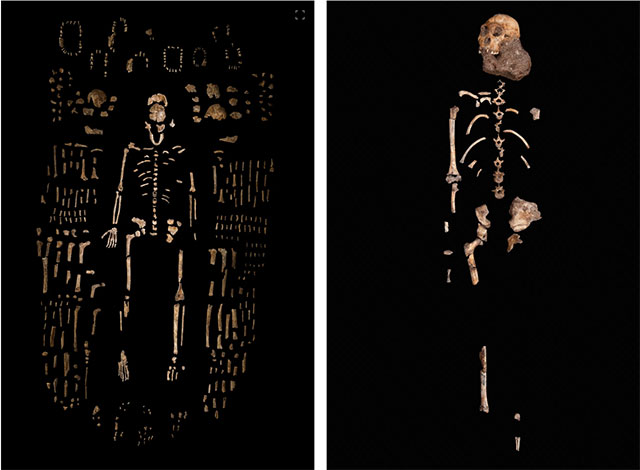
Although Homo sapiens is the only surviving human species, many of our extinct relatives have been discovered in the last 25 years. Homo floresiensis — the 'hobbit' — lived about 50,000 years ago, and along with Australopithecus sediba and Homo naledi, have helped scientists better understand the complex evolutionary process of humankind.
Ancient DNA is rewriting history
Techniques for extracting ancient DNA, perfected over the past 25 years, have helped discover the Denisovans, a hybrid of Neanderthals and Denisovans, as well as reconstruct their history of migration, interbreeding, and even the spread of diseases in the past.
Dinosaur feathers discovered
The discovery of dinosaur soft tissue and feathers has confirmed the hypothesis that many dinosaur species, including Tyrannosaurus rex, may have possessed feathers, shattering the decades-old image of 'scaly-skinned dinosaurs'.
The Ice Age mummy is perfectly preserved
The melting permafrost has revealed nearly perfectly preserved prehistoric animal mummies, from 40,000-year-old mammoths to 28,000-year-old cave lion cubs. Remarkably, a species of nematode frozen for 46,000 years has been revived — perhaps the most impressive 'hibernation' ever recorded.
The major hypotheses, if confirmed
The ninth planet of the Solar System
Since 2016, astronomers have suspected the existence of a giant planet located 20 times farther from the Sun than Neptune. If discovered, 'Planet Nine' would both explain unusual orbits and hold special symbolic significance — because the person who proposed the hypothesis was also the one who contributed to 'degrading' Pluto.
Google's 'quantum dominance' claim
In 2019, Google claimed to have achieved quantum supremacy when its Sycamore quantum computer performed a task in 200 seconds that a classical supercomputer would have taken 10,000 years to solve. This claim remains controversial, and history will be the final judge.
Dark energy may not be constant
New data from the DESI project suggests that the expansion of the universe may be slowing down, indicating that dark energy is not a constant — a development that could shake the foundations of modern cosmological models.
New treatments for neurological diseases
New therapies targeting amyloid plaques offer hope for Alzheimer's disease, while vaccines targeting the Epstein-Barr virus are being tested to prevent multiple sclerosis.
Potential extraterrestrial biosignatures
The findings of phosphine on Venus, biomarkers on exoplanets, and potential evidence of ancient microorganisms on Mars are not conclusive evidence of extraterrestrial life, but they suggest that the search is increasingly based on empirical data rather than speculation.
What will the next 25 years be like?
No one knows for sure how far science will take humanity in the next 25 years. But as Jennifer Doudna observes, most major breakthroughs originate from basic research, not with an immediate application in mind.
The biggest challenge is getting these tools to the people who need them most.
Final Thoughts
Understanding the biggest scientific breakthroughs of the last 25 years —— and some intriguing mysteries to look forward to makes it easier to evaluate the information and apply the most relevant recommendations. Focus on the key points above and verify details that may change over time.
FAQ
What is the biggest scientific breakthroughs of the last 25 years —— and some intriguing mysteries to look forward to?
Explore the biggest scientific breakthroughs of the last 25 years —— and some.
What key points does this article cover?
The article focuses on Life Sciences, Decoding the human genome and the emergence of synthetic life, CRISPR: The gene editing revolution, with practical explanations and examples.
How can you use this information in practice?
Use the explanations to compare options, verify important details, and make a more informed decision. Apply the recommendations that best match your goals and situation.
Related Articles
 Scientific Breakthroughs in 2025 That Could Change Everything8 minutes read
 How Modern Tech Has Made Life Easier7 minutes read
 The 9 Biggest Mysteries of Modern Physics Make Scientists Headaches7 minutes read
 The Top 6 Biggest Mysteries Yet to Be Deciphered by the Ancient6 minutes read
 11 Mysterious Ancient Buildings in the World That Challenge9 minutes read
 How Will VR Change Computers Moving Forward7 minutes read
Reader Comments 0
Sign in with email or Google to join the discussion.