Table of Contents
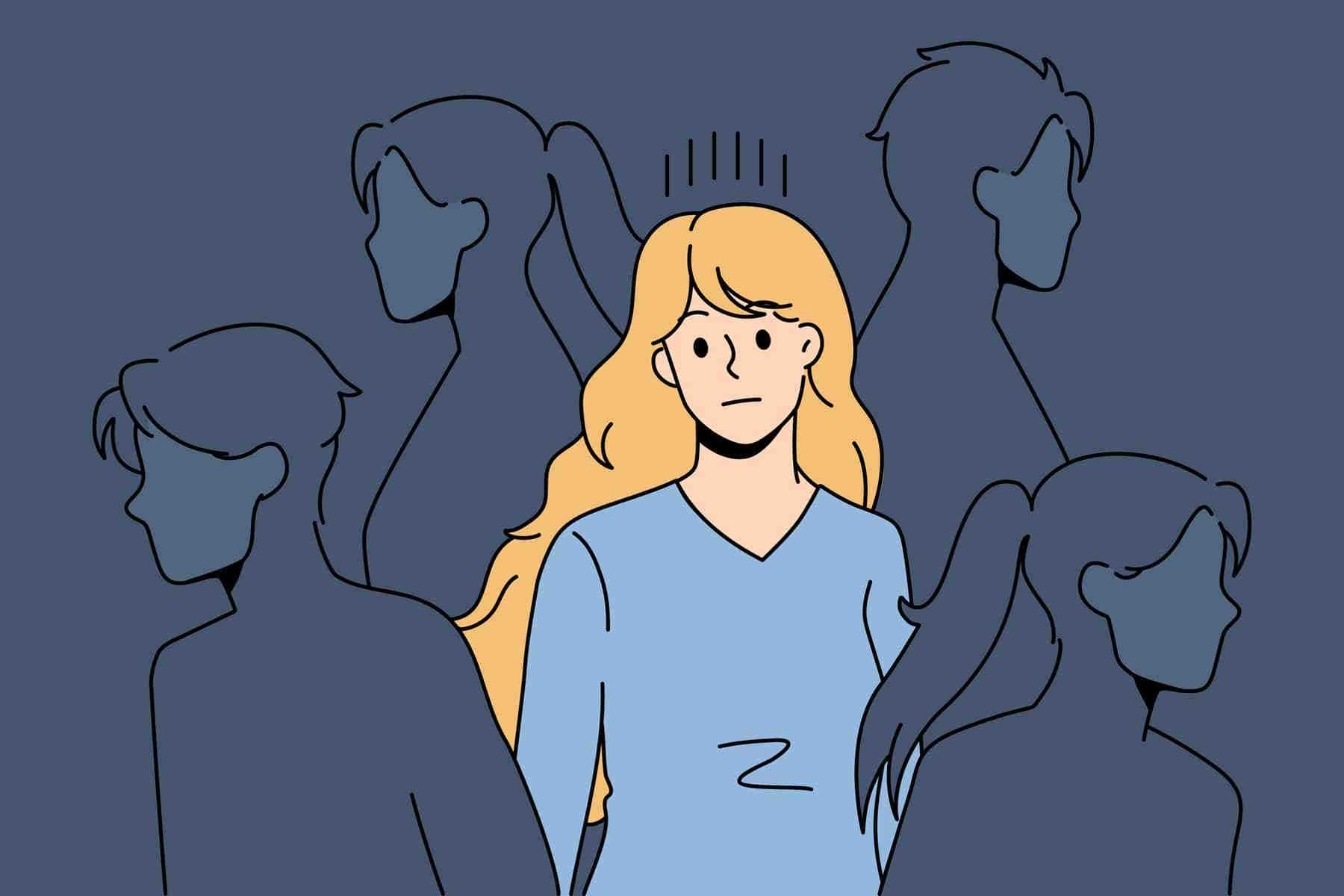
Have you ever felt out of place at a party or deeply misunderstood by your colleagues, friends or partners? Are you sociable but still feel lonely in a crowd?
Have you ever felt out of place at a party or deeply misunderstood by your colleagues, friends or partners? Are you sociable but still feel lonely in a crowd? You are not alone because many people feel the same way.

Psychoanalyst Carl Jung said that ' Loneliness does not come from not having anyone around, but from not being able to communicate what seems important to you .' This could be due to shyness or social skills. But even an individual with many social and communication skills may not be able to have a meaningful exchange when there is no one willing to listen and able to talk. The experience of feeling isolated and alone in space & relationships – when you have the necessary skills but no one to share them with – is called perceived loneliness. What is this phenomenon? Let's find out together!
What is loneliness and social isolation?
First, social isolation is not necessarily a precursor to loneliness. For example, note that loneliness itself is not synonymous with isolation. You can be absent from social gatherings without experiencing loneliness. While previous notions have linked loneliness to objective social isolation, depression, introversion, or poor social skills, recent research has demonstrated that such characteristics may not be true.
Second, sociable people also feel lonely when they are surrounded by people. But even as we try to avoid making social isolation the central focus of definitions and explanations of loneliness, the social aspect of loneliness continues to be emphasized in psychology.
What is cognitive loneliness?
Cognitive isolation is the inability to share the richer mental aspects of one's life, beyond the one-way sharing of thoughts and ideas. Cognitive loneliness is closely tied to our " Cognitive abilities " and " Intellectual endeavors ," including our desire to play with ideas with others and engage in conversations about different forms of creativity. A musician, a composer, an educator who enjoys comparing notes on teaching philosophy, a clinician who wants to discuss difficult psychological questions, or a researcher excited about the early findings of a new project may feel " All dressed up and nowhere to go " when their topic of interest is not being addressed or responded to by others who do not share their interests or backgrounds.
This is not to say that cognitive connection with others is the only antidote to this kind of loneliness. Everyone has thoughts, stories and experiences to share, and both as a person and as a support professional. But not everyone in life is willing and able to share their thoughts in response to the thoughts of others. Therefore, a like-minded person, or someone who " Understands " us, will contribute greatly to dispelling this particular loneliness.

Ultimately, being able to talk about the things that matter most to you means you are no longer alone. You can be seen and known for who you really are. The 'dance' of conversation is key. Having a partner who is willing to be there for you along the way and knows some of the 'dances,' or is interested in learning some new ones, can help alleviate this loneliness.
FAQ
What should you know about if you are sociable but still feel lonely, you are not alone?
In practical terms, have you ever felt out of place at a party or deeply misunderstood by your colleagues, friends or partners? Are you sociable but still feel lonely in a crowd.
Why does if you are sociable but still feel lonely, you are not alone matter?
The article highlights that you are not alone because many people feel the same way.
What is the main takeaway?
The main takeaway is that second, sociable people also feel lonely when they are surrounded by people.
Related Articles
 When Feeling Lonely and Lost, Remember These 12 Things Carefully8 minutes read
 The Good Stt, the Mood for Those Who Are Lonely15 minutes read
 What Makes Us Feel Lonely: Loneliness9 minutes read
 Sad Pictures: Wallpaper for Lonely People3 minutes read
 Why the More Friends We Feel the More Lonely9 minutes read
 These Stt or Talk About Betrayal in Love: Stt About Love10 minutes read
Reader Comments 0
Sign in with email or Google to join the discussion.