Table of Contents
This updated guide examines Click: How to Remove the Popup Ads in Avira Antivir and organizes the essential facts, background, and practical takeaways in clear American English.
Method 1of 2:
Using Avira Settings
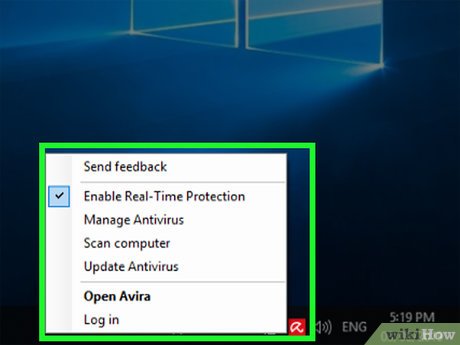 Right-click the Avira icon. You'll find this umbrella-shaped icon in the bottom-left corner of your Windows computer's desktop, though you may first have to click ^ here to view it.
- On a Mac, click the Avira logo in the top-right corner of the screen.
- If your computer doesn't have a right mouse button, use two fingers to click or tap the trackpad, or press the far-right side of the trackpad button in lieu of right-clicking.
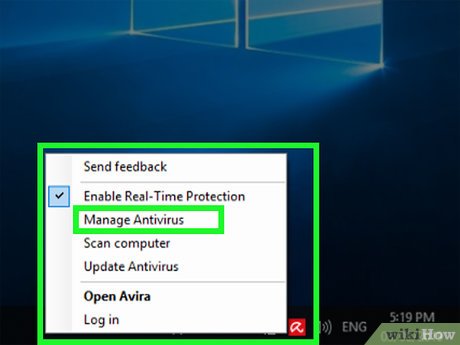 ClickManage Antivirus. It's in the pop-up (Windows) or drop-down (Mac) window. Doing so will open the Avira control panel.
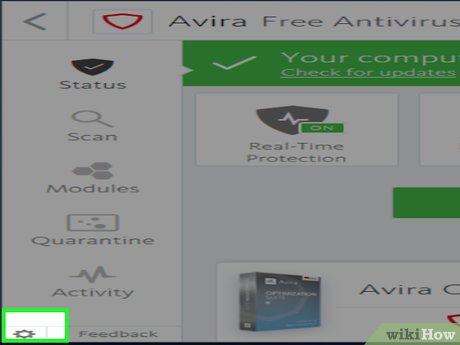 Click the "Settings" gear. This icon is in the bottom-left corner of the window.
 Click theGeneraltab. It's on the left side of the window.
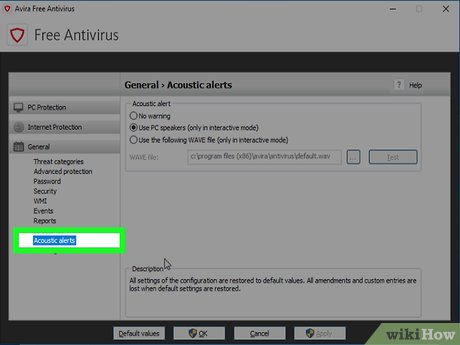 ClickAcoustic alerts. You'll find this below the General box.
 Check the "No warning" box. It's near the top of the window.
 ClickWarnings. This tab is on the left side of the window.
 Uncheck the "Show notice if the virus definition file is out of date" box. It's at the top of the window.
 ClickApply, then clickOK. On Windows, you'll click Yes when prompted before clicking OK .
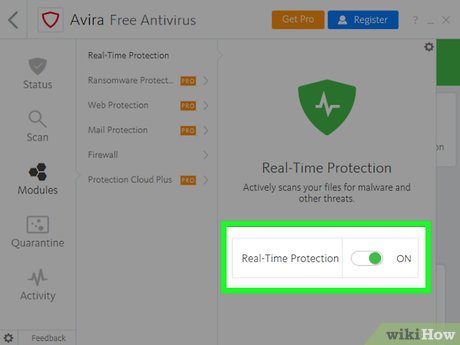 Disable real-time scanning. Click the Avira icon, then click the Real-Time Scanning bar and click the On slider to turn it off. This will turn off Avira's constant scanning.
- On a Mac, click Open Avira in the drop-down menu before clicking the Real-Time Scanning bar.
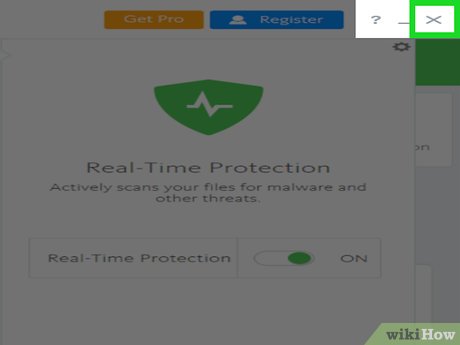 Close the Avira window. You should no longer receive the bulk of Avira's pop-ups, though you will see a pop-up reminding you to upgrade about once a day when logging onto your computer.
Method 2of 2:
Using the Local Security Policy Tool
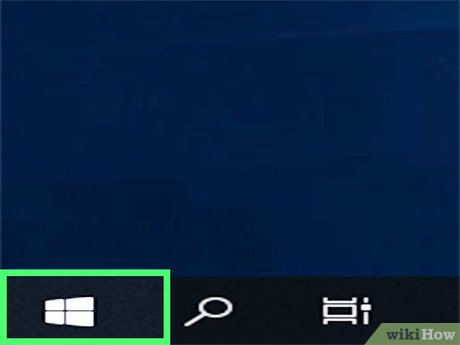 Open Start
 . Click the Windows logo in the bottom-left corner of the screen. The Local Security Policy tool can block most of Avira's pop-ups.[1]
- This option is only available on Windows Professional edition. If you have Windows Home edition, you won't be able to use the Local Security Policy tool.
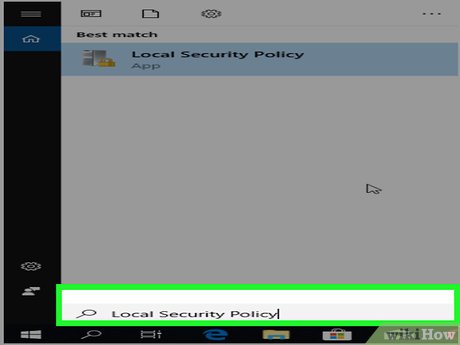 Typelocal security policyinto Start. This will search your computer for the Local Security Policy program.
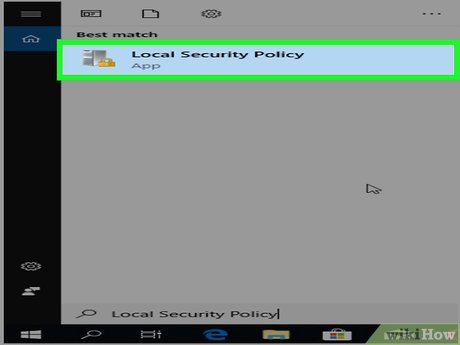 ClickLocal Security Policy. It should be at the top of the Start window. Doing so will open the Local Security Policy window.
- If this doesn't work, type insecpol.mscand click the secpol.msc option at the top of the Start window.
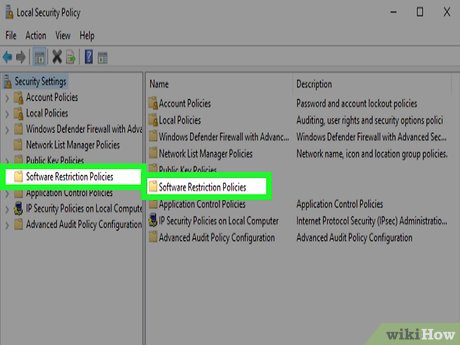 ClickSoftware Restriction Policies. It's a folder on the left side of the window.
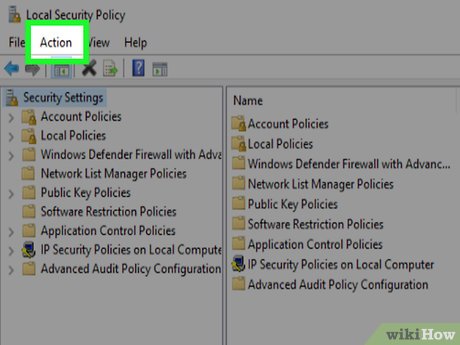 ClickAction. This tab is at the top of the window. A drop-down menu will appear.
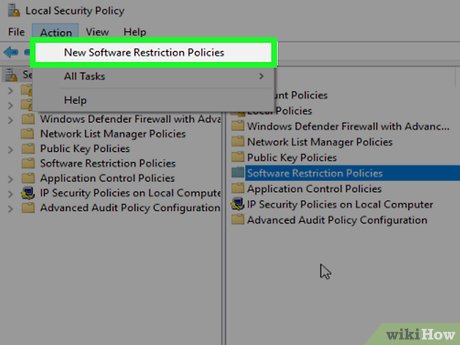 ClickNew Software Restriction Policy. This option should be in the Action drop-down menu. Doing so will prompt a few options to appear in the box that's on the right side of the window.
- You can also right-click the Software Restriction Policies folder and then click New Software Restriction Policy in the drop-down menu.
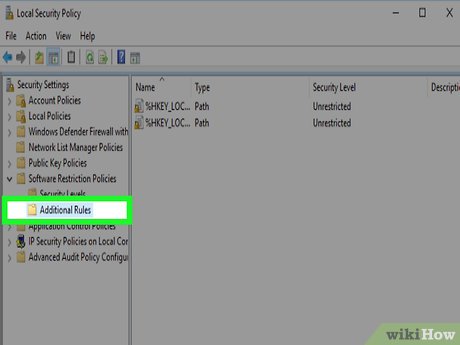 Double-clickAdditional Rules. It's a folder on the right side of the window.
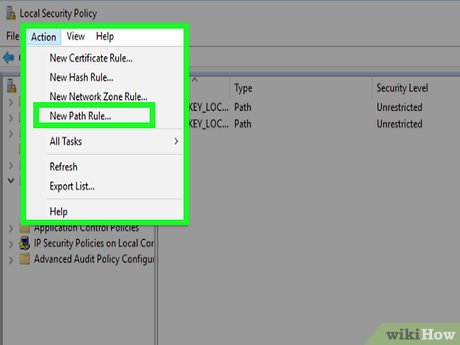 ClickAction, then clickNew Path Rule…. You should see this option near the bottom of the Action menu. Doing so opens a new window.
- You can also right-click the right side of the window and then click New Path Rule… in the drop-down menu.
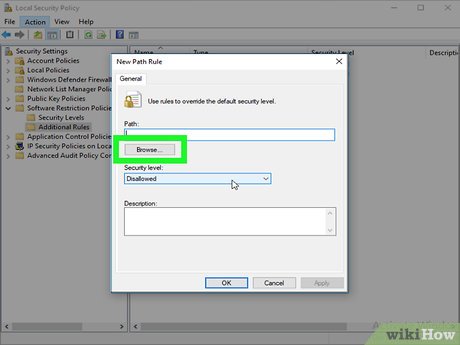 ClickBrowse…. It's below the "Path" text box. A window where you can search for the Avira folder will open.
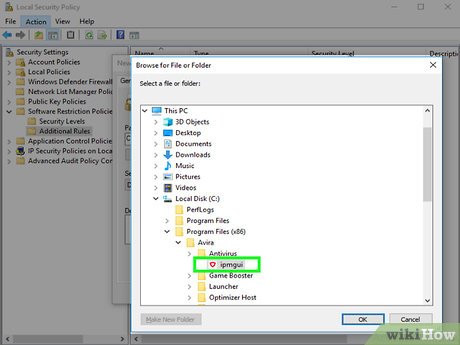 Go to the Avira folder and select the notifications file. Click This PC , click your hard drive's name, click Program Files (x86) , click Avira , click AntiVir Desktop , and double-click the ipmgui.exe file.
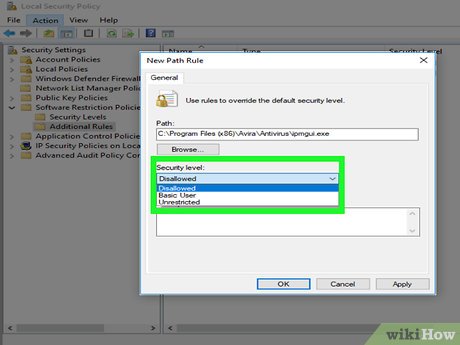 Make sure that the security level is set to "Disallowed". If you see anything else below the "Security level" heading, click the drop-down box below it and select Disallowed before proceeding.
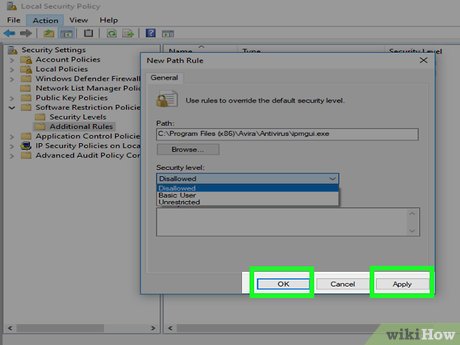 ClickApply, then clickOK. Both options are at the bottom of the window. Doing so will block Avira's notifications on your computer.
FAQ
What is Click: How to Remove the Popup Ads in Avira Antivir about?
It provides a structured overview of click, explains the main context, and highlights practical takeaways for readers.
Why does this topic matter?
Understanding the main concepts helps readers evaluate the issue, avoid common mistakes, and make better-informed decisions.
How should readers use this information?
Use the guidance as a practical starting point, confirm details that may have changed, and follow current product, safety, or security recommendations.
Related Articles
 Avira Antivir -- Protect Your Computer in the Simplest Way5 minutes read
 Top 5 Free Antivirus Software of 20113 minutes read
 How to Remove Fake Popup Window 'Update Flash Player' or 'Update11 minutes read
 How to Uninstall Avira Connect4 minutes read
 Offers for Copyright of Avira Prime Antivirus Software, Priced at3 minutes read
 Div: How to Create a Simple CSS Popup in Your Web Page4 minutes read
Reader Comments 0
Sign in with email or Google to join the discussion.