Table of Contents
This updated guide explains how to Enable / Disable Automatic Restart When BSOD Error Is through clear steps, practical examples, and important checks that help prevent common errors.
If you dislike this automatic reboot behavior and want the system to show a BSOD error until you reboot the system manually, you can turn off the automatic restart feature when you encounter a BSOD error in Windows.. How to do the following.
Turn on / Off the Automatic Restart Feature When Encountering BSOD Error from Startup & Recovery
Advanced System Properties has a dedicated option to quickly enable or disable automatic restart of Windows. All you have to do is convert a checkbox to done.
1. First, open the Start menu, search for "View advanced system settings" and click the result to open the Advanced System Properties window. Alternatively, you can use the Run command "SystemPropertiesAdvanced. exe".
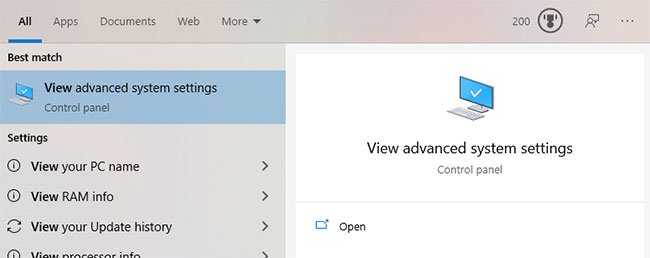 Open the Advanced System Properties window
2. In the System Properties window, click the Settings button in the Startup and Recovery section .
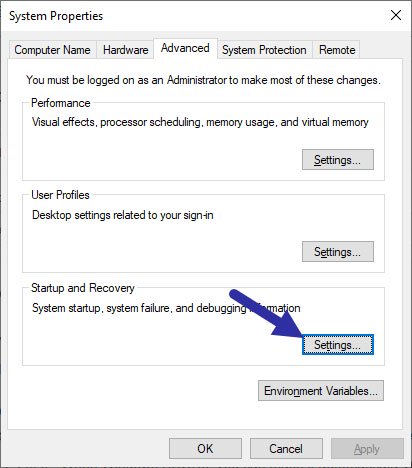 Click the Settings button in the Startup and Recovery section
3. Now, clear the Automatically restart checkbox to turn off automatic restart. If you may need to enable automatic reboot, select the checkbox again. Click the OK button to save changes.
 Clear the Automatically restart checkbox
From now on, depending on your configuration, Windows will automatically restart or not.
Enable / Disable Automatic Restart When Encountering BSOD Error Via Command Prompt
Alternatively, you can also use a simple command to turn off the automatic restart. Of course, you can also use this same command with a small change to activate the function.
1. First, open Command Prompt with admin rights.
2. In the Command Prompt window, execute the command below as needed.
- To disable:
wmic RecoverOS set AutoReboot = False
- To activate (this is the default option):
wmic RecoverOS set AutoReboot = True
As soon as you execute the command, the function will be changed immediately. No need to reboot.
FAQ
What is the easiest way to Enable / Disable Automatic Restart When BSOD Error Is?
Start with the requirements in this guide, then follow each step in order. Check the result after every major change so problems are easier to identify.
Can beginners follow these instructions?
Yes. The process is organized into practical steps, and you can repeat any step before moving forward.
What should I check if the method does not work?
Confirm your software or device version, permissions, settings, file format, and internet connection when the task depends on online services.
Related Articles
 Restart: How to Disable Automatic Reboot After Windows Update3 minutes read
 How to Find the Cause of Blue Screen Death and Minidump Errors?8 minutes read
 How to Fix Automatic Repair Error in Windows 105 minutes read
 Summary of Some Ways to Fix Windows 10 Crash, BSOD Error and13 minutes read
 How to Enable // Disable Automatic Login in Debian 105 minutes read
 How to Fix BSOD Memory Management Error7 minutes read
Reader Comments 0
Sign in with email or Google to join the discussion.