Table of Contents
Today, the four-eyed antelope is on the brink of extinction - but how exactly did it get there?
Four-Eyed Antelope Overview
In a small patch of land near the Kenya-Somalia border, the world's rarest antelope, a strange-looking 'four-eyed' animal called the hirola, once roamed the grasslands here in its thousands. Today, the four-eyed antelope is on the brink of extinction – but how exactly did it get there?
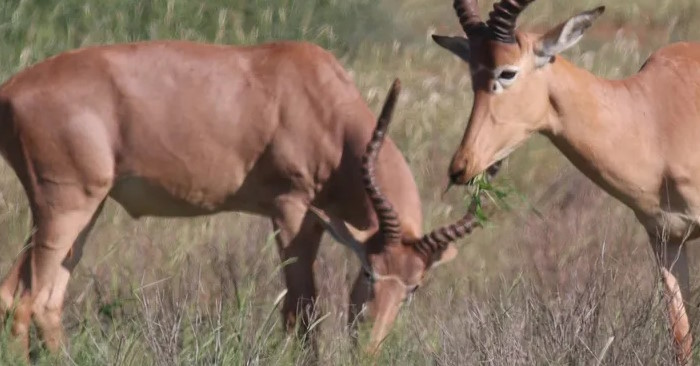
Officially known as Beatragus hunteri, these strange members of the Bovidae family are also known as 'four-eyed antelopes' because from a distance, they appear to have four eyes. However, take a closer look and you'll see that they aren't eyes at all; the dark spots below their eyes are actually what are called preorbital glands. Found on many other bovids like sheep and goats, as well as cervids (true deer), hirola secrete a substance that helps mark their territory.
The four-eyed antelope 's more common name, hirola, comes from the Somali word Arawla, which roughly describes the golden-brown color of its coat. Particularly among pastoralist communities in Somalia, the hirola is considered a good omen.
Unfortunately, these auspicious signs have all but disappeared. In the 1970s, the hirola population numbered around 15,000. Today, that number has plummeted to less than 500. There are no captive populations of hirola left either; the small wild population is the only remaining population.

According to the Hirola Conservation Program (HCP), the decline began in the 1980s with an outbreak of rinderpest. Also known as cattle cholera, this highly contagious viral disease is capable of infecting hirola and other wild even-toed ungulates, as well as domestic livestock.
The virus causes symptoms such as fever, mouth lesions, discharge from the eyes and nose, diarrhea and dehydration, and can lead to death in just 10 to 15 days. Although considered the deadliest disease in history for livestock, it also devastated the hirola, wiping out 85 to 90 percent of the population.
Rheumatic fever has since been eradicated – marking the first (non-human) viral disease to be completely eradicated, and only the second to be completely eradicated, after smallpox – but the four-eyed antelope population is still struggling to recover.
Although other factors such as predation and livestock competition are thought to be involved, this lack of recovery is largely due to the degradation of the Hirola's grassland habitat, which has been increasingly replaced by trees over the past 30 years. As a result, the antelope has been restricted to less than 5% of its native range, significantly reducing its access to space and food.
To address this problem, conservationists like HCP have worked with local communities and governments to create and protect more than 404,686 hectares (1 million acres) of new habitat for Hirola antelopes, as well as restore grasslands in areas near their habitat.
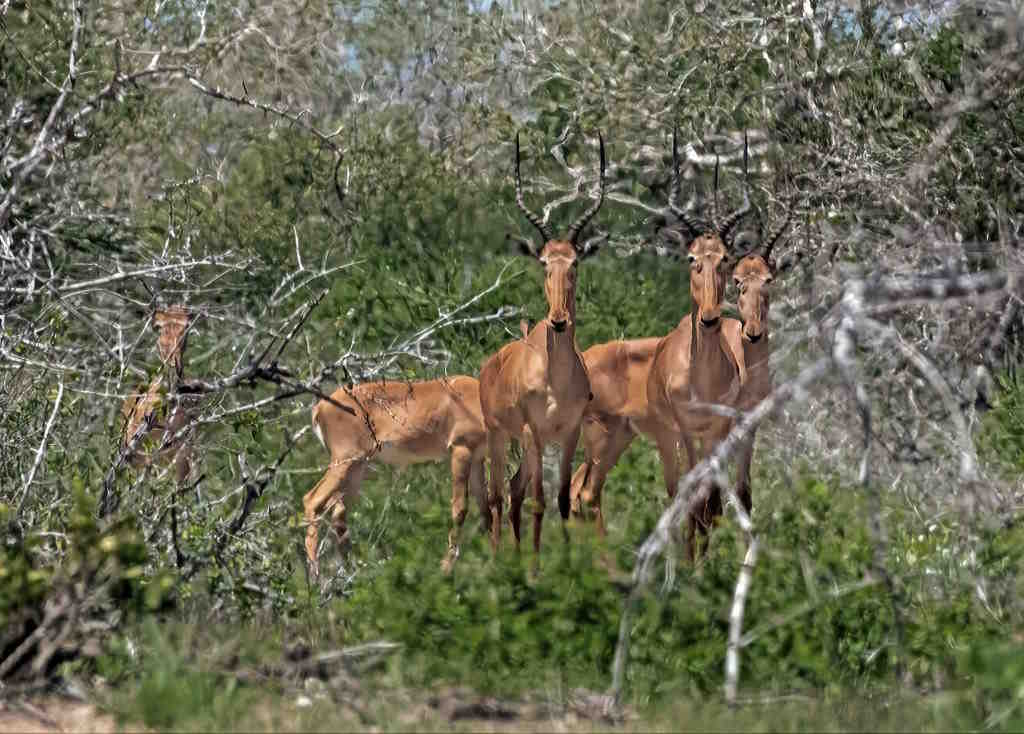
There is still a long way to go before the Hirola antelope can reach its former numbers - but with continued care and conservation efforts, you can hope that they will be 'resurrected'.
FAQ
What should you know about the four-eyed antelope is the world's most endangered antelope?
In practical terms, today, the four-eyed antelope is on the brink of extinction - but how exactly did it get there.
Why does the four-eyed antelope is the world's most endangered antelope matter?
The article highlights that today, the four-eyed antelope is on the brink of extinction – but how exactly did it get there.
What is the main takeaway?
The main takeaway is that the four-eyed antelope 's more common name , hirola, comes from the Somali word Arawla, which roughly describes the golden-brown color of its coat.
Related Articles
 New Zealand Yellow-eyed Penguins Face Extinction3 minutes read
 Anime World Simulator: Full Latest Giftcode and How to Redeem Code11 minutes read
 The World's 10 Most Endangered Animals2 minutes read
 The 10 Fastest Animals on Earth3 minutes read
 Science Created a Shocking Red-eye Mutant Bee4 minutes read
 Solitary Jaguar Dared to Plunge into the Bait of Wild Dogs2 minutes read
Reader Comments 0
Sign in with email or Google to join the discussion.