Table of Contents
This guide provides a practical overview of Familiarize Yourself with PivotTable Reports, including its main features, benefits, limitations, and important considerations.
To gain a thorough understanding of PivotTable reports, learn the following:
1. What are PivotTable reports?
- PivotTable reports are the most useful feature of Excel that helps you statistic data according to many different criteria. From there, you save time and effort to produce a detailed report describing the above data.
- A PivotTable reports will turn all data into brief reports that help you determine the information and direction you need for the future.
2. Create a PivotTable reports
2.1 Review the source data.

Before creating a PivotTable report, you should review the source data to avoid unnecessary errors.
- The title in the PivotTable report will be taken from the title names of the columns in the data table.
- There should be no blank columns in the source data table to create a PivotTable report.
2.2 Create a PivotTable report dialog box.
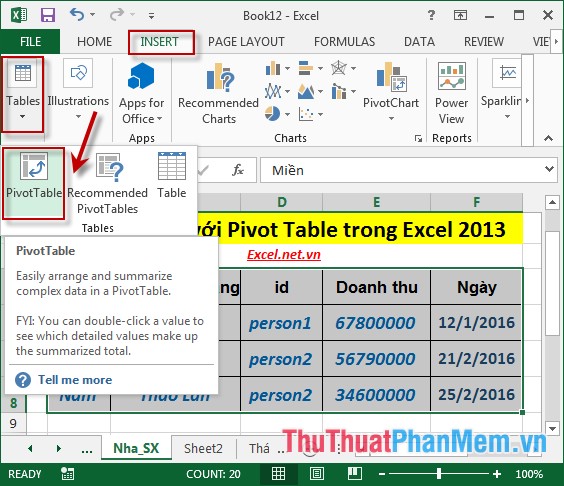
Step 1: Select the data to create a report -> Insert -> Tables -> Pivot Table:
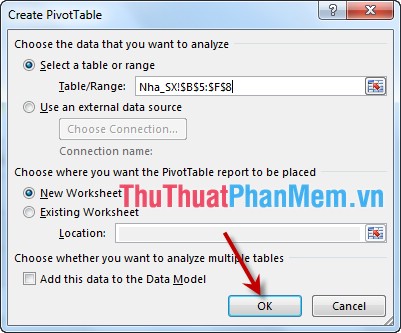
Step 2: After selecting the dialog box appears including the following options:
- Select a table or range: Select the data area to create a report.
- Choose where you want the PivotTable report to be placed: Choose where to save the report:
+ New Worksheet: Save in a new sheet.
+ Existing Worsheet: Save the report in the current sheet.
- After making your selection click OK:
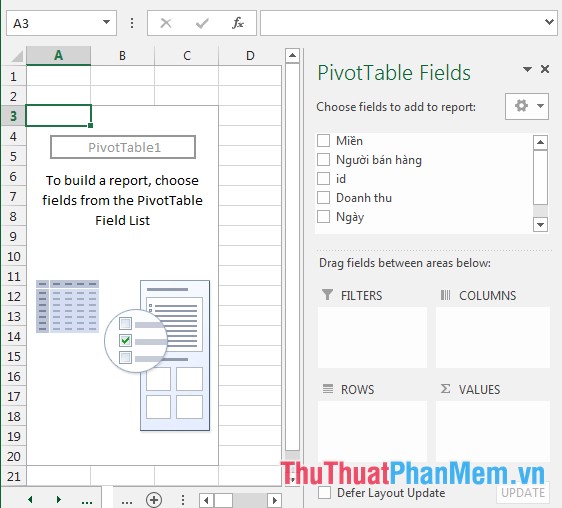
Step 3: After selecting OK the report table appears but there is no data:
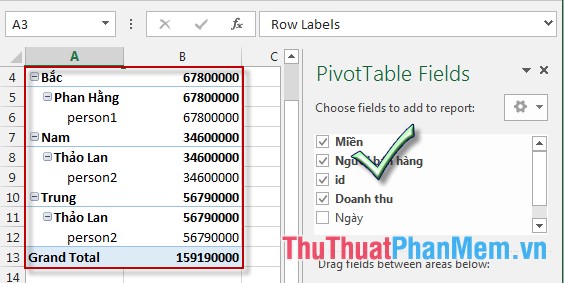
Step 4: Check the name of the fields to create a report -> be PivotTable report:
3. Basic PivotTable report.
- PivotTable report includes 2 main parts:

+ Layout area for the report: An area that displays all the information of the report.
+ PivotTable Field List : This is where the column headings of source data you want to display on the report and you can optionally select the fields to display on the report.
- In case you want the PivotTable Field List to disappear -> click on the outside of the report, want the report to appear again -> click on the area inside the report layout.
Above is a detailed guide on how to create PivotTable reports in Excel 2013.
Good luck!
FAQ
What should I know about Familiarize Yourself with PivotTable Reports?
Focus on the key features, requirements, limitations, and practical use cases explained in this guide.
How do I get the best results with Familiarize Yourself with PivotTable Reports?
Follow the recommended steps, use current software or information, confirm compatibility, and review settings before major changes.
Are there any risks or limitations?
Potential limitations depend on compatibility, data quality, cost, privacy, support, and how the product or method is used.
Related Articles
 A PivotTable: What It Is and How to Use PivotTable in Excel4 minutes read
 Calculate Data in a PivotTable in Excel3 minutes read
 Filter PivotTable Report Data in Excel5 minutes read
 How to Use PivotTable in Excel — Use PivotTable5 minutes read
 Use VBA in Excel to Create and Repair Pivottable: Pivotfields7 minutes read
 4 Advanced Pivottable Functions for Excel Data Analysis8 minutes read
Reader Comments 0
Sign in with email or Google to join the discussion.