Table of Contents
New research shows that microplastics are present in fruits and vegetables consumed daily. Here are some everyday foods that contain microplastics that you may not know about.
New research shows that microplastics are present in fruits and vegetables consumed daily. Here are some everyday foods that contain microplastics that you may not know about.
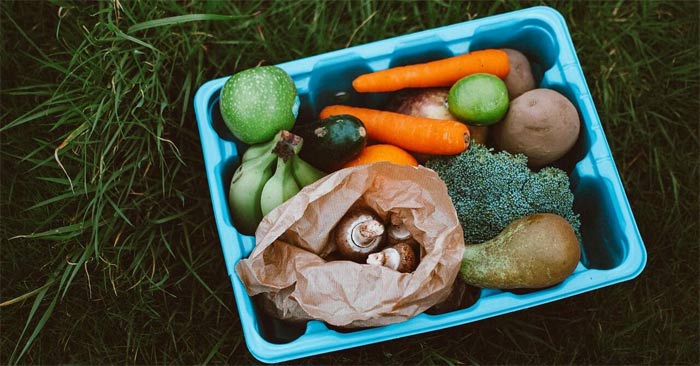
Foods containing microplastics are eaten every day
Fruits and vegetables
Researchers at the University of Catania, Italy, have discovered microplastic particles in fruits and vegetables such as carrots, lettuce, apples and pears.
Apples Were among the fruits with the highest levels of microplastics, with an average of 195,500 particles per gram, while pears Averaged Around 189,500 particles per gram. Broccoli and carrots Were found to be the most contaminated vegetables, with an average of more than 100,000 particles per gram.
Two previously published studies found that microplastics were entering the roots of lettuce and wheat plants. Nanoplastics were taken up by the roots. Fruits and vegetables can accumulate microplastics through absorption from water or soil contaminated with microplastics.
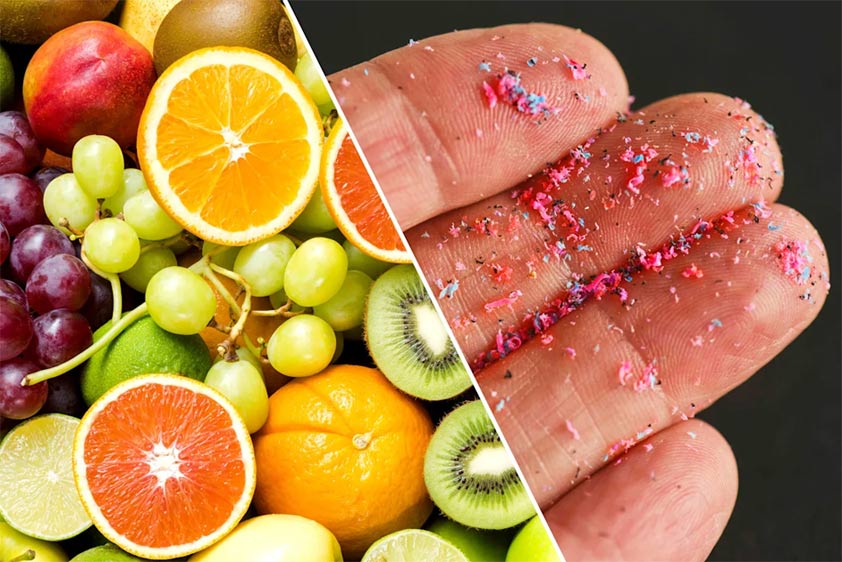
Salt
The Consumer Council of Hong Kong found microplastics in 20% of salt samples tested in April 2020. Between 114 and 17,200 milligrams of microplastics were found per kilogram of salt tested. Some samples even showed microplastics coming from disposable polypropylene (PP) packaging.
According to a 2018 study co-designed by Incheon National University, South Korea, and Greenpeace East Asia, more than 90% of 39 salt brands sampled from 21 countries were found to contain microplastics. Salt containing microplastics is still available in supermarkets, grocery stores, or online. Based on international research, people may be consuming about 20,000 microplastic particles per year with an average daily salt intake of 10 grams.
Mullet
Microplastic fragments were found in 60% of wild flathead mullet tested by the Education University of Hong Kong in 2018, with an average of 4.3 pieces per fish. One fish reportedly ate 80 pieces. More microplastic fragments were also found in saltwater and greyhead mullet purchased from various fish markets.
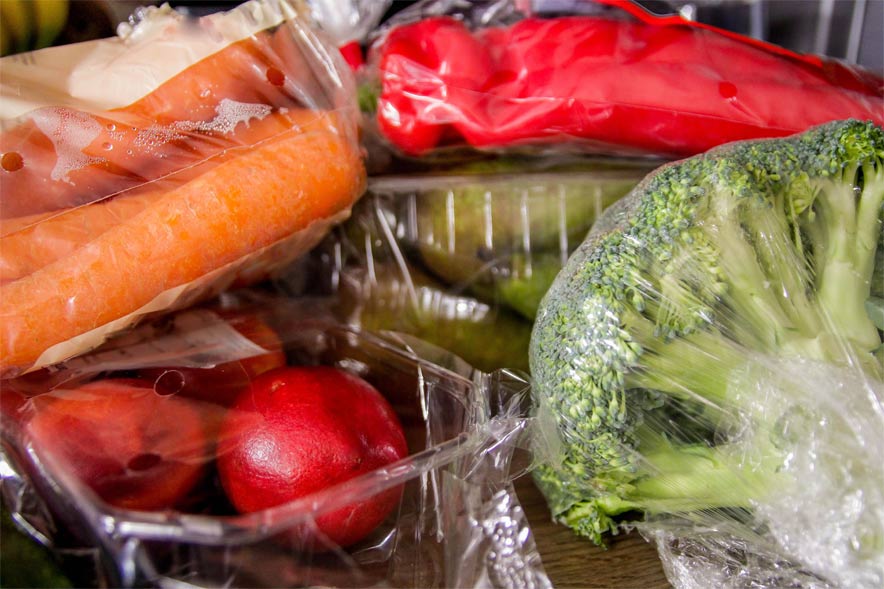
How does plastic enter the food chain?
Microplastics are small pieces of plastic less than 5mm long, mainly coming from our daily disposable plastic items, such as supermarket packaging, fruit packaging nets, bread packaging bags, etc. More than 112 tonnes of plastic packaging waste is discharged into the sea via Hong Kong every year. Disposable packaging has become one of the main sources of plastic pollution.
Microplastics enter the ocean because they are too small to be filtered or screened during wastewater treatment. Plastic waste does not dissolve in water but breaks down into smaller particles, which are often consumed by plankton and mollusks, and then move up the food chain.
Microplastics are harmful to aquatic organisms, for example, intestinal malformations in fish. Microplastics can contain additives that are toxic and harmful to humans; they can attach to persistent organic pollutants (POPs) such as pesticides and plasticizers, or conventional PE and PP. Whether we eat food contaminated with plastic or microplastics, our health is at risk.
Solutions to the global plastic crisis
Reduce plastic, limit the use of plastic packaging and refuse single-use plastic in daily life. Encourage chain stores to adopt plastic bottle deposit programs; provide plastic bottle collection options by creating plastic-free shopping areas.
FAQ
What should you know about everyday foods containing microplastics?
In practical terms, new research shows that microplastics are present in fruits and vegetables consumed daily. Here are some everyday foods that contain microplastics that you may not know about.
Why does everyday foods containing microplastics matter?
The article highlights that foods containing microplastics are eaten every day Fruits and vegetables Researchers at the University of Catania, Italy, have discovered microplastic particles in fruits and vegetables such as carrots, lettuce, apples.
What is the main takeaway?
The main takeaway is that salt containing microplastics is still available in supermarkets, grocery stores, or online.
Related Articles
 The Following Common Products Can Be Major Sources of Microplastics8 minutes read
 Microplastic Particles Found in Antarctic Snow for the First Time4 minutes read
 9 Types of Foods That Help You Improve Your Mood Quickly6 minutes read
 The Silent Impacts That Microplastics Can Have on the Brain5 minutes read
 Foods That Are Bad for Your Kidneys: Explained7 minutes read
 Foods High in Cholesterol: What Should Be Eaten? What Type Should7 minutes read
Reader Comments 0
Sign in with email or Google to join the discussion.