Table of Contents
The story of how black cats became a symbol of Halloween is truly terrifying. Here's how black cats became a Halloween staple.
The story of how black cats became a symbol of Halloween is truly terrifying. Here's How black cats became a Halloween staple.
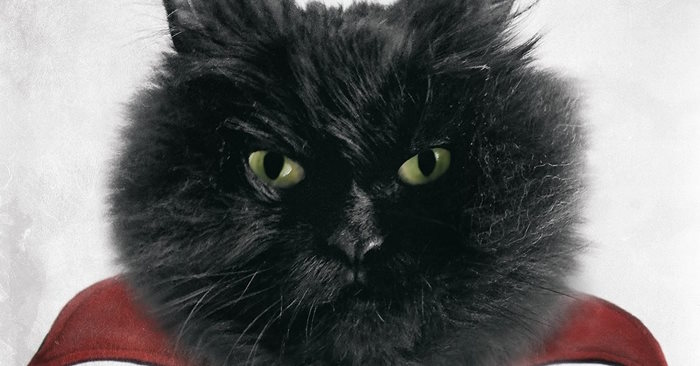
Halloween is the most anticipated spooky and scary festival of the year. During this festival, you will see evil witches, goblins, ghosts and other dark creatures haunting the space between the world of the living and the world of the dead. So why are cute black cats grouped with these hideous creatures? Did you know that cats are known to sneak into places where they are not allowed to go, also known as the underworld?
' It seems like cats have gotten a bad rap ,' says Meghan Henning, PhD, a professor of Christian origins at the University of Dayton in Ohio. In fact, the story of how black cats became one of Halloween's most famous symbols is incredibly creepy and convoluted, stemming from the holiday's early origins and cats' penchant for meddling.
What does a black cat symbolize?
' It depends on the culture you live in ,' says Henning. Many Asian cultures consider cats (regardless of color) to be symbols of good luck, while Welsh and Scottish folklore holds that a black cat appearing at your doorstep will bring health and prosperity.
' In England, black cats were considered lucky because they were thought to be better hunters, able to move quickly in the dark ,' says Henning. 'But Then black cats became associated with witches and evil spirits, and they became fierce. If a black cat crossed your path, it meant bad luck was coming your way .'
The origin of superstitions about black cats
It's a long and complicated story. ' For centuries, cats were symbols of the sacred ,' says Henning. ' But then, due to a series of unfortunate events that happened to cats, things turned dark. '
Here are some of the key moments in the black cat's rise and fall in fame:
Sacred Cats
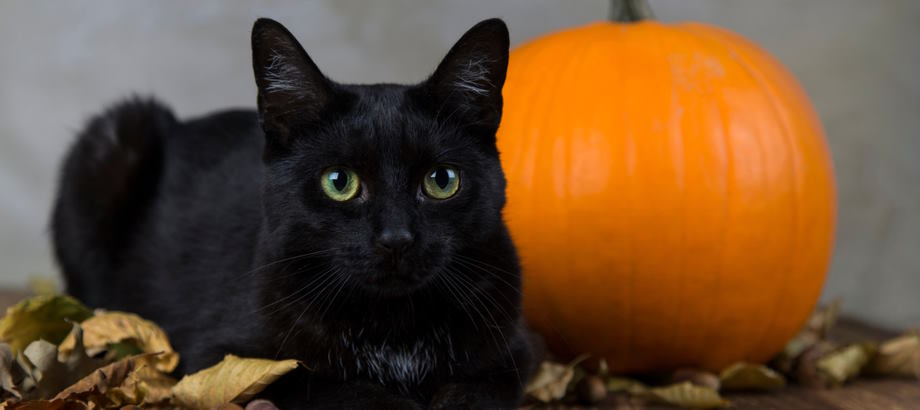
In ancient Egypt, black cats were not only loved, but also worshiped. Bastet, daughter of the sun god Ra, was often depicted as a cat and was believed to protect homes from evil spirits. In wealthy households, cats were treated like royalty, adorned with jewelry and immortalized in paintings and statues. When cats died, they were mummified in the hope that they would one day be reunited with their owners in the afterlife. And anyone who killed a cat was sentenced to death.
A magical assistant
In Greek mythology, we have Hecate, the goddess of magic, and she had a cat. The cat became Hecate's pet, helping her perform her spells and witchcraft.
Although Hecate was a relatively minor goddess, she played a large role in establishing cats' reputation as mystical creatures.
Celtic Sith Cat
Black cats played a central role in the Celtic-pagan harvest festival of Samhain (pronounced SOW-in or SAH-win). Like the earliest versions of Halloween, it was a night of feasting and fear, as the Celts believed it was the only night of the year when spirits could return from the world of the dead to the world of the living.
Some believed that spirits from the dark world would enter the bodies of black cats and steal their souls. And legend has it that a Celtic creature called the Sith Cat, which was said to resemble a large black cat with a white spot on its chest, was actually a witch transformed into a cat. Leaving a dish of milk for the Sith Cat on Samhain would bring good fortune for the year. But anyone who did not offer milk to the Sith Cat would be cursed.
' Over time, the association between witches and black cats and Halloween began to cement ,' Henning says.
Cats nearly extinct because of Pope's misconception
The real trouble didn't begin until 1233. " Shortly after Pope Gregory IX ascended the throne, he issued his first bull, 'Vox in Rama ,'" Henning says. " It was in response to rumors that there were many Satanists in Germany ."
At the time, the Church was on a crusade to eradicate heresy, and one of the Church's most aggressive inquisitors, Konrad von Marburg, reported that Luciferians in Germany were worshipping the devil in various forms, including as a black cat. " The devil that was supposedly being worshipped was a vague half-man, half-cat form, and there were stories of witches kissing the butt of a black cat ," Henning says. " You can see how that affected people, right? And it led to widespread persecution of black cats, and other cats as well. "
Although domestic cats aren't even mentioned in the Bible (much less associated with Satan) and Marburg was later found to have tortured people to extract confessions at will, his bizarre allegations had serious consequences. " Some say that cats were nearly exterminated in Europe, and that was part of the reason for the spread of the plague—because there were no cats to kill the rats ," Henning says.
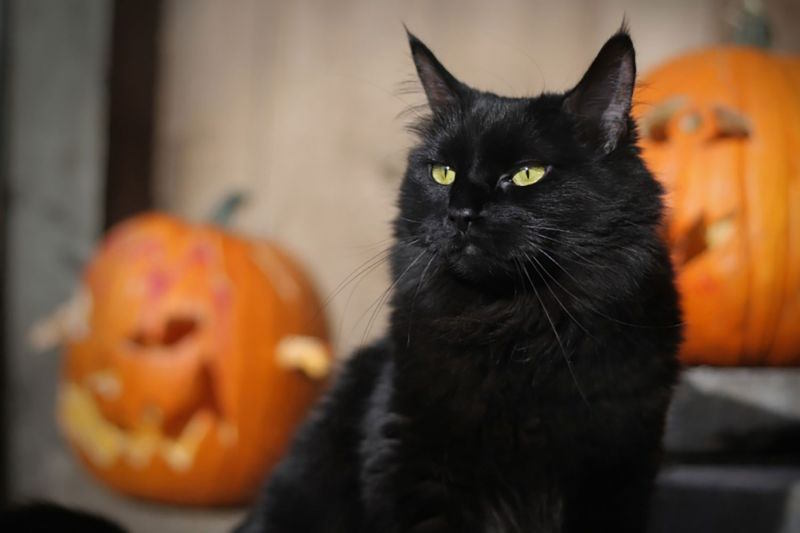
So how did black cats become a symbol of Halloween?
Although it seems to have originated with witches, the origins of Halloween are still quite obscure. However, there is a well-documented overlap between pagan and Christian festivals.
Originally called All Saints' Eve, it marks the day before All Saints' Day, a day the Catholic Church created to remember the dead. But its timing—All Saints' Day falls on November 1, so All Saints' Eve is October 31—means it overlaps with the pagan harvest festival of Samhain. And it seems some of those traditions have blended in.
" People think that on All Saints' Eve, the boundary between the other world and this world is very thin ," Henning says, "so it's especially easy for saints to intervene in your life. But if they can intervene, then so can demons and devils, and then they add in witches, and cats come in too."
FAQ
What should you know about how did black cats become a symbol of halloween?
In practical terms, the story of how black cats became a symbol of Halloween is truly terrifying. Here's how black cats became a Halloween staple.
Why does how did black cats become a symbol of halloween matter?
The article highlights that here's How black cats became a Halloween staple.
What is the main takeaway?
The main takeaway is that so how did black cats become a symbol of Halloween.
Related Articles
 How to Trim Super Simple Pumpkins to Decorate for Halloween Night3 minutes read
 Infographic - the Grrr Benefit of Cats!3 minutes read
 Top 10 Most Beautiful Cats in the World5 minutes read
 Unique and Impressive Halloween Cakes3 minutes read
 Halloween Wallpapers for Phones3 minutes read
 Suggest an Impressive Decoration for Halloween5 minutes read
Reader Comments 0
Sign in with email or Google to join the discussion.