Table of Contents
Ancient peoples may have been forgotten, but their cultural imprints quietly live on, shaping the world today.
Ancient peoples May have been forgotten, but their cultural imprints quietly live on, shaping the world today. Here are Some of those ancient peoples !
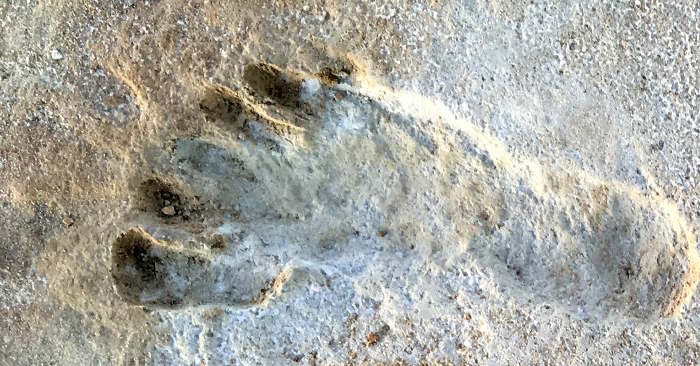
The Etruscans – The Hidden Architects of Rome
When you think of ancient Italy, Rome comes to mind first. But before the Romans built their empire, there were the Etruscans—a mysterious civilization that thrived in central Italy from about 900 to 300 BC. They weren't just neighbors to early Rome; they were teachers, trendsetters, and sometimes fierce rivals.
The Etruscans introduced to Rome the sophisticated urban planning, advanced engineering, and religious rituals that would later shape Roman society. Roads, drainage systems, and even the iconic triumphal arch may all have Etruscan origins.
Their influence extended beyond infrastructure. Symbols of power such as the fasces – a bundle of clubs with axes attached – originated with the Etruscans and later became symbols of Roman power as well as Western iconography. Although gradually absorbed by Rome, their art, language and religious rituals still survive as echoes on the walls of Roman temples and tomb frescoes. Essentially, the Etruscans quietly laid the foundations for one of the most famous civilizations in world history, even if most people today do not recognize their name.
The Sogdians – The Merchants Who Connected the World
Before global trade had acronyms like WTO or NAFTA, there were the Sogdians—the first entrepreneurial class of Central Asia. Thriving from the 4th to the 10th centuries, these Persian-speaking merchants turned the Silk Road into the superhighway of the ancient world. From China to Byzantium, their caravans carried silk, spices, glassware, and gossip with equal efficiency.
They conquered not by sword but by contract, becoming indispensable intermediaries between East and West. Sogdian cities like Samarkand and Bukhara were already international cultural crossroads long before the term was coined. Through the Sogdian network, Buddhism spread from India to China, and later Manichaeism and Islam followed similar paths. Their language even became the unofficial language of trade across Central Asia.
Eventually, the Sogdians were absorbed by larger empires, their cities fading into dust and legend. But their spirit of cultural exchange laid the foundations for a globalized economy.
The Minoans – The Seafarers Who Taught Europe to Dream
Before Greece gave us gods and geometry, Crete was home to the Minoans—a civilization so advanced it made its Bronze Age neighbors seem primitive.
Thriving from 2000 to 1400 BC, the Minoans built vast palaces with plumbing systems, multi-level architecture, and frescoes so vivid they are still visible today. Their palace center at Knossos was more than just a city—it was an architectural masterpiece, complete with storehouses, workshops, and winding corridors that may have inspired the myth of the Minotaur's labyrinth.
But their true genius lay at sea. The Minoans ruled the Aegean Sea through trade rather than war, exchanging olive oil, wine, and pottery across the Mediterranean. Their ships became floating cultural emissaries, spreading ideas that would later shape the Greek world—from artistic styles to navigation. Even the word 'Europe' is often associated with their mythology. Then, around 1450 BCE, a catastrophic volcanic eruption—possibly Thera (now Santorini)—devastated their society, leading to its decline. Yet echoes of their sophistication lived on, sowing the seeds of European civilization.
The Olmecs – The civilization that gave birth to civilization in the Americas
Before the Maya built temples or the Aztecs sacrificed their enemies, there were the Olmecs—the mysterious 'mother culture' of Central America. Thriving along what is now the Gulf Coast of Mexico between 1200 and 400 BC, the Olmecs had 'advanced civilization' before it cooled.
They built cities with ceremonial centers, complex hierarchies, and, most famously, colossal stone heads that still baffle archaeologists. Many of them weigh tens of tons and may represent ancient rulers or athletes. The Olmecs also pioneered innovations that became cultural cornerstones across Mesoamerica. They may have developed an early writing system, used a complex calendar, and played an early version of the Mesoamerican ballgame—a ceremonial blend of politics, religion, and sport.
Their influence was far-reaching, shaping the Mayan, Zapotec, and Aztec civilizations that followed. Though they disappeared more than two millennia ago, the Olmecs left behind a legacy etched into basalt and embedded in religion. Every pyramid, every hieroglyph, and every rubber ball 'bounced' through Mesoamerica's history echoes the people who started it all.
Scythians – Tattooed Horses – Lords of the Steppe
If Attila the Hun was the 'thunderbolt,' then the Scythians were the 'storm' that came before it. Long before the Mongols swept across Asia, the Scythians dominated the vast Eurasian steppe from around 900 to 200 BC with deadly grace. They were nomadic people—archers, horsemen, and artists—who saw war as both an art of survival and a performance.
Herodotus describes them as fierce warriors who drank the blood of their enemies, though that is probably more myth than fact. In reality, they were a sophisticated, mobile society, proficient in horseback combat centuries before anyone else. Their golden artifacts—finely crafted jewelry and weapons—reveal a people obsessed with beauty as much as with battle. Archaeologists have discovered Scythian mummies decorated with elaborate tattoos that would still look out of place today.
Their horsemanship spread west into Europe and east into China, influencing warfare, art, and even fashion. Eventually, they disappeared into the maelstrom of history, swept up in the empires they once feared. But their indomitable spirit—daring, free, and wild—still gallops through the stories of the wandering warrior.
FAQ
What should you know about ancient peoples whose cultural imprints shaped the world?
In practical terms, ancient peoples may have been forgotten, but their cultural imprints quietly live on, shaping the world today.
Why does ancient peoples whose cultural imprints shaped the world matter?
The article highlights that here are Some of those ancient peoples .
What is the main takeaway?
The main takeaway is that their ships became floating cultural emissaries, spreading ideas that would later shape the Greek world—from artistic styles to navigation.
Related Articles
 The 9 Most Mysterious Ancient Peoples in the World6 minutes read
 Marvel at the 10 Most Bizarre Shaped Flowers in the World2 minutes read
 15 Ancient Artifacts Resembling Modern Furniture Are Surprising6 minutes read
 The Top 6 Biggest Mysteries Yet to Be Deciphered by the Ancient6 minutes read
 11 Mysterious Ancient Buildings in the World That Challenge9 minutes read
 Intact Ancient Cities You Can Still Visit Around the World5 minutes read
Reader Comments 0
Sign in with email or Google to join the discussion.