Table of Contents
This guide provides a practical overview of Add Tables to Slides in PowerPoint, including its main features, benefits, limitations, and important considerations.
1. Create a table
- Go to Insert -> Table -> select the number of rows and columns to create as shown:
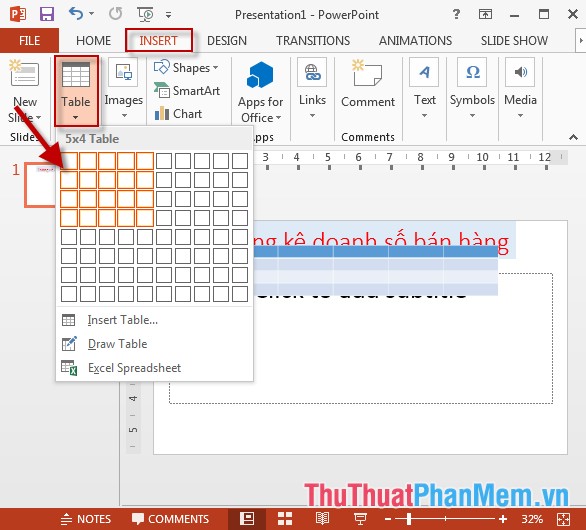
Or you can click Insert Table to enter the number of columns and rows you want:
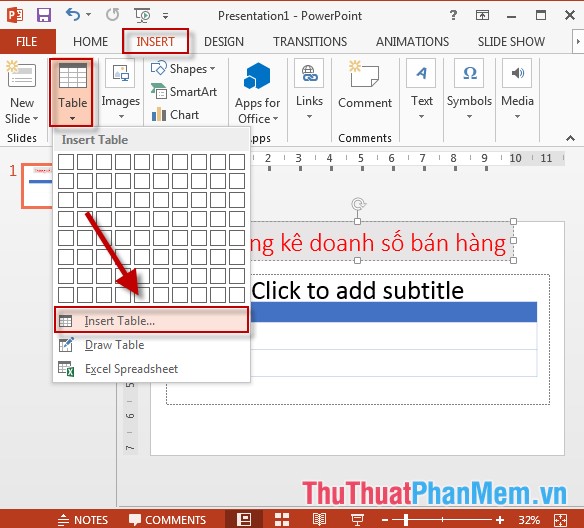
- The dialog box appears enter the number of columns in the Number of Columns, number of lines in the Number of Rows -> click OK:

- The result has been created as shown in the table:

2. Edit the table structure.
- To edit the structure of the table, click the table to edit -> Design -> Table Styles select the types of support available for the table:

- Click the Shading section to select the color to fill the table:

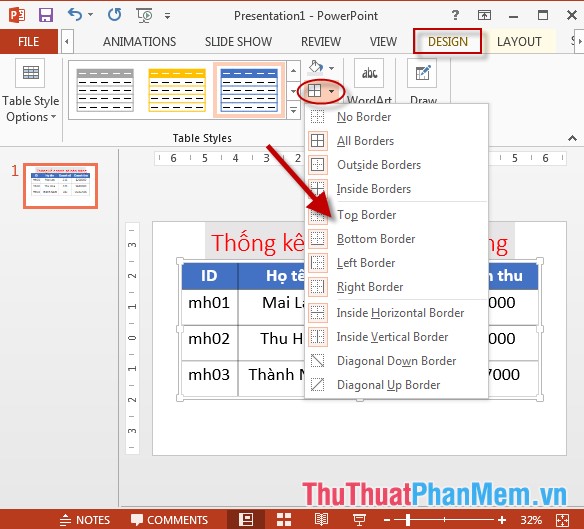
- To create a border for the table click the All border icon -> select the type of border to create:
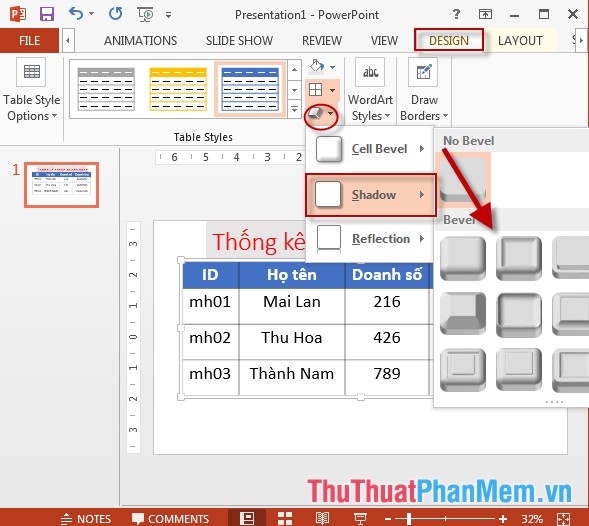
- To create effects for the Effects icon picker menu -> select the types of effects to create:
3. Format table.
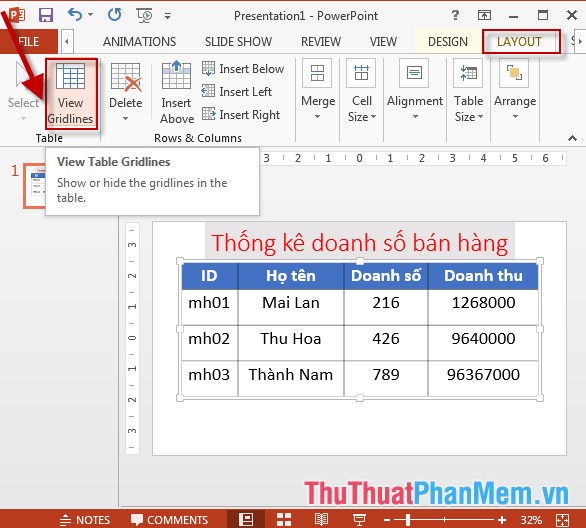
- Want to display the table as a grid -> select the table -> Layout -> View Gridlines:
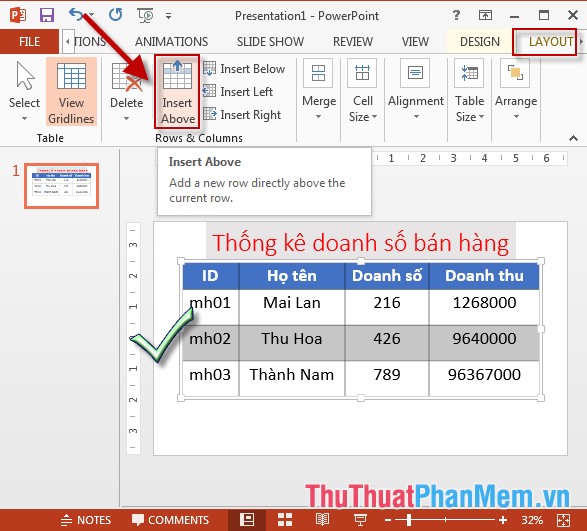
- To insert more rows for the table -> select the position of the row you want to insert by selecting the row next to it -> Layout -> Insert Above ( insert above the current row position) or Insert Below ( insert below the row position present):
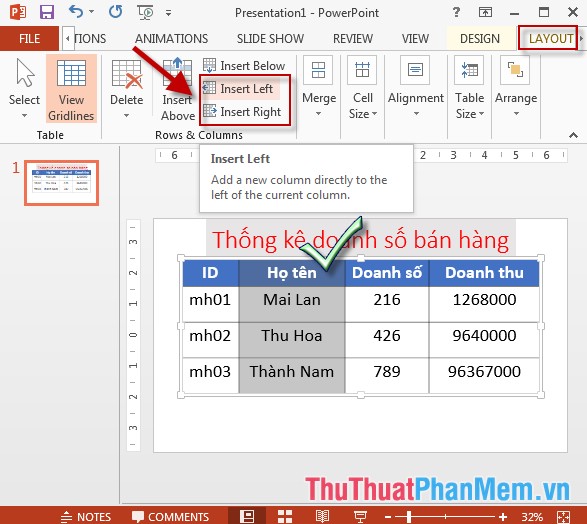
- Similarly, to insert more columns select Insert Left ( insert to the left of the current column), Insert Right ( insert to the right of the current column)
- To make a tie or split the Merge selection panel, choose Merge Cells or Split Cells depending on your requirements:

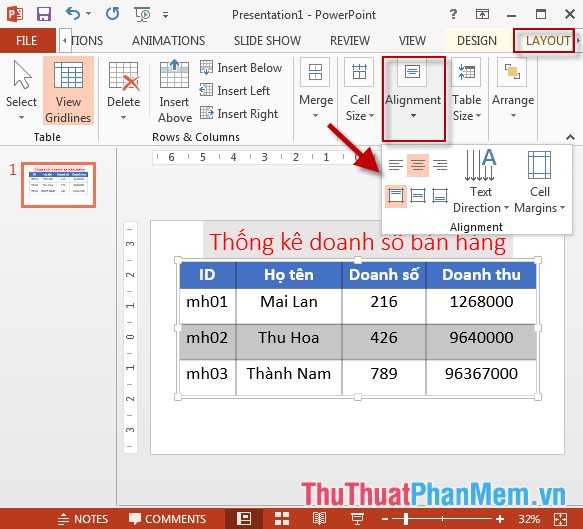
- Also click Alignment -> select the alignment types for the content in the table:
The above is a detailed guide on how to add tables to slides in PowerPoint.
Good luck!
FAQ
What should I know about Add Tables to Slides in PowerPoint?
Focus on the key features, requirements, limitations, and practical use cases explained in this guide.
How do I get the best results with Add Tables to Slides in PowerPoint?
Follow the recommended steps, use current software or information, confirm compatibility, and review settings before major changes.
Are there any risks or limitations?
Potential limitations depend on compatibility, data quality, cost, privacy, support, and how the product or method is used.
Related Articles
 PowerPoint 2019 (Part 21): Tables: Explained7 minutes read
 Basic Information About Slides in PowerPoint 201611 minutes read
 PowerPoint 2016: Basic Information About Slides12 minutes read
 PowerPoint 2019 (Part 4): Basic Slide Concepts: Explained11 minutes read
 How to Convert Google Slides to Powerpoint3 minutes read
 How to Delete Duplicate Slides on Powerpoint Is Very Simple3 minutes read
Reader Comments 0
Sign in with email or Google to join the discussion.