Table of Contents
This guide provides a clear, practical overview of "Shocking Facts About the Trinity Nuclear Test". It organizes the most useful details, explains important considerations, and highlights the steps or choices that matter most.
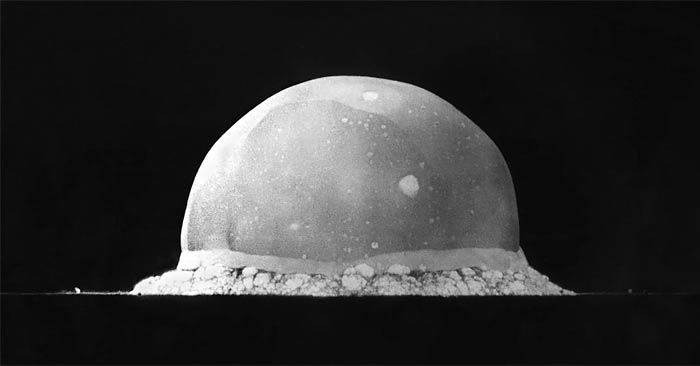
" Now I have become death, the destroyer of worlds. " Paraphrased from the Bhagavad Gita, this quote ran through Robert Oppenheimer's mind as he witnessed history. On July 16, 1945, the first atomic bomb exploded near Socorro, New Mexico—and 80 years later, we are still feeling the political and scientific shocks of this high-risk experiment. Here are the facts about the explosion, codenamed "Trinity."
8 different sites considered for nuclear bomb test
US military officials began searching for a suitable site for the Trinity test in May 1944. Barrier reefs in southern Texas were considered, as were an island off the coast of southern California and Rice, California (now a ghost town). Colorado's San Luis Valley area was also considered.
New Mexico alone offered four separate options: the Tularosa Basin, an area near a village near Cuba, the desert south of Grants, and a waterless desert called the Jornada del Muerto, or 'Route of the Dead.' The latter was chosen because of its wide-open, largely uninhabited space and proximity to Los Alamos, where the Manhattan Project's bombs were being developed. Construction on the site began in the fall of 1944.
No one knows where the code name Trinity came from.
Oppenheimer had forgotten his inspiration. ' Why I chose the name is unclear ,' he said in a 1962 conversation with General Leslie Groves. The erudite physicist said that as the day of the bomb's detonation approached, he often thought of John Donne, the 17th-century poet whom he greatly admired. Donne begins a famous sonnet with the words ' Batter my heart, three person'd God ,' a reference to the Christian holy trinity. But, Oppenheimer said, ' beyond that, I have no clue .'
There was a rehearsal
One hundred and eight tons of TNT were placed on a 20-foot wooden platform and detonated on May 7, 1945. The test allowed everyone to calibrate their data collection equipment.
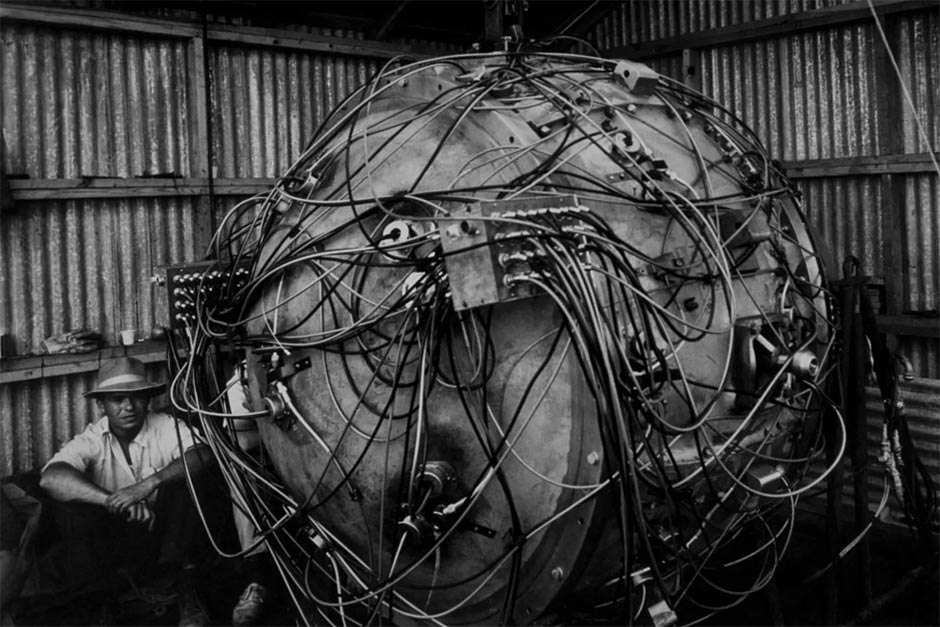
Physicist Edward Teller feared the test could detonate Earth's atmosphere.
Work came to a halt (according to some reports) when Teller presented his doomsday scenario. Fission explosions, like those that would have produced the first US nuclear test, would generate heat in the tens of millions of degrees. He warned that this heat could fuse nitrogen atoms throughout the planet's atmosphere, triggering a catastrophic release of energy and incinerating life on Earth. Fortunately, further analysis and modeling showed that this outcome was unlikely.
Scientists have taken bets on how big the explosion will be.
Teller bet it would be 45,000 tons of TNT. Hans Bethe bet 8,000 tons. Oppenheimer predicted 300 tons and privately bet another associate $10 that the test would fail. Leslie Groves became upset when Enrico Fermi bet whether the bomb would wipe out the entire world or just New Mexico.
Trinity fireball seen 180 miles away
When it detonated, the bomb had enough destructive power to rival about 20,000 tons of TNT. It also released a bright flash of light that terrified residents of Albuquerque, Santa Fe, Silver City, and El Paso.
Rowena Baca of San Antonio, New Mexico, 35 miles away, was pushed under the bed by her grandmother, who mistook the Trinity nuclear test for the end of the world. Navy pilot John R. Lugo initially thought he was watching the sun rise—from the south—as he flew near Albuquerque that morning.
At first, people were informed that this was a ammunition accident.
In response to questions from the public, the military issued a statement obfuscating the true origin of the explosion:
' Several inquiries have been received regarding a large explosion that occurred at the Alamogordo Air Force Base Reserve this morning. An ammunition depot containing a large quantity of high explosives and fireworks exploded. No one was killed or injured, and damage to property outside the explosive depot was minor. Weather conditions affected the contents of the shell casing. The explosion may have forced the Army to temporarily evacuate some civilians from their homes. '
Americans did not know what really happened until two atomic bombs were dropped on Hiroshima and Nagasaki, Japan, the following month.
The Trinity bomb was similar in design to the Fat Man bomb that destroyed Nagasaki.
The military dropped a uranium-based atomic bomb, nicknamed Little Boy, on Hiroshima on August 6, 1945. Three days later, the United States dropped a plutonium-based bomb, Fat Man, on Nagasaki. The former was relatively simple and Manhattan Project scientists believed it did not need testing, but the latter was more complex—it required a plutonium-filled core to explode before it could detonate.
FAQ
What should you know about 8 different sites considered for nuclear bomb test?
US military officials began searching for a suitable site for the Trinity test in May 1944. Barrier reefs in southern Texas were considered, as were an island off the coast of southern California and Rice, California (now a ghost town). Colorado's San Luis Valley area was also considered.
What should you know about no one knows where the code name Trinity came from?
Oppenheimer had forgotten his inspiration. ' Why I chose the name is unclear,' he said in a 1962 conversation with General Leslie Groves. The erudite physicist said that as the day of the bomb's detonation approached, he often thought of John Donne, the 17th-century poet whom he greatly admired. Donne begins a famous sonnet.
What should you know about there was a rehearsal?
One hundred and eight tons of TNT were placed on a 20-foot wooden platform and detonated on May 7, 1945. The test allowed everyone to calibrate their data collection equipment.
What should you know about physicist Edward Teller feared the test could detonate Earth's atmosphere?
Work came to a halt (according to some reports) when Teller presented his doomsday scenario. Fission explosions, like those that would have produced the first US nuclear test, would generate heat in the tens of millions of degrees. He warned that this heat could fuse nitrogen atoms throughout the planet's atmosphere, triggering.
Related Articles
 How to Use G Shock Watch from a - Z7 minutes read
 Experience the Destructive Power of a Nuclear Bomb When It3 minutes read
 What Is Left of the Earth if All the Nuclear Bombs in the World4 minutes read
 AMD Introduces an 18mm Thick Laptop Using APU Trinity3 minutes read
 The Width and Path of Radioactive Clouds if North Korea Tests2 minutes read
 Asus Sold Laptops Using APU AMD Trinity from May 154 minutes read
Reader Comments 0
Sign in with email or Google to join the discussion.