Table of Contents
This guide provides a practical overview of Overview of the PowerPoint Interface, including its main features, benefits, limitations, and important considerations.
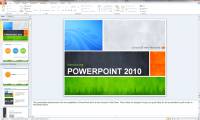
1. The interface contains commands and controls.
1.1 Title bar: At the top shows the name of the presentation.
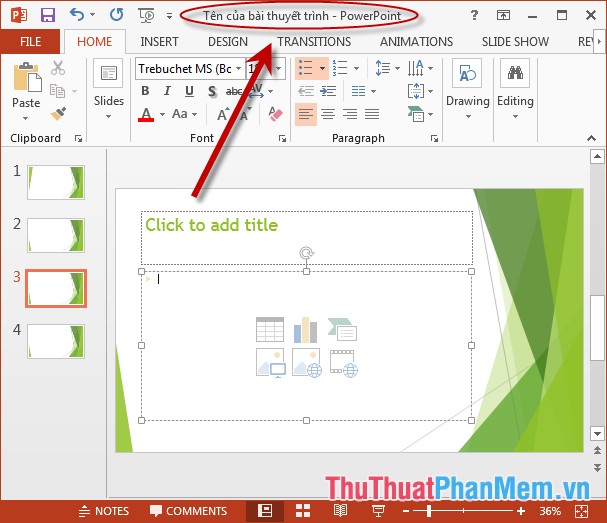
1.2 Ribbon: Located below the title bar includes the command tag to help you create a complete presentation.
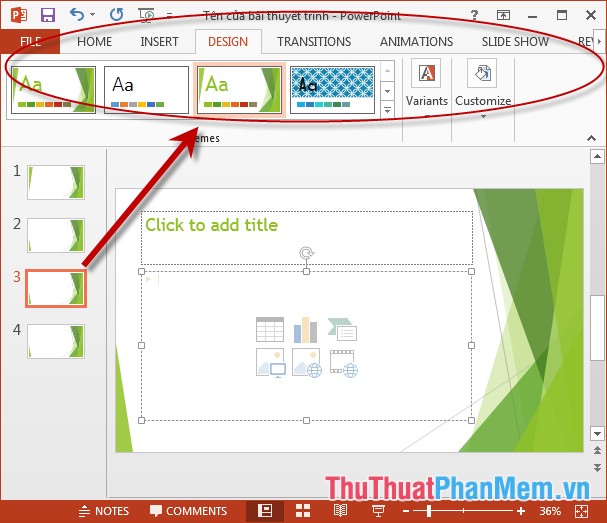
- When clicking on each tab command -> groups of orders in the command card are displayed:
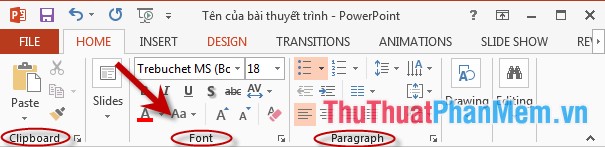
1.3 On the left of the title bar is the File menu: Contains the most frequently used commands such as creating new files, saving, printing.


1.4 On the right end of the title bar are three window controls:
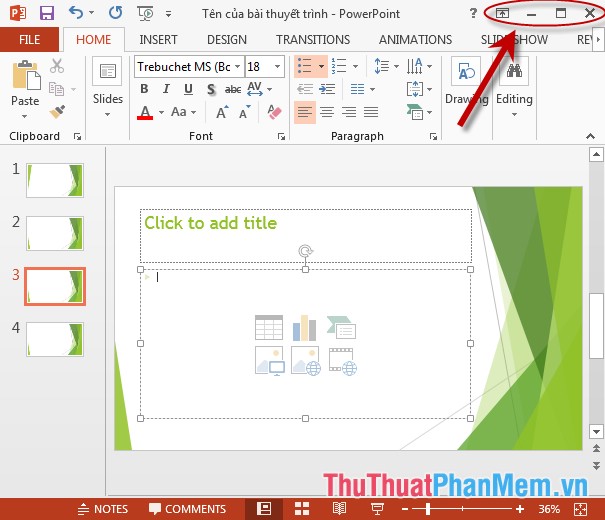
- Minimize: Minimize the window.
- Restore Down / Maximize: Adjust the size of the window.
- Close : Close the current presentation.
1.5 Quick Access Toolbar: located on the right of the title bar, showing the buttons Savve, Undo, Redo.
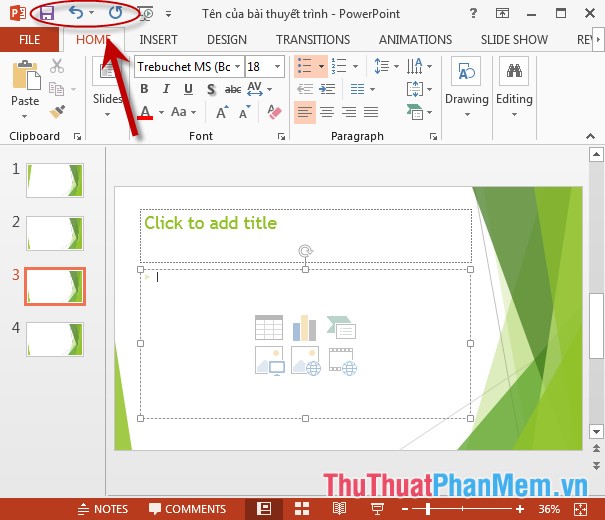
2. Main interface:
- Overview window: Shows thumbnails of all slides in an active presentation.
- Silde: This window takes up most of the program window and displays the current page of the presentation.
- Notes: Located at the bottom of the slide window, allowing users to create notes for slides.
- The bottom bottom displays the shortcut buttons to change the display status, Silde slide show, zoom in and out the window.

Above is a detailed overview of the PowerPoint interface .
Good luck!
FAQ
What should I know about Overview of the PowerPoint Interface?
Focus on the key features, requirements, limitations, and practical use cases explained in this guide.
How do I get the best results with Overview of the PowerPoint Interface?
Follow the recommended steps, use current software or information, confirm compatibility, and review settings before major changes.
Are there any risks or limitations?
Potential limitations depend on compatibility, data quality, cost, privacy, support, and how the product or method is used.
Related Articles
 Overview of the Interface in Excel 2013, 20163 minutes read
 Overview of the Forefront Tmg 2010 Management Interface8 minutes read
 PowerPoint 2019 (Part 1): Getting Started with PowerPoint: Explained7 minutes read
 How to Check Where Google AI Overview Gets the Information5 minutes read
 Coreldraw X6 Interface Overview, and Coreldraw X6 KEYS to11 minutes read
 Great Presentation in PowerPoint 20106 minutes read
Reader Comments 0
Sign in with email or Google to join the discussion.