Table of Contents
This updated guide examines Shapes Powerpoint: How to Include Shapes in Powerpoint and organizes the essential facts, background, and practical takeaways in clear American English.
- How to draw flow charts in PowerPoint
- How to use Draw tool on PowerPoint
- Mind mapping in PowerPoint
- Instructions for creating charts on PowerPoint
Instructions for aggregating cubes in PowerPoint
Step 1:
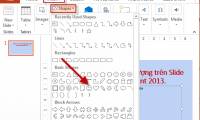
At the slide interface in PowerPoint, we click on the Insert item and then select the Shapes item to select the shape to use.
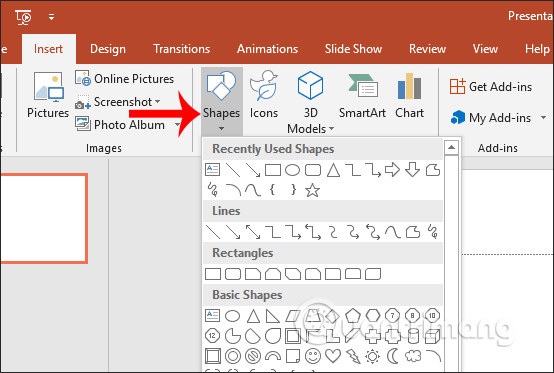
Step 2:
We click on the cube 1 and draw on the slide, then draw the shape 2 and overlap the shape 1 as shown below.

Step 3:
Next, press and hold down the Ctrl key and click on each of the cubes to select both shapes at once.

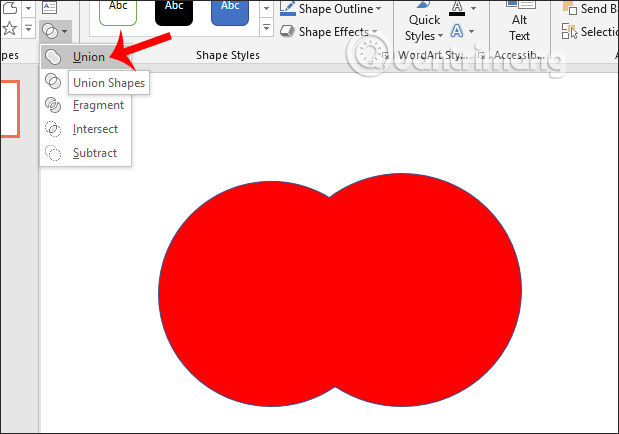
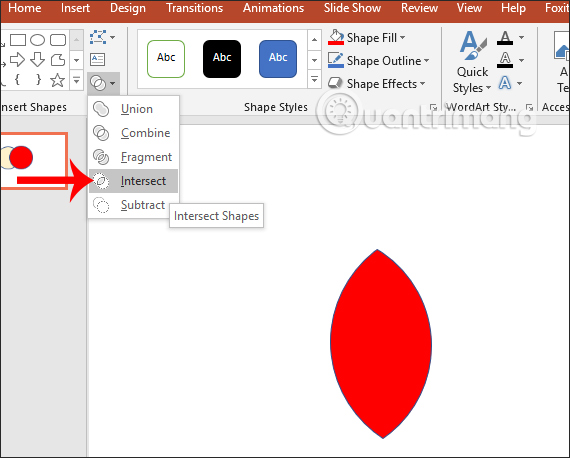
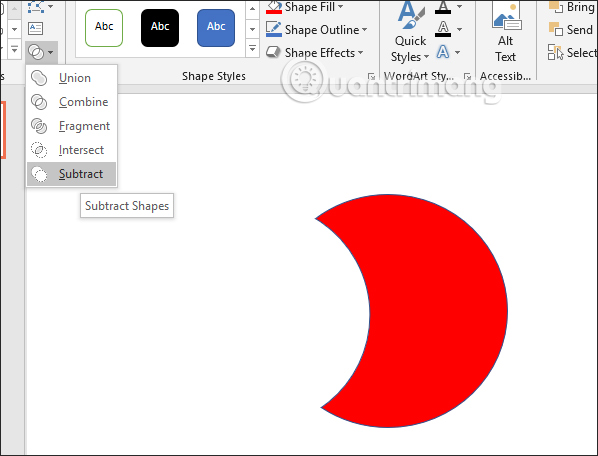
Next we click on the Format tab and then on the Insert Shapes group the user clicks on the Merge Shapes option . Show 4 different types of shapes for us to choose. When you hover your mouse over each type of cube, then the cube group will display the preview so we know how to group it.

With Union , cubes will pool together without displaying the intersection.
With Combine , the cube group will display the intersection with different colors as shown below.

Fragment gives a group of shapes and clearly shows the intersection of the shapes.

With Intersect will display the intersection of the image only.
Subtract subtracts part 1 and the intersection of the two shapes.
We choose the type of block we want to use for our presentation slide. Users can use this block puzzle with many different shapes and unlimited numbers.
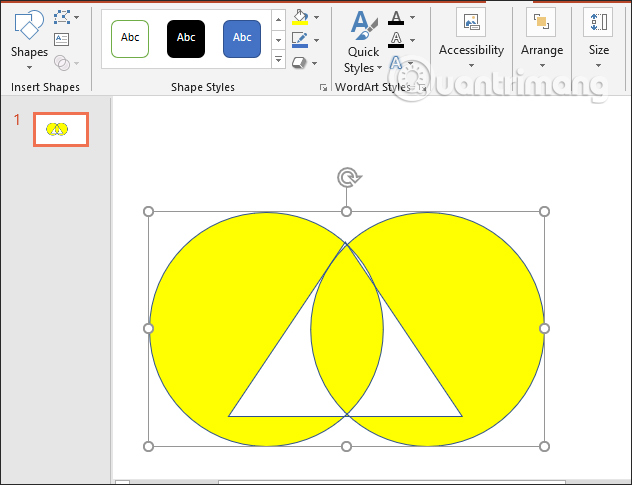
PowerPoint operations are very simple. We just need to draw each cube, group them together and select the type of collage you need to make.
I wish you all success!
FAQ
What is Shapes Powerpoint: How to Include Shapes in Powerpoint about?
It provides a structured overview of shapes PowerPoint, explains the main context, and highlights practical takeaways for readers.
Why does this topic matter?
Understanding the main concepts helps readers evaluate the issue, avoid common mistakes, and make better-informed decisions.
How should readers use this information?
Use the guidance as a practical starting point, confirm details that may have changed, and follow current product, safety, or security recommendations.
Related Articles
 PowerPoint 2019 (Part 16): Shapes: Explained7 minutes read
 PowerPoint 2016: Working with Shapes8 minutes read
 Manipulate Shapes in PowerPoint 20166 minutes read
 PowerPoint 2019 (Part 1): Getting Started with PowerPoint: Explained7 minutes read
 Insert and Draw Shapes on Slide in PowerPoint4 minutes read
 PowerPoint 2019 (Part 15): Image Formatting: Explained7 minutes read
Reader Comments 0
Sign in with email or Google to join the discussion.