Table of Contents
X-ray-tracked microscopic sperm robots mark the future of fertility, enabling precision medicine and IVF research.

Tiny, agile human sperm are getting a high-tech upgrade. This is good news for infertile couples. Researchers at the TechMed Center at the University of Twente have transformed the agile, fast-swimming sperm into tiny, magnetically controlled robots that can be tracked and controlled inside a full-size anatomical model.
Sperm are nature's amazing swimmers. Their main role is to navigate the complex environment of the female reproductive tract to reach and fertilize the egg. Each sperm is designed to be slim for speed, with a tail that propels it forward and a head that carries genetic material.
Their small size and natural flexibility allow them to move in challenging biological environments – a trait that researchers are now exploiting for medical applications.

Sperm become tiny robots
In addition to their fertility, sperm cells' inherent mobility and adaptability make them promising candidates for microrobotics, allowing scientists to explore new ways to deliver drugs and perform diagnostics in hard-to-reach areas of the body.
A major challenge in using sperm for medical applications is their invisibility under conventional imaging techniques. Traditional X-rays have difficulty detecting sperm due to their small size, low density, and near-transparency to radiation.
This limitation has, until now, prevented scientists from accurately observing or controlling sperm inside the human body.
To overcome that, the University of Twente research team collaborated with researchers and medical experts from Radboud University Medical Center and the University of Waterloo (Canada).
" Until now, visualizing sperm inside the body has been nearly impossible ," said study lead author Islam Khalil, a researcher at the University of Texas.
They coated real sperm cells with magnetic nanoparticles, making them visible under X-rays and responding to external magnetic fields.
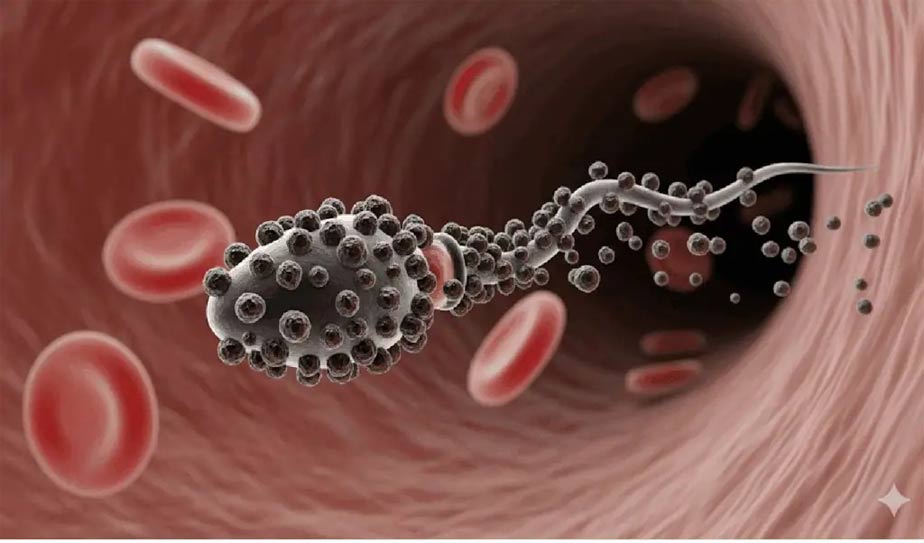
Nature combined with medical robots
This innovative approach enables real-time tracking and precise control of microrobots in a life-size anatomical model, marking a breakthrough in the field of medical microrobotics.
The potential applications of this technology are diverse. By delivering drugs directly into the sperm cell body, the researchers envision the possibility of delivering drugs precisely to specific target locations such as the uterus or fallopian tubes.
This could revolutionize the treatment of conditions such as uterine cancer, endometriosis or uterine fibroids, all of which currently lack precise or minimally invasive drug delivery methods.
Beyond therapeutics, real-time tracking of sperm movement could shed light on the biological processes of fertilization, improve understanding of unexplained infertility, and even improve assisted reproductive techniques such as in vitro fertilization (IVF).
Safety is also an important consideration. Tests have shown that the sperm nanoparticle clusters remain biocompatible, with no significant toxicity to human uterine cells even after 72 hours of exposure. This suggests that future in-vivo applications may be possible.
The team published their findings in the journal npj Robotics.
Final Thoughts
The development covered in this article is worth following, but specifications, dates, and feature details may change until the relevant company or organization publishes an official confirmation.
FAQ
What is the main development covered in this article?
X-ray-tracked microscopic sperm robots mark the future of fertility, enabling precision medicine and IVF research.
What should you know about Sperm become tiny robots?
In addition to their fertility, sperm cells' inherent mobility and adaptability make them promising candidates for microrobotics, allowing scientists to explore new ways to deliver drugs and perform diagnostics in hard-to-reach areas of the body.
Is every reported detail officially confirmed?
Not necessarily. Product leaks, preview builds, research reports, and early announcements can change. Confirm important specifications, dates, and availability through an official source before making a decision.
Related Articles
 Microrobots Controlled by Metal Patches Can Deliver Drugs and Clean4 minutes read
 10 Interesting Facts About Sperm to Men Do Not Know4 minutes read
 The Process of Sperm Formation and the 5 Facts Startle You4 minutes read
 Sperm Also Has a 'Switch' That Helps to Turn on and Off4 minutes read
 Watch Extremely Fierce and Fierce Sumo Fighting Robots2 minutes read
 Found a Way to Detect HIV-infected T Cells That Are 'Dormant', Opening up Hope for Root4 minutes read
Reader Comments 0
Sign in with email or Google to join the discussion.