Sometimes you want to print an Excel spreadsheet to view and share data offline. Once you have selected your page layout settings, you can easily preview and print your spreadsheet from Excel 2016 using the Print window.
Page Formatting and Printing in Excel 2016
Watch the video below to learn more about formatting pages and printing spreadsheets in Excel 2016:
Access the Print Window
1. Select the File tab. Backstage view appears.

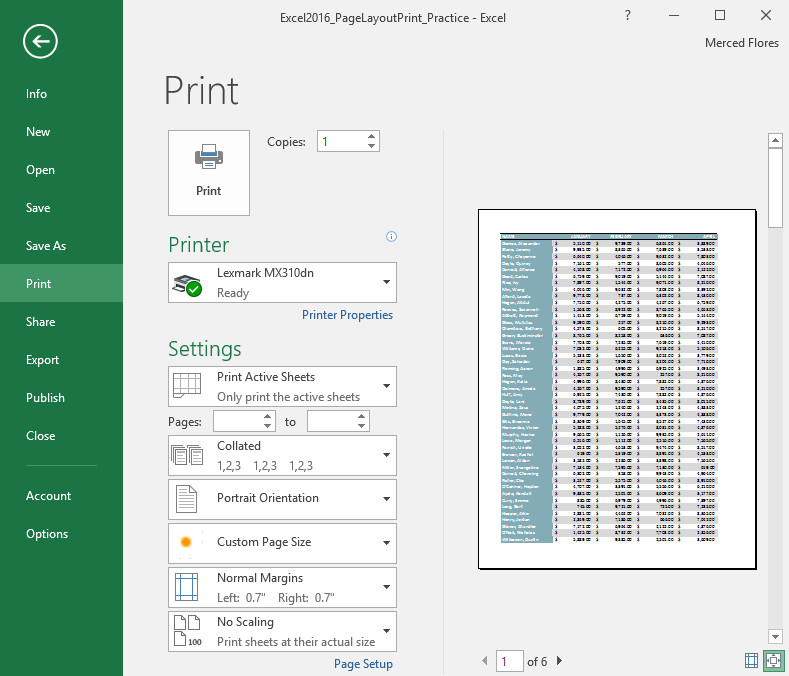
2. Select Print . The Print window will appear.

Print window.
Print a Spreadsheet
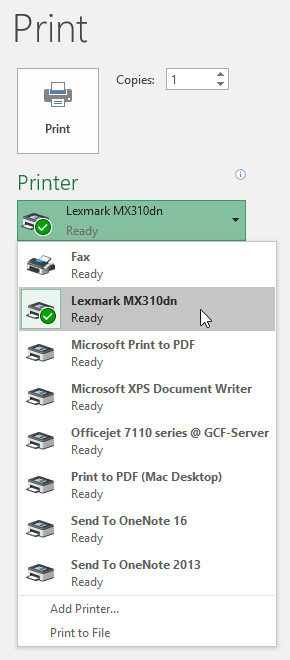
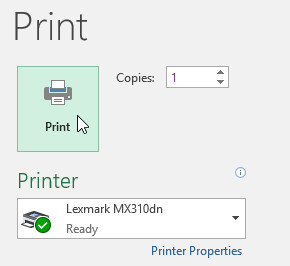
1. Navigate to the Print window, then select the desired printer.
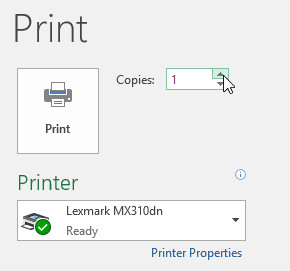
2. Enter the number of copies you want to print.
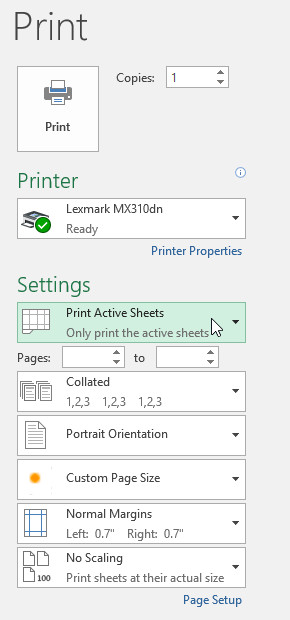
3. Select additional settings if needed.
4. Click Print .
Select Print Area
Before printing an Excel spreadsheet, it's important to decide exactly what information you want to print. For example, if you have multiple worksheets in your spreadsheet, you'll need to decide whether you want to print the entire spreadsheet or just the active worksheets. You may also want to print only selected content from the spreadsheet.
Print Current Worksheets
Spreadsheets are considered active when selected.
1. Select the spreadsheet you want to print. To print multiple worksheets, click the first worksheet, hold down the Ctrl key on your keyboard, and then click the other worksheets you want to select.

2. Navigate to the Print window.
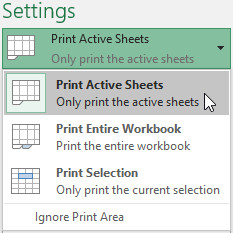
3. Select Print Active Sheets from the Print Range drop-down menu.
4. Click the Print button.

Print the Entire Workbook
1. Navigate to the Print window.
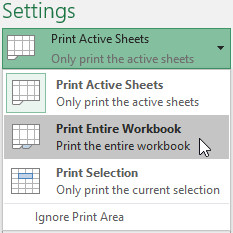
2. Select Print Entire Workbook from the Print Range drop-down menu.
3. Click the Print button.
Print a Selection
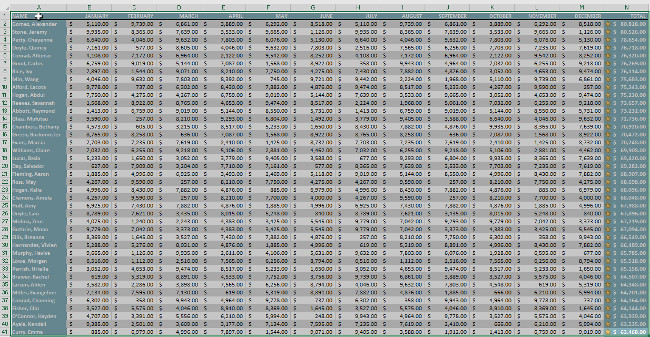
In the example, we will print records for the top 40 sales people in the central spreadsheet.
1. Select the cells you want to print.
2. Navigate to the Print window.
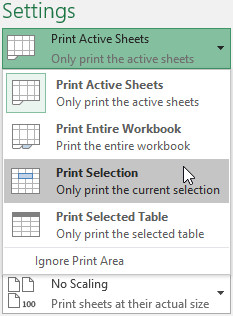
3. Select Print Selection from the Print Range drop-down menu.
4. Your preview selection will appear in the Preview window.
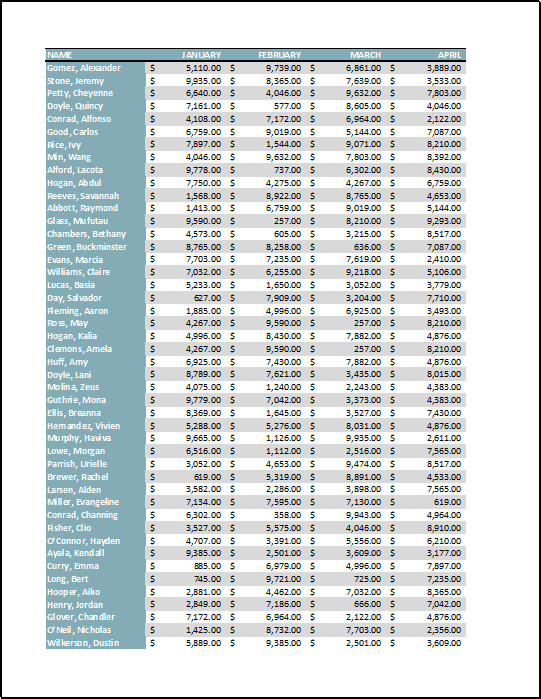
5. Click the Print button to print the selection.
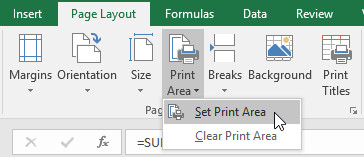
6. If you want, you can set a print area in advance to visualize which cells will be printed as you work in Excel. Simply select the cells you want to print, click the Page Layout tab, select the Print Area command, and then select Set Print Area . Note that if you need to print the entire spreadsheet, you'll need to clear the print area.
Adjust Content
Sometimes you have to make small adjustments from the Print window to get your spreadsheet contents to fit on a printed page. The Print window includes several tools to help you scale your spreadsheet to fit your spreadsheet contents, such as page scaling and margins.
Change Print Orientation (Portrait/landscape)
Excel 2016 offers two page orientation options: Landscape and Portrait . Landscape orients the page horizontally, while portrait orients the page vertically. In our example, we'll set the orientation to landscape.
1. Navigate to the Print window.
2. Select the desired orientation from the Page Orientation drop-down menu. In our example, we'll select Landscape Orientation .
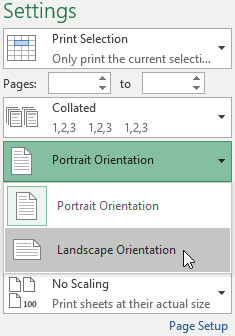
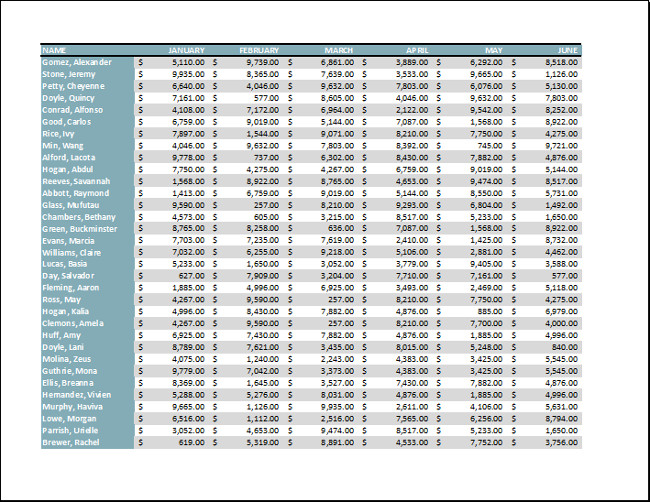
3. The new page orientation will be displayed in the Preview box.
Refine Content Before Printing
If some of your content is cut off by the printer, you can use scaling to have the spreadsheet shrink to the page automatically.
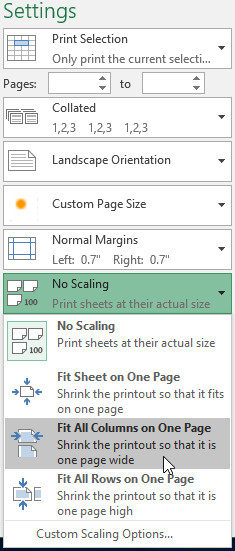
1. Navigate to the Print window. In the example, we see in the Preview pane that the spreadsheet content will be cut off when printed.
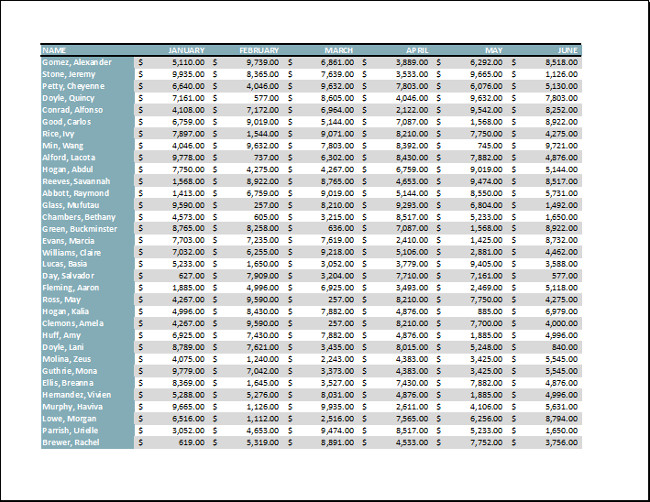
2. Select the desired option from the Scaling drop-down menu. In our example, we'll select Fit All Columns on One Page .
3. The spreadsheet will be collapsed to appear on one page.
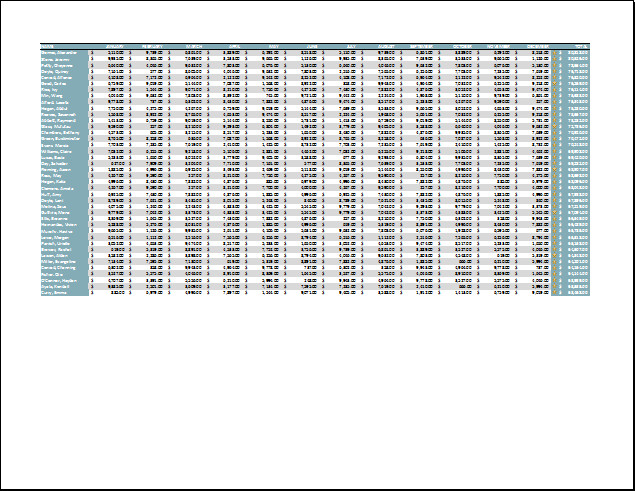
- Note that spreadsheets will be harder to read as they are scaled down, so you probably won't want to use this option when printing a spreadsheet with a lot of information. In our example, we'll change the scaling setting to No Scaling .
Using the Print Titles Command
If your spreadsheet uses section headers, it is important to include headers on each page of the printed spreadsheet. It would be difficult to read a printed spreadsheet if the headers only appeared on the first page. The Print Titles command allows you to select specific rows and columns to appear on each page.
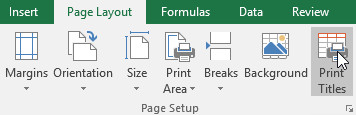
1. Click the Page Layout tab on the Ribbon toolbar, and then select the Print Titles command.
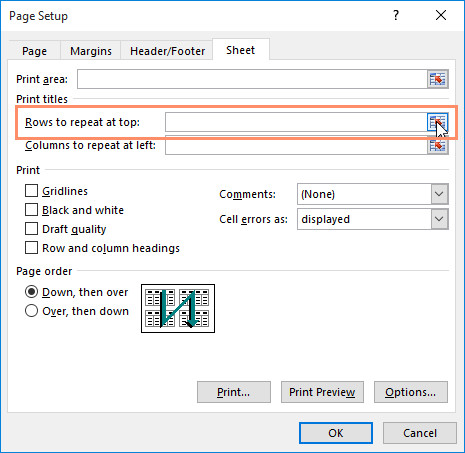
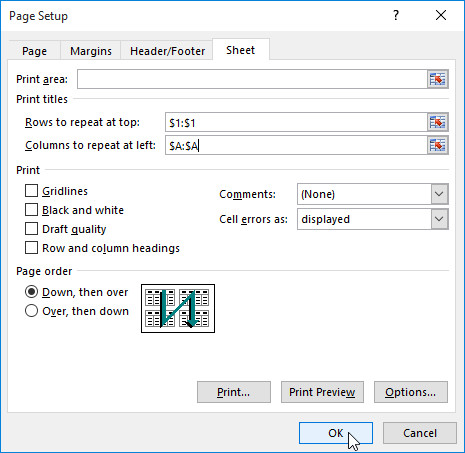
2. The Page Setup dialog box will appear. From here, you can choose which rows or columns to repeat on each page. In our example, we'll repeat the first row.
3. Click the Collapse Dialog button next to the Rows to repeat at top: field.
4. The cursor will turn into a small selection arrow and the Page Setup dialog box will collapse. Select the row(s) you want to repeat at the top of each printed page. In our example, we'll select row 1 .
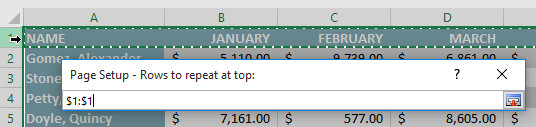
5. Row 1 will be added to Rows to repeat at top: . Click the Collapse Dialog button.

6. The Page Setup dialog box will expand. To repeat a column, use the same procedure shown in steps 4 and 5. In our example, we choose to repeat row 1 and column A.
7. Once you are satisfied with your selections, click OK .
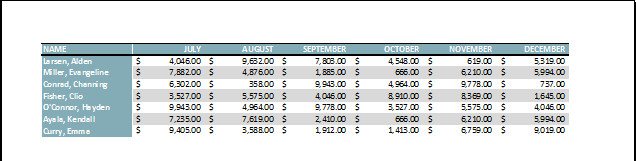
8. In the example, row 1 appears at the top of each page and column A appears on the left of each page.
Adjust Page Breaks
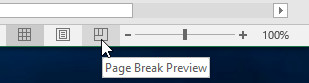
1. Click the Page Break Preview command to change to Page Break view.
2. The vertical and horizontal dashed lines indicate page breaks. Click and drag one of these lines to adjust that page break.
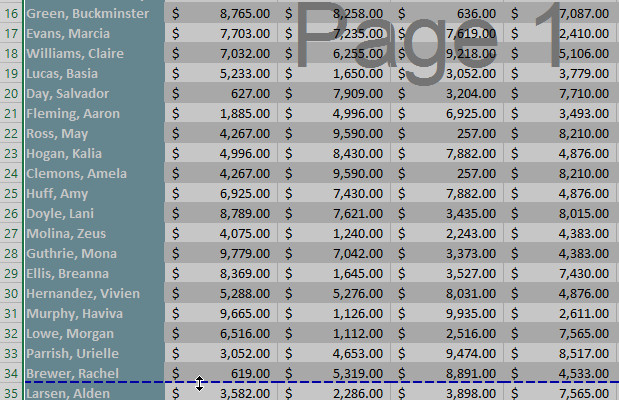
3. In the example, we have placed a horizontal page break between row 21 and row 22.
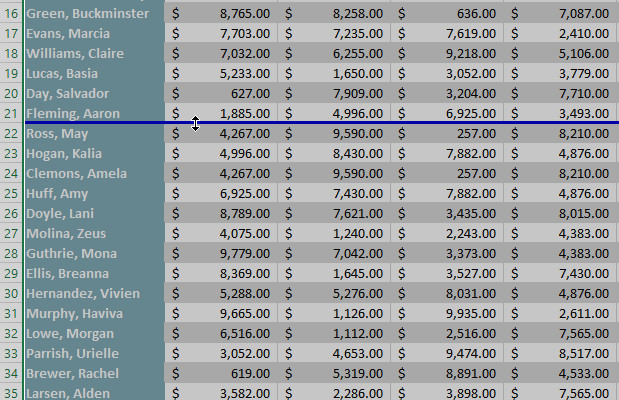
4. In the example, all pages now show the same number of rows due to the change in page breaks.
Modify Margins in the Preview Box
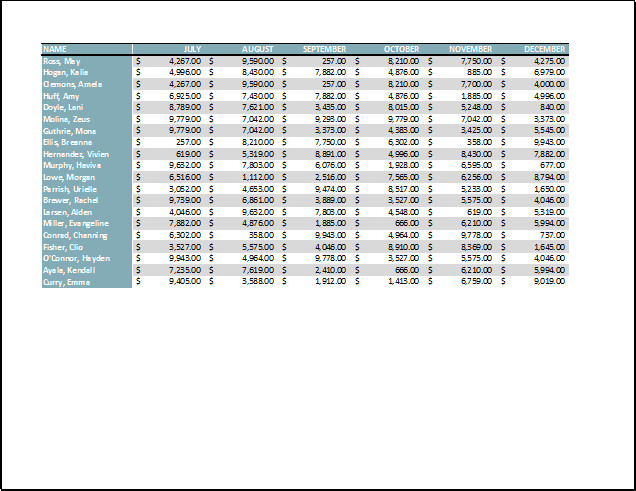
Margins are the spaces between your content and the edge of the page. Sometimes you need to adjust margins to make your data easier to read. You can modify page margins from the Print pane.
1. Navigate to the Print pane.
2. Select the desired margin size from the Page Margins drop-down menu. In our example, we select Narrow Margins .
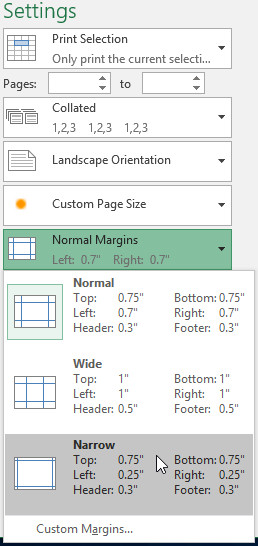
3. The new margin will be displayed in the Preview box.
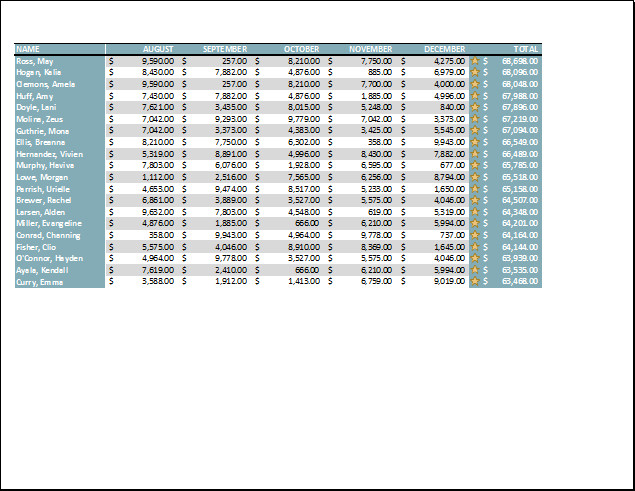
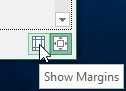
4. You can adjust the margins yourself by clicking the Show Margins button in the lower-right corner, then dragging the margin lines in the Preview window.
Have fun!




Reader Comments 0
Sign in with email or Google to join the discussion.