Table of Contents
Some marine predators can seriously injure people, but their risks differ. A crocodile can attack a person near a waterway, while a cone snail or blue-ringed octopus is more likely to injure someone who handles it. This list covers five examples rather than ranking the world's deadliest ocean animals.
Saltwater crocodile
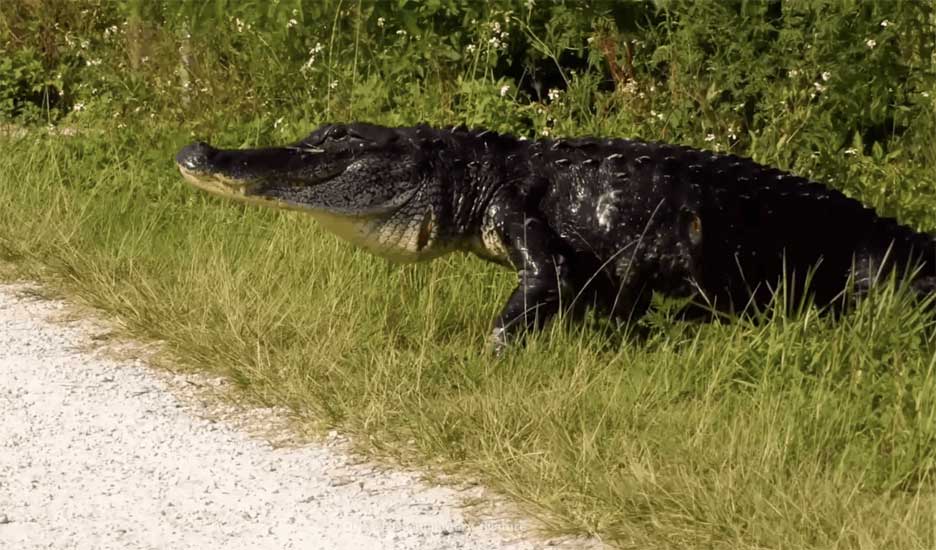
The saltwater, or estuarine, crocodile is a large ambush predator. Despite its name, it can inhabit freshwater rivers, estuaries and coastal waters. Its size and powerful jaws make an encounter potentially fatal.
Prevention is more dependable than advice about fighting an attacking crocodile. In crocodile habitat, follow local warnings, keep well back from the water's edge and do not enter water merely because you cannot see an animal. Never feed or approach one. Queensland's crocodile habitat guidance explains that they can occur in waterways and the sea within their range.
Bull shark
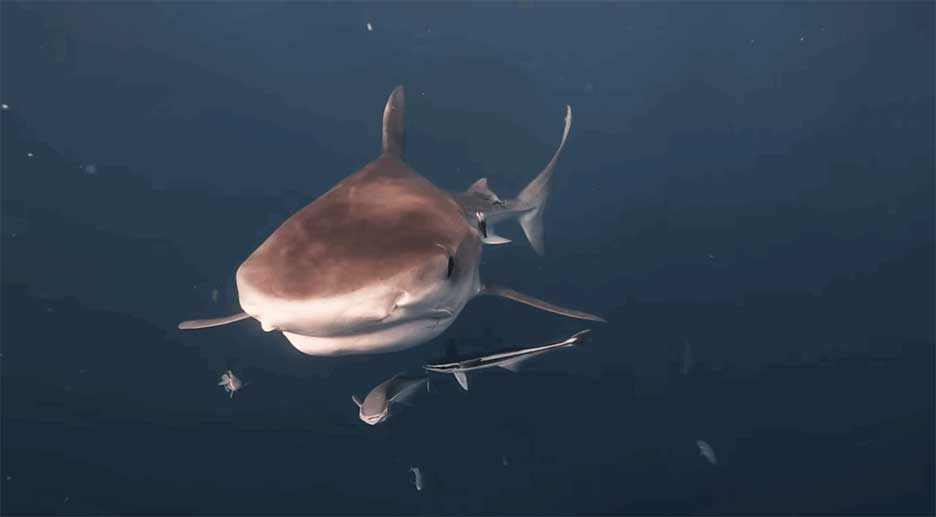
Bull sharks occur in coastal waters and can also travel into freshwater. This brings them into some bays, estuaries and rivers used by people. They are predators of aquatic animals; treating them as animals that are always seeking human prey gives a misleading picture.
Follow beach closures and lifeguard advice, and do not enter water where a shark has been reported. Avoid approaching or feeding sharks. A generalized instruction to strike a shark is not a substitute for local swimming guidance or an emergency response.
Cone snail
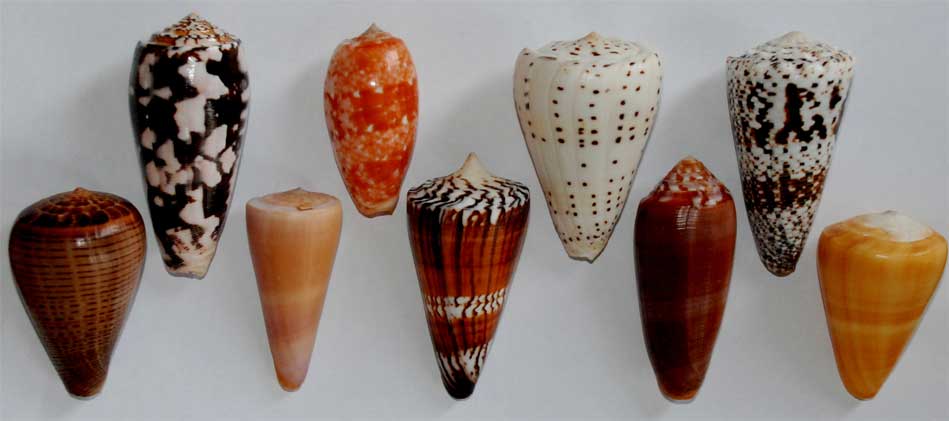
Cone snails use a specialized, harpoon-like tooth to inject venom into prey. Some species can cause severe poisoning in people, including weakness and breathing problems.
A patterned shell is not safe to collect if a live snail may be inside. Leave it in place and do not put it in a pocket or handle it to identify the species. A suspected cone snail sting requires urgent medical help.
Box jellyfish
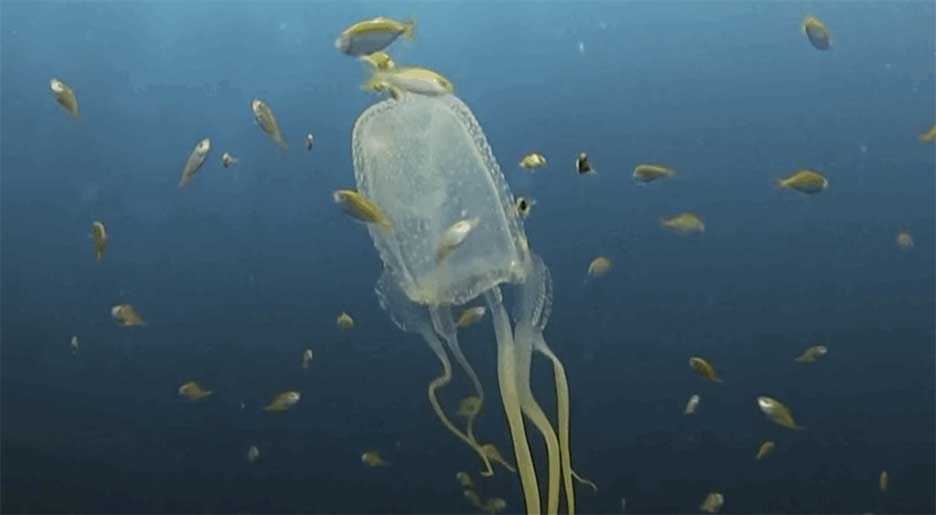
Box jellyfish are a group of jellyfish, not a single species with one level of danger. Some tropical species can deliver life-threatening stings. Their tentacles contain stinging cells used to capture prey.
Check local marine-stinger warnings and seasonal advice before swimming. Use recommended protective clothing and designated swimming areas where provided, while recognizing that these measures do not remove every risk. If someone is seriously stung, alert a lifeguard and call emergency services.
Blue-ringed octopus
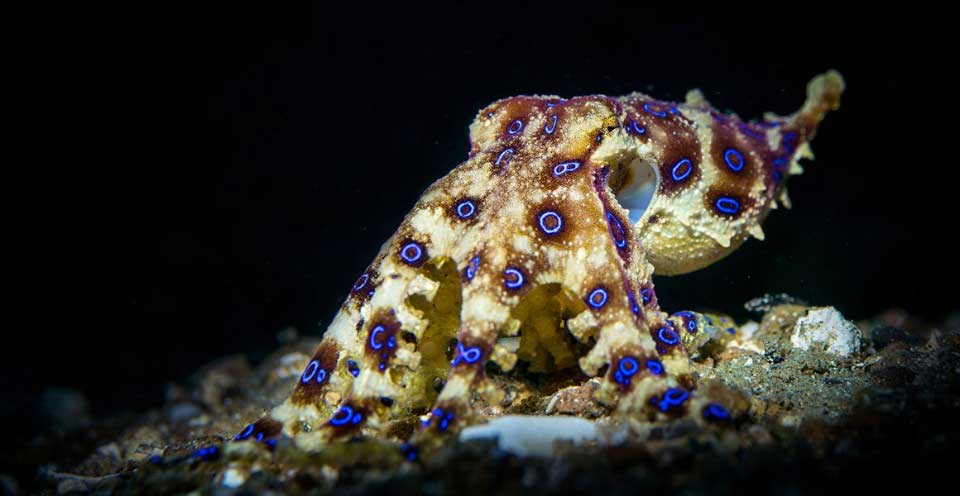
A blue-ringed octopus can look small and harmless, but its bite can cause severe poisoning. The bite may initially be painless, and dangerous weakness or breathing difficulty can follow. Do not wait for pain before seeking help after a suspected bite.
Observe rock-pool animals from a distance. Do not pick up an octopus, move it for a photograph or allow children to handle it. Its blue markings are not a reliable invitation to approach.
What to do after a serious bite or sting
Get the person out of danger without exposing yourself and contact local emergency services. In Australia, call 000 for suspected blue-ringed octopus or cone snail poisoning, or for collapse or breathing difficulty after a marine sting. Follow the emergency operator's instructions.
First aid depends on the animal; there is no single treatment for every marine sting. For example, pressure immobilization guidance for cone snail and blue-ringed octopus poisoning differs from jellyfish treatment. Use Healthdirect's species-specific first-aid guidance and trained local responders rather than a universal home remedy.
Related Articles
 This Jewel Is Proof That There Is a Large Sea of Water Deep Beneath5 minutes read
 IBM AI Robots Are Deployed to Clean the Oceans on Earth3 minutes read
 What Would Happen If the Earth's Oceans Disappeared?5 minutes read
 Why Are Marine Creatures Mostly Predators and Rarely See7 minutes read
 The Earth's Core May Be Hiding Dozens of Hydrogen Oceans3 minutes read
 The Largest Depth in the Ocean Detected Living Organisms1 minutes read
Reader Comments 0
Sign in with email or Google to join the discussion.