Table of Contents
This guide provides a practical overview of Apply Texture Effect to Background Color in PowerPoint, including its main features, benefits, limitations, and important considerations.
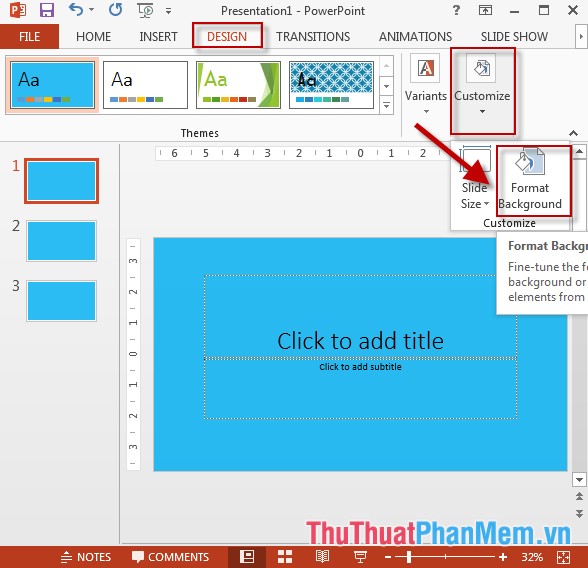
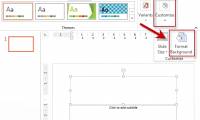
Step 1: Go to the Design tab -> Format Background:
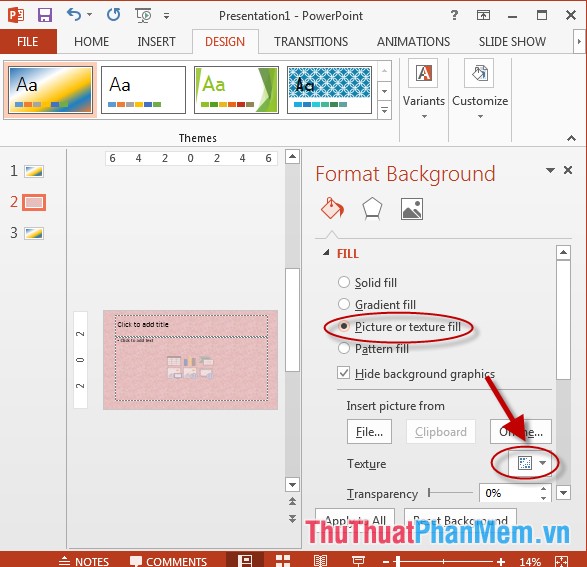
Step 2: The Format Background window appears, click Picture or Textture fill -> click Texture:
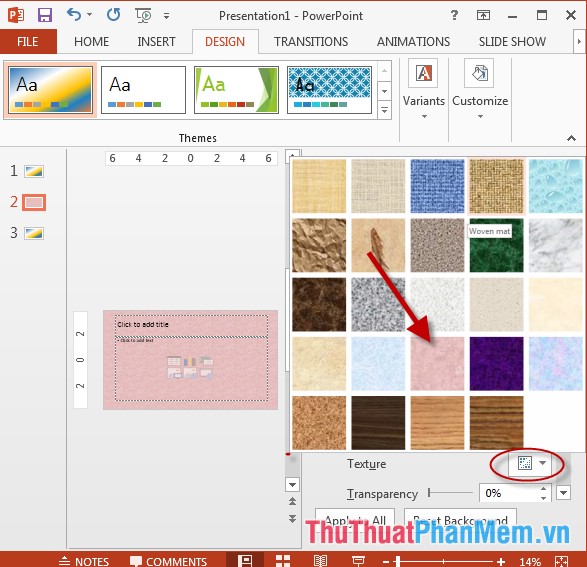
Step 3: List of display samples -> click the template that matches your slide show:
Step 4: Click the Transparency option to change the transparency for the background color:

Step 5: Finally, click Apply to All to set the Texture pattern for all slides:

- In case you do not want to apply the color settings -> click Reset Background.
The above is a detailed guide on how to apply texture effects to background colors in PowerPoint.
Good luck!
FAQ
What should I know about Apply Texture Effect to Background Color in PowerPoint?
Focus on the key features, requirements, limitations, and practical use cases explained in this guide.
How do I get the best results with Apply Texture Effect to Background Color in PowerPoint?
Follow the recommended steps, use current software or information, confirm compatibility, and review settings before major changes.
Are there any risks or limitations?
Potential limitations depend on compatibility, data quality, cost, privacy, support, and how the product or method is used.
Related Articles
 How to Create Powepoint Color Schemes4 minutes read
 Apply Gradient Effects to Background Colors in PowerPoint3 minutes read
 Set Background Color in PowerPoint2 minutes read
 Apply Picture Effects to Background Colors in PowerPoint2 minutes read
 Create a Color Mixing Effect in PowerPoint2 minutes read
 Apply a Built-in Color Scheme Effect in PowerPoint2 minutes read
Reader Comments 0
Sign in with email or Google to join the discussion.