Table of Contents
This guide provides a practical overview of Practical Exercise on Production Statistics Table, including its main features, benefits, limitations, and important considerations.
The example has the following data table:
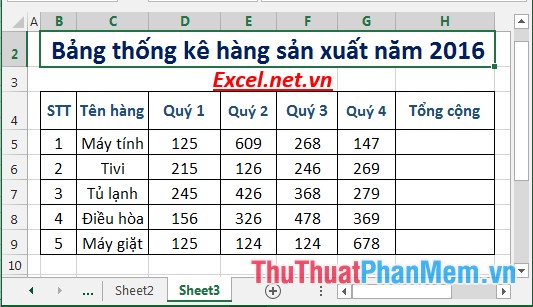
Production statistics table. First calculate the total value of the items. Use visual data charts to compare between quarters of items.
Step 1: Calculate the total number of items sold in the year. In the cell to calculate enter the formula: = SUM (D5: G5) -> press Enter -> the result is:
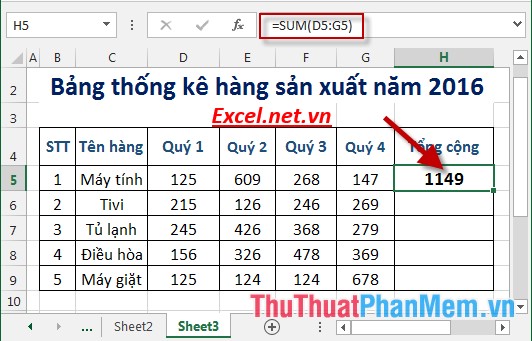
Step 2: Similarly copy the remaining values to result:

Step 3: Select the data area to create statistical chart -> Insert -> go to Columns -> select the type of chart to create:

Step 4: After selecting the chart type is as shown:

Step 5: You can edit the title right on the chart:

Step 6: In case you want to change the position of notes, for example, change the notes of items to the right, do the following: Click on the chart -> click on the Chart Element icon -> Legend -> Right:

Step 7: After editing, there is a chart as shown:
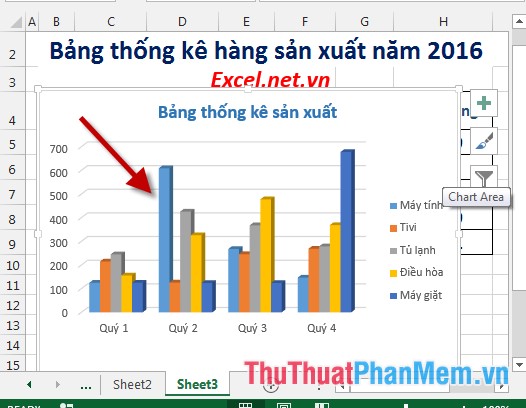
Looking at the chart, you can immediately compare and statistic data between the quarter and quarterly items. Not just the numbers are aggregated anymore, charts help you to statistic data quickly, have a visual look and provide trends and remedies for limited items.
The above is a detailed guide on how to produce manufactured statistics in Excel 2013.
Good luck!
FAQ
What should I know about Practical Exercise on Production Statistics Table?
Focus on the key features, requirements, limitations, and practical use cases explained in this guide.
How do I get the best results with Practical Exercise on Production Statistics Table?
Follow the recommended steps, use current software or information, confirm compatibility, and review settings before major changes.
Are there any risks or limitations?
Potential limitations depend on compatibility, data quality, cost, privacy, support, and how the product or method is used.
Related Articles
 How to View Workbook Statistics in Excel3 minutes read
 Practical Exercise on Computer Rental List in Excel3 minutes read
 Create Descriptive Statistics Table for Dataset in Excel3 minutes read
 How to Naming Excel Tables4 minutes read
 How to Use the NORMDIST Function in Excel - Function That Returns4 minutes read
 How to Remove Table Formatting in Excel7 minutes read
Reader Comments 0
Sign in with email or Google to join the discussion.