Table of Contents
This guide provides a practical overview of Hide and Show Gridlines, including its main features, benefits, limitations, and important considerations.

Example of creating a gridless chart:

To display gridlines in the chart do the following:
1. Display grid lines in the chart:
Step 1: Click on the chart -> Design -> Add Chart Element -> GridLine -> click Primary Major Horizontal to display the horizontal grid lines:

After choosing the result:
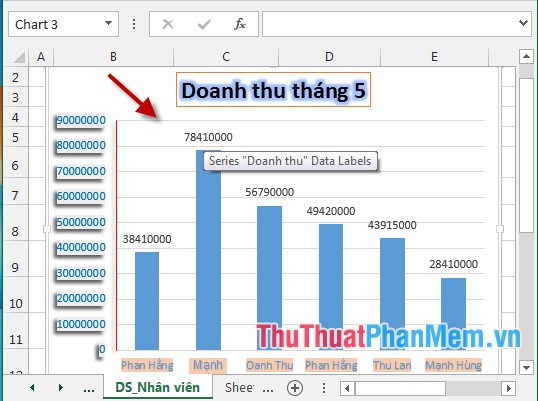
Step 2: Click the chart -> Design -> Add Chart Element -> GridLine -> click Primary Major Vertical to display vertical grid lines:

If you want smaller grid lines, do the following:
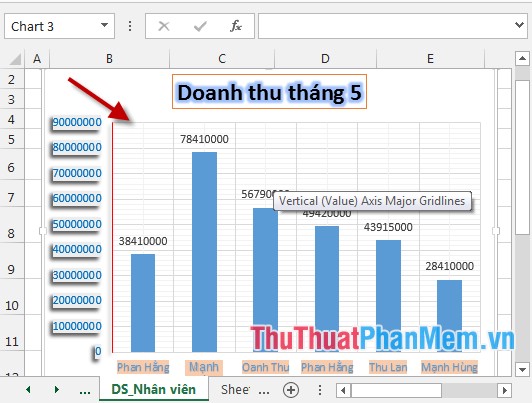
+ Click on the chart -> Design -> Add Chart Element -> GridLine -> click Primary Minor Horizontal to display horizontal grid lines with small size:

+ Similar to the grid lines have small vertical dimensions. After choosing the result:
2. Edit the grid lines of the chart:
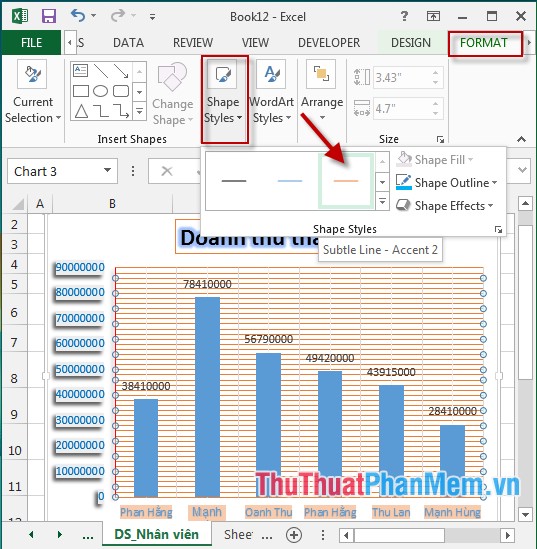
- Click on the grid of the chart -> Format -> Shape Styles -> choose the colors and effects for the grid of the chart in the section:
+ Shape Outline: Create color borders for the grid.
+ Shape Effects: Create effects for the grid.
- After modifying the grid lines the results are:
3. Hide the grid lines of the chart.
- Click on the chart -> Design -> Add Chart Element -> GridLine -> click again on the selected objects to display on the chart (as shown below, all Gridline objects are not displayed):

The above is a detailed guide on how to show grid lines in a chart in Excel 2013.
Good luck!
FAQ
What should I know about Hide and Show Gridlines?
Focus on the key features, requirements, limitations, and practical use cases explained in this guide.
How do I get the best results with Hide and Show Gridlines?
Follow the recommended steps, use current software or information, confirm compatibility, and review settings before major changes.
Are there any risks or limitations?
Potential limitations depend on compatibility, data quality, cost, privacy, support, and how the product or method is used.
Related Articles
 Instructions on How to Delete Gridlines in Excel3 minutes read
 How to Hide and Hide Sheets in Excel and Show Them Again5 minutes read
 Hide / Show the Formula Bar in Excel2 minutes read
 How to Hide, Show Notes in Tables on Excel: Create Excel Notes4 minutes read
 How to Hide and Show Sheet in Excel: Step-by-Step Guide3 minutes read
 Types of Data Hiding in Excel - Part End: Hide Excel Files7 minutes read
Reader Comments 0
Sign in with email or Google to join the discussion.