Table of Contents
This updated guide examines Learn Resource Monitor Tool in Windows Server 2012 and organizes the essential facts, background, and practical takeaways in clear American English.
To open the Resource Monitor, go to Server Manage → Tools .
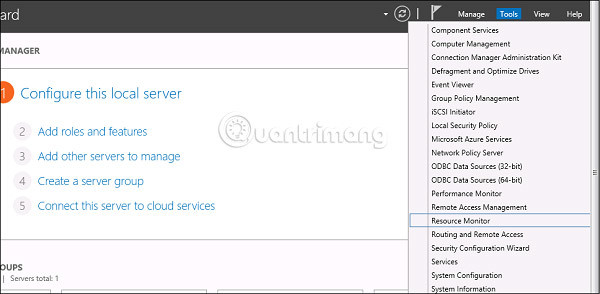
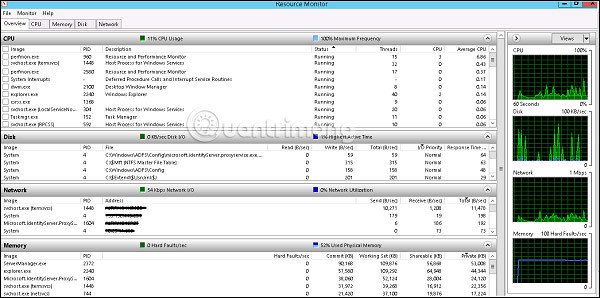
Click on ' Resource Monitor ', the first part is ' Overview '. It indicates how much CPU is being used by each application and on the right side of the table, it tracks in real time the CPU usage chart. The Memory sectionindicates how much memory each application uses and on the right side of the table, it is being tracked in the CPU usage graph (in real time).
The Disk tab splits into different hard disks. This will show the current I / O drive and disk usage level for each process. The Network tab displays the processes and network bytes sent and received. It also displays current TCP connections, currently listening ports and IDs.
:
- How to enable Remote Desktop Management in Windows Server 2012
- Learn about firewalls, Windows Firewall on Windows Server 2012
- 6 ways to access Control Panel on Windows Server 2012
FAQ
What is Learn Resource Monitor Tool in Windows Server 2012 about?
It provides a structured overview of Windows Server 2012, explains the main context, and highlights practical takeaways for readers.
Why does this topic matter?
Understanding the main concepts helps readers evaluate the issue, avoid common mistakes, and make better-informed decisions.
How should readers use this information?
Use the guidance as a practical starting point, confirm details that may have changed, and follow current product, safety, or security recommendations.
Related Articles
 5 Ways to Open Resource Monitor in Windows 103 minutes read
 Learn About the Management and Monitoring Functions of Resource15 minutes read
 11 Ways to Open Resource Monitor in Windows 105 minutes read
 How to Install and Open File Server Resource Manager in Windows3 minutes read
 Learn About Microsoft Network Monitor Tool -- Part 17 minutes read
 Don't Miss Out on Useful Tools Available on Windows 10!4 minutes read
Reader Comments 0
Sign in with email or Google to join the discussion.