Table of Contents
This updated guide examines How to Install and Open File Server Resource Manager in Windows and organizes the essential facts, background, and practical takeaways in clear American English.
How to install File Server Resource Manager
Step 1 - Go to Server Manager> Manage> Add Roles and Features> Next. Select Role-based or feature-based installation , then select Select a server from the server pool . Click Next.
Then, at the list, find File and Storage Services and expand it. Then, expand Files and iSCSI Services , select File Server Resource Manager and then a window will open.

Step 2 - Click Add features and then click Next.
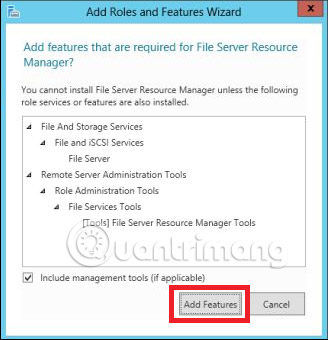
Step 3 - Click the Next button .

Step 4 - Click the Install button .

How to open File Server Resource Manager
Now that you have installed the File Server Resource Manager, open it by following the instructions below.
Step 1 - Click Server Manager> Tools> File Server Resource Manager .
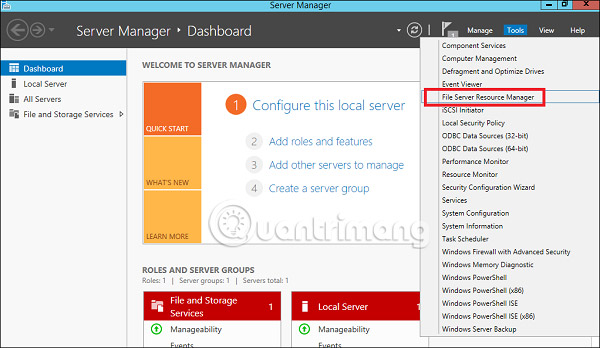
To set the norm for a folder, follow the steps as below.
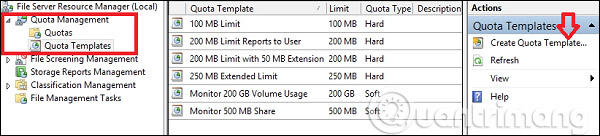
Step 2 - On the left panel click Quota Management , then expand the Create Quota Template section , then click Create Quota Template. on the right panel as shown in the screenshot below.
Step 3 - A new table will be opened, in which the most important aspect is to set the Space Limit , depending on your needs. Here, this example will set 2GB and then click OK.
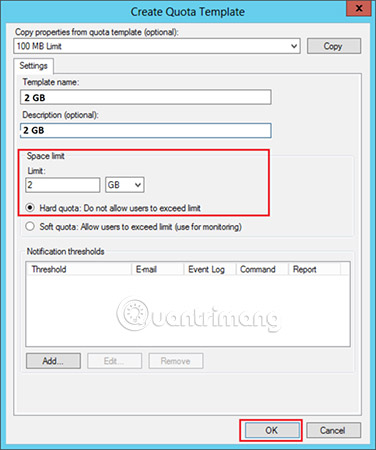
Step 4 - You must set a set quota for it and once the folder reaches that quota, it will send you a notification about where you will have the option to place the email.
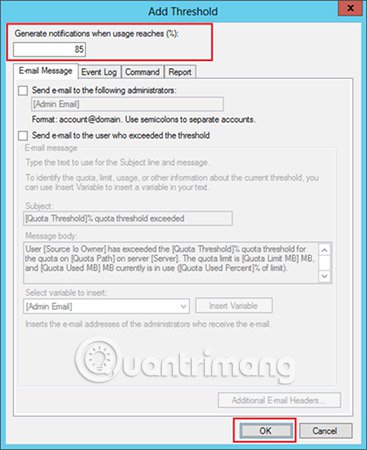
Step 5 - Click OK.
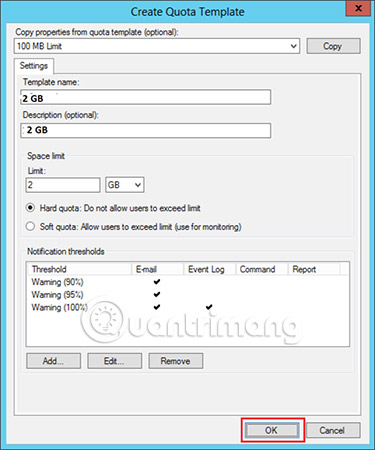
Step 6 - Then, to attach this norm to a folder, right-click on the template and then click Create Quota from Template.

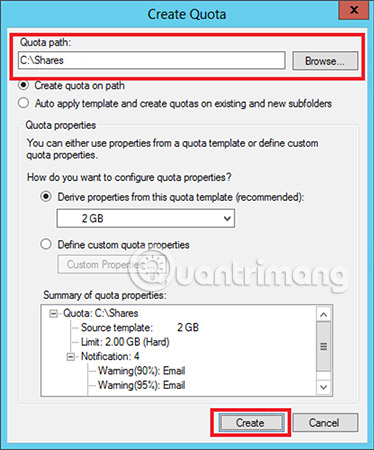
Step 7 - Click Browse. and then select your folder. Click Create.
Step 8 - To set restrictions for your folders, go to the left side of the File Screening Management> File screening templates window, then click on the left panel of Create File Screen Template.
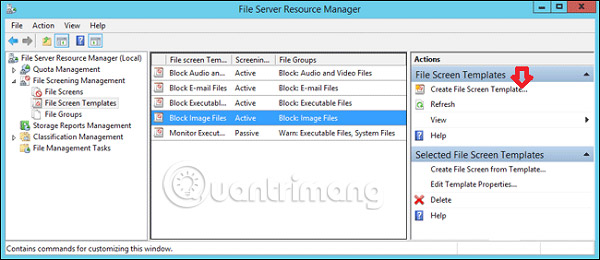
Step 9 - Click Browse. and find the folder you want to select. Finally, click Create.

:
- Learn about File and Storage Services in Windows Server 2012
- How to configure and adjust WSUS in Windows Server 2012
- How to install WSUS in Windows Server 2012
FAQ
What is How to Install and Open File Server Resource Manager in Windows about?
It provides a structured overview of Windows Server 2012, explains the main context, and highlights practical takeaways for readers.
Why does this topic matter?
Understanding the main concepts helps readers evaluate the issue, avoid common mistakes, and make better-informed decisions.
How should readers use this information?
Use the guidance as a practical starting point, confirm details that may have changed, and follow current product, safety, or security recommendations.
Related Articles
 Fsutil Resource Command in Windows7 minutes read
 5 Ways to Open Resource Monitor in Windows 103 minutes read
 7 Simple Ways to Open Task Manager on Macbook, Windows 10,117 minutes read
 How to Enable Cross Origin Resource Sharing (Cors) for Sharing3 minutes read
 Learn Resource Monitor Tool in Windows Server 20122 minutes read
 11 Ways to Open Resource Monitor in Windows 105 minutes read
Reader Comments 0
Sign in with email or Google to join the discussion.