Table of Contents
This guide provides a practical overview of Instructions on How to Create a New User on Windows 10, including its main features, benefits, limitations, and important considerations.
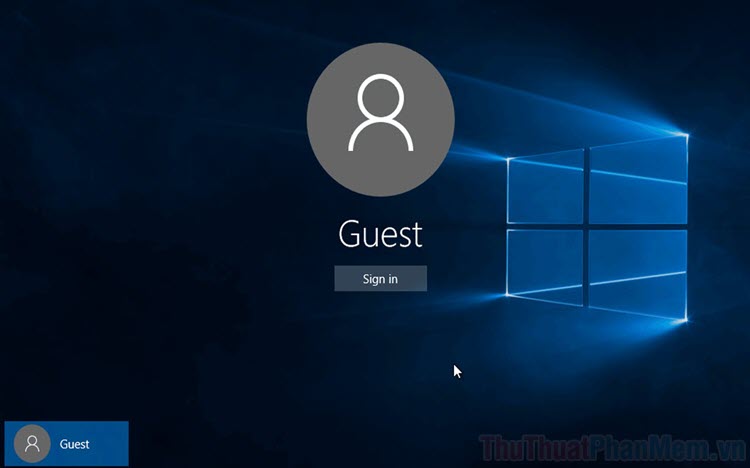
1. Create a User account on Windows 10 using Settings
Settings is a tool to manage all Windows settings, so creating a User account on Settings will be the most complete and easiest.
Step 1: First, press Windows + I to open the Settings window. Next, you select Accounts to set up accounts.

Step 2: Then, you select the card Family & Other User (1) and select Add someone else to this PC (2) to proceed to create more accounts.

Step 3: Normally, when you create an additional User account on Windows 10 you will need to use a Gmail account registered on Microsoft so it is very confusing. The fastest and most convenient way to create a User account is to choose I don't have this person's sign-in information .

Step 4: Next, you select Add a user without a Microsoft account to create a User without a Micosoft account.

Step 5: After that, you turn to set the information such as: Name, password, security answers.
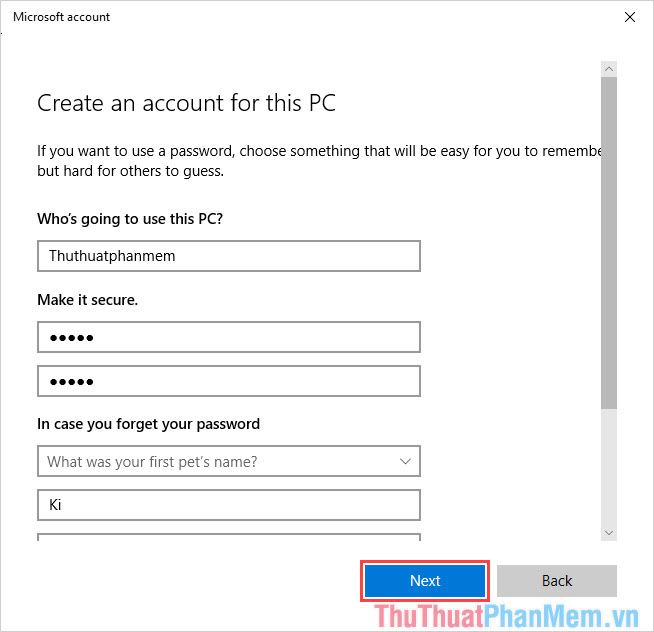
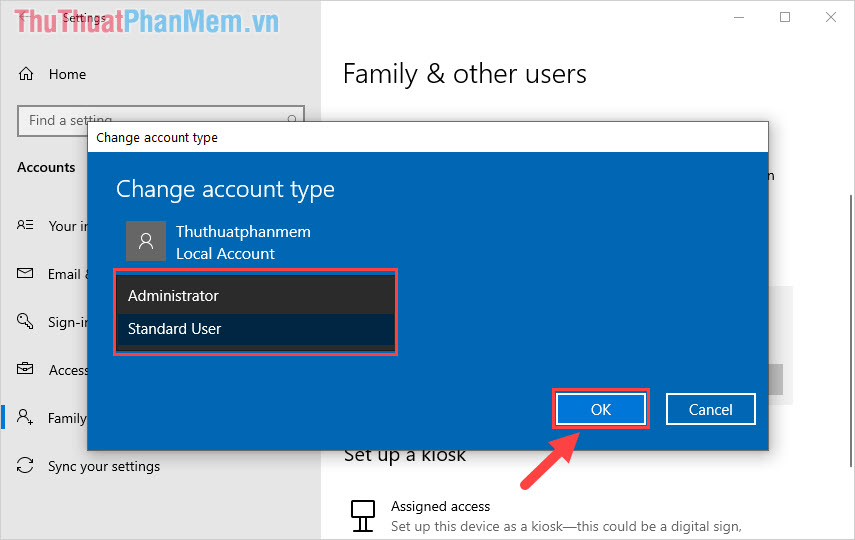
Step 6: When you're done, you can choose Change account type to change the account type .

Step 7: Here, you can set this as an Administrator account or a Standard User . The Administrator account will allow the User to intervene deeply into Windows, while the Standard User account will not interfere deeply with Windows.
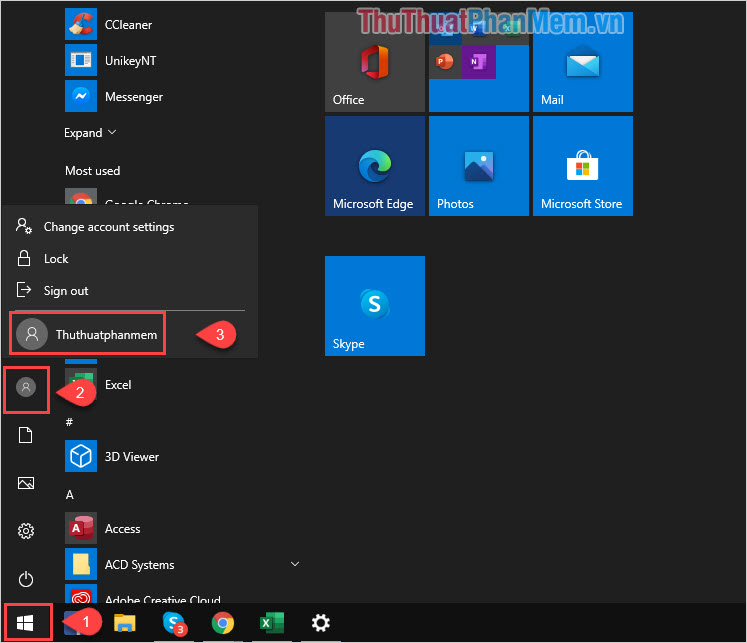
Step 8: So you have finished creating a User account on Windows 10. Now you select MenuStart -> Account -> User to switch to another account.
2. Create a User account on Windows 10 with Control Panel
Control Panel also provides a range of settings for the Windows 10 Supported operating systems.
Step 1: First, open MenuStart and enter Control Panel to open the edit window.

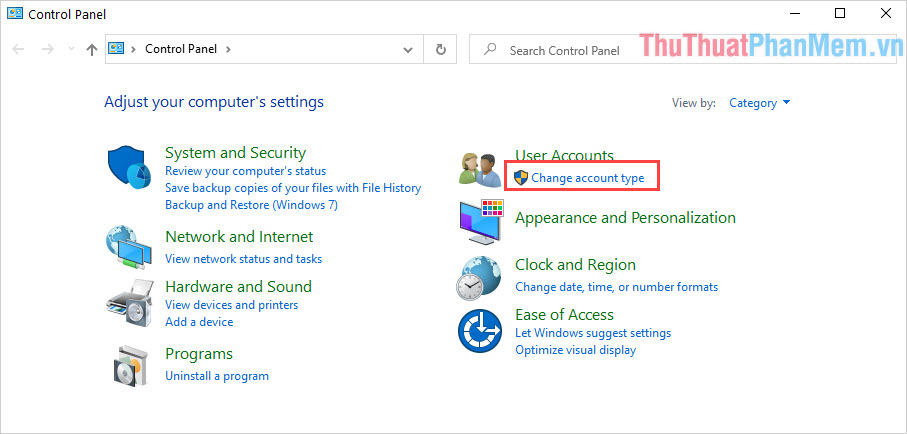
Step 2: Then, you select Change account type to proceed to set up the User account on Windows 10.
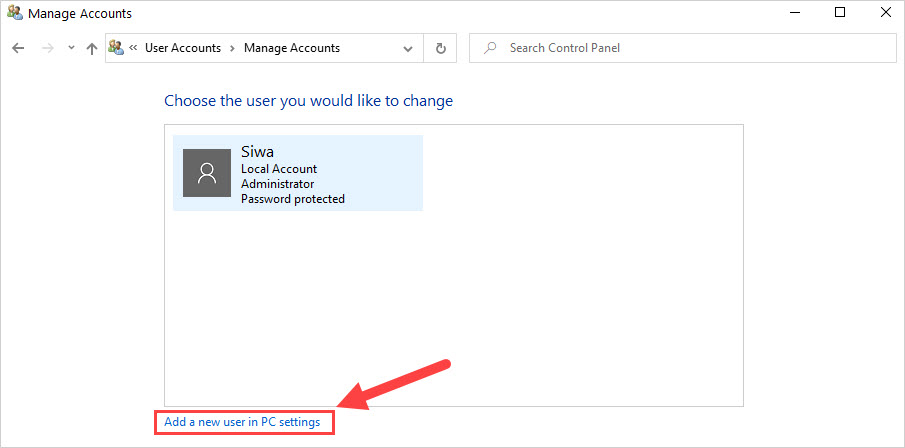
Step 3: Here, you proceed to select Add a new user in PC settings to create more User accounts.
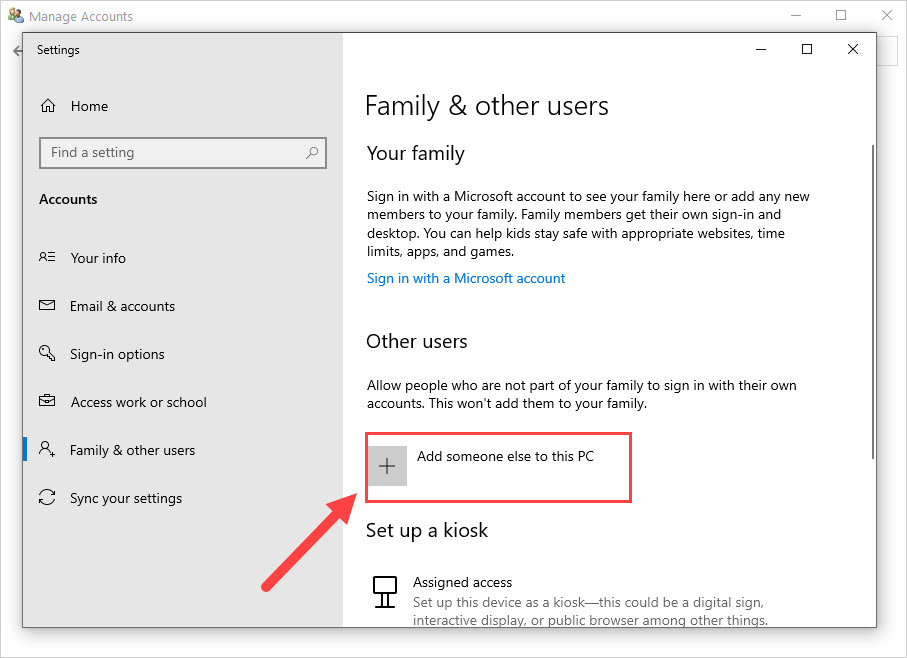
Step 4: Next, you select Add someone else to this PC and proceed to repeat the operation as Method 1.
In this article, Software Tips guide you how to create more User accounts on Windows 10. Supported operating systems, I wish you success!
FAQ
What should I know about Instructions on How to Create a New User on Windows 10?
Focus on the key features, requirements, limitations, and practical use cases explained in this guide.
How do I get the best results with Instructions on How to Create a New User on Windows 10?
Follow the recommended steps, use current software or information, confirm compatibility, and review settings before major changes.
Are there any risks or limitations?
Potential limitations depend on compatibility, data quality, cost, privacy, support, and how the product or method is used.
Related Articles
 Instructions on How to Create, Delete User Accounts on Windows4 minutes read
 How to Create a New Windows 11 User Quickly and Simply5 minutes read
 How to Create a New User on Windows 10 Using Computer Management5 minutes read
 Cannot Create a New User Account on Windows 10, 8.1 and 8, This5 minutes read
 How to Create a New User on Windows 117 minutes read
 Manage User on Windows by Command in CMD7 minutes read
Reader Comments 0
Sign in with email or Google to join the discussion.