Table of Contents
This updated guide examines Disk: How to Eject a Cd from Your Mac and organizes the essential facts, background, and practical takeaways in clear American English.
Method 1of 2:
Ejecting Normally
 Press your Mac's⏏Ejectbutton. This key is in the top-right corner of your Mac's keyboard. If the CD tray/slot is working correctly, the disk should slide right out.
- The disk may take a few seconds to eject if you were using it immediately before pressing the Eject button.
- If you're attempting to eject from an external disk drive instead, press and hold theF12key until the disk pops out. Most external disk drives also have a physical button that you can press.
- Some disk drives have a small pinhole in the front. You can insert a small paperclip or similar object into this hole and push to open manually the CD tray.
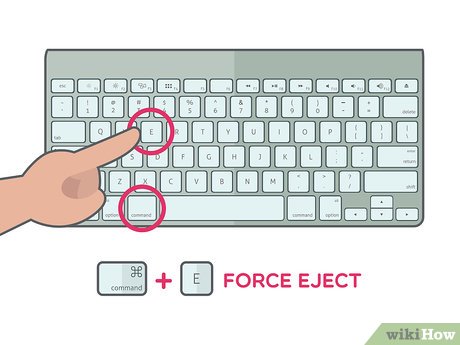 Press⌘CommandandEtogether. This keyboard shortcut will force your CD to eject if the Eject key isn't working but the CD drive is undamaged.
 Use the Finder. Open the Finder—which resembles a blue, face-shaped icon in your Mac's Dock—then do the following:
- Find the disk's name under "Devices" on the left side of the window.
- Click the "Eject" triangle icon to the right of the disk's name.
 Drag the disk icon into the trash. Locate the disk icon on your computer's desktop, click and drag it onto the Trash Can in the lower-right corner of the screen, and release the disk icon. This should prompt the CD to eject from your Mac.
 Eject the disc with iTunes. To do so:
- Open iTunes
- Click Controls in the upper-left side of the screen.
- Click Eject Disc or Eject [Name of Disk] at the bottom of the drop-down menu.
Method 2of 2:
Ejecting a Stuck Disk
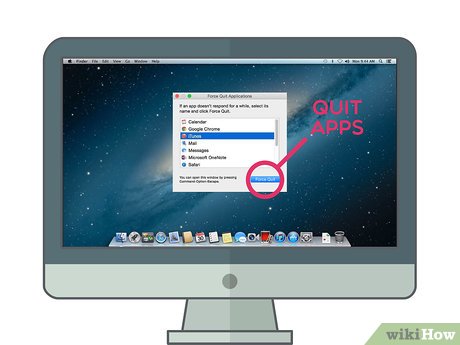 Close any open apps. Some CD drives—especially external ones—won't respond to ejection commands if the CD is currently being used by an app. You can keep web browsers open, but make sure things like iTunes, media players, video games, and any other programs that might be using the disk are shut down.
 Tilt your Mac while ejecting the disk. Angle the disk slot side of the Mac downward, then use one of the disk ejection techniques that you'd use for a working disk. Sometimes mechanical parts that drive the CD ejection can become weakened over time; gravity may provide the push you need to release the CD.
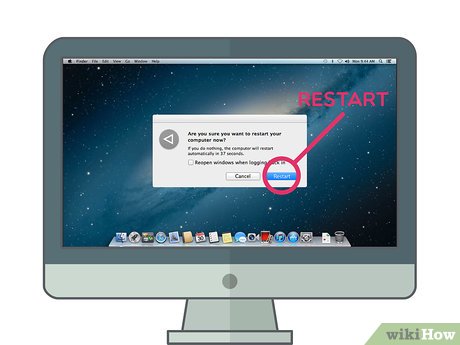 Restart your Macwhile holding down the mouse button. This will usually prompt your Mac to force the CD to eject upon starting back up.
- If you use a traditional mouse with your Mac, make sure you're holding down the left mouse button.
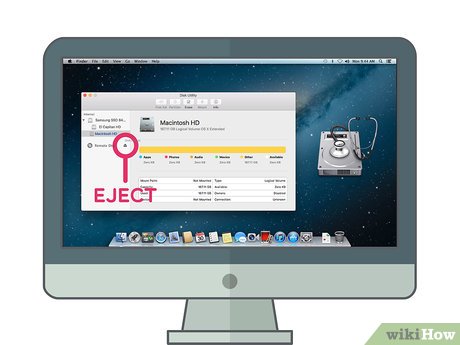 Use Disk Utility to open the CD tray. Open Spotlight by clicking the magnifying glass icon
 , typedisk utilityinto Spotlight, and click Disk Utility to open Disk Utility, then do the following:
- Click your disk's name in the left-hand side of the window.
- Click Eject at the top of the window.
 Use a Terminal command. Click Spotlight
 , type interminal, and click
 Terminal to open Terminal. Typedrutil ejectinto Terminal and press⏎Returnto force the CD drive open.
- If this command doesn't work, try typing indrutil tray ejectinstead.
 Retry the above methods after giving your computer a break. Shut down your computer for as long as possible (at least 10 minutes), then turn it back on and work through the above methods again to see if any of them work.[1]
 Take your computer to a professional. If none of the above methods work, it's most likely either because your CD drive itself no longer works, or because the CD in the CD drive is physically stuck. Take your computer to a computer repair store or an Apple store and allow a professional to physically remove the disc rather than attempting to do so yourself.
FAQ
What is Disk: How to Eject a Cd from Your Mac about?
It provides a structured overview of disk, explains the main context, and highlights practical takeaways for readers.
Why does this topic matter?
Understanding the main concepts helps readers evaluate the issue, avoid common mistakes, and make better-informed decisions.
How should readers use this information?
Use the guidance as a practical starting point, confirm details that may have changed, and follow current product, safety, or security recommendations.
Related Articles
 How to Eject a CD with a Mac: Step-by-Step Guide7 minutes read
 How to Use the Eject Button on the MacBook5 minutes read
 How to Properly Eject an Iphone from a Mac3 minutes read
 5 Ways to Securely Disconnect a Removable Hard Drive on a5 minutes read
 How to Push Water from iPhone Speaker with Water Eject3 minutes read
 Why Turn Off Confirm Ejects in Among Us?4 minutes read
Reader Comments 0
Sign in with email or Google to join the discussion.