Table of Contents
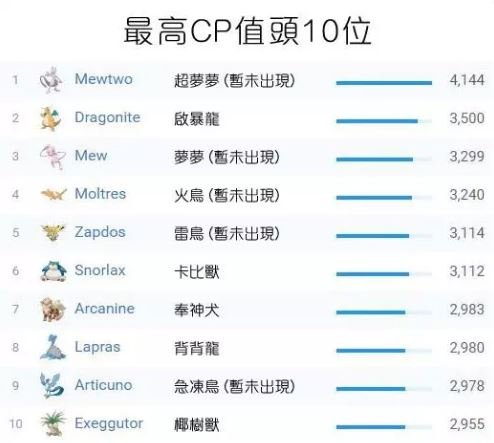
Combat Power (CP) is a summary of a Pokémon's current battle strength, calculated from its Attack, Defense, Stamina, individual values and level. It is useful for a quick comparison, but it does not reveal whether a Pokémon has the right moves, typing or role for a particular battle.
Older “top 10 strongest Pokémon” lists are unreliable because Pokémon GO has added many species, moves and battle formats since launch. Balance updates can also change which attackers, defenders and PvP choices perform best.
What CP tells you
CP combines several underlying values into one visible number. Powering up raises a Pokémon's level and usually increases both CP and HP. Two Pokémon of the same species can show different CP because their level and individual values differ.
A high maximum CP often indicates strong overall stats, but it is not a universal ranking. Some high-CP Pokémon have unsuitable moves or typing for a target, while lower-CP species can be valuable in Great League or Ultra League because those formats impose CP limits.
Attack affects damage and CP
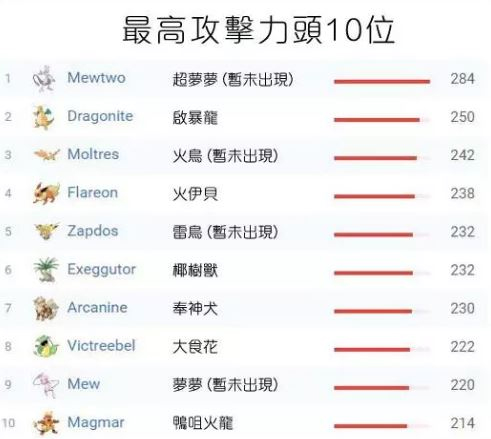
Attack contributes to the damage a Pokémon can deal and has a strong influence on the CP formula. In raids, high Attack and effective moves help finish a boss before the timer expires. In PvP, however, maximizing Attack is not always ideal because a lower Attack value can sometimes allow more Defense and HP under a league's CP cap.
Pokémon GO does not use the main-series split between physical and special attacks in the way the original article described. Fast Attacks and Charged Attacks have their own types, power and energy behavior, and their performance depends on the battle format.
Defense reduces incoming damage
Defense helps a Pokémon withstand attacks. It is relevant to all Pokémon GO combat damage rather than only to a separate category of “physical” moves. A durable Pokémon can stay in battle longer, but Defense should be considered together with HP, resistances and the opponent's attack type.
Gym defenders, raid counters and PvP Pokémon use bulk differently. A Gym defender may benefit from durability and awkward matchups, while a raid attacker must also contribute enough damage before time expires.

Stamina determines HP
Stamina is the underlying species stat used to calculate a Pokémon's visible HP. HP represents how much damage it can take before fainting. A high-Stamina species may have a large HP total, but that alone does not make it the best choice if its Defense, moves or type matchup are poor.
When a Pokémon reaches zero HP, use a Revive or Max Revive before healing it further. Potions restore lost HP but do not revive a fainted Pokémon.

Where individual values fit
Each Pokémon has individual values, commonly called IVs, for Attack, Defense and HP. The in-game appraisal shows their relative quality. IVs refine a species' base stats; they do not turn every species into an equally strong battler.
A perfect appraisal is not automatically the best investment. For raids, species and moves usually matter more than a small IV difference. For CP-capped PvP leagues, the preferred IV spread may include lower Attack so the Pokémon can reach a higher level without exceeding the cap.
How to choose a strong Pokémon for a task
- Start with the battle format. Decide whether the Pokémon is for raids, Gyms, Team GO Rocket or a specific GO Battle League.
- Check the matchup. Use attacks that are super effective and choose types that resist the opponent where possible.
- Review the moves. A strong species with the wrong Fast or Charged Attack may underperform.
- Consider level and cost. Compare the Stardust, Candy and special-item cost needed to make it usable.
- Use appraisal in context. Prefer IVs that support the chosen format rather than chasing a perfect rating for every Pokémon.
Why fixed strongest-Pokémon lists age badly
The four archived images on this page reflect a very early roster. They can show how players compared CP, Attack, Defense and HP at the time, but they are not current rankings. New Pokémon, form changes, move updates, Mega Evolution, Shadow bonuses and format rules can all change the answer.
For a current team, search by the exact activity and opponent—for example, a raid boss or PvP league—rather than asking for one Pokémon that is “strongest” in every situation.
Related Articles
 Amazingly, the Whole Herd of Buffaloes Returned to Save the Same Kind from Hungry Lions4 minutes read
 Wild Buffalo: Complete Guide3 minutes read
 Komodo Assassin Dragon Slayed a Giant Buffalo with a Cup4 minutes read
 List of the Most Current Buffalo Battery Smartphones by Phone Arena3 minutes read
 How to Set a Schedule on a Buffalo Linkstation3 minutes read
 Furmark - Software to Test VGA and Hardware Performance6 minutes read
Reader Comments 0
Sign in with email or Google to join the discussion.