Table of Contents
This updated guide examines Power: How to Turn on a Mac Computer and organizes the essential facts, background, and practical takeaways in clear American English.
Method 1of 4:
MacBook Pro and MacBook Air
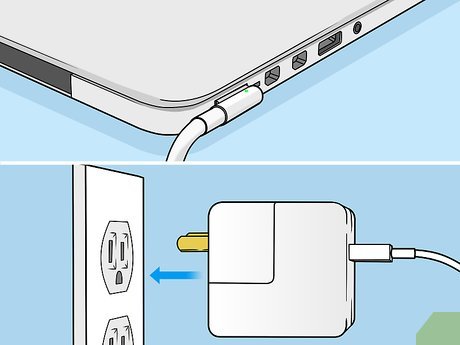 Charge your Mac laptop. If your battery is not charged, plug your laptop into a power source now. Some Mac notebooks will automatically power on once plugged into a power source.[1]
 Open the lid of your laptop. Most newer Mac laptop models will power on automatically once you open the lid. If this doesn't turn your laptop on, skip to the next step.
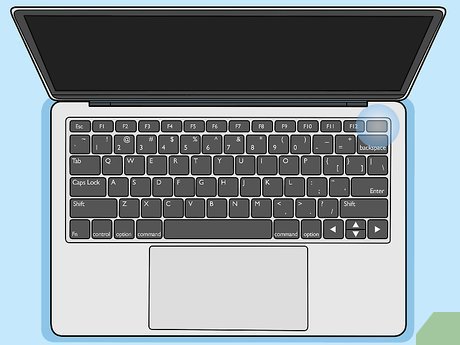 Locate the Power button
 . The location of this button varies by model.
- If your Mac's keyboard has a row of physical function keys (F1-F12) running along the top of the keyboard, you'll find the power key at the far-right end of this row. The key has a "Power" icon, which is an open circle that contains a vertical line at its center.
- If you're using a MacBook with Touch Bar and/or Touch ID (such as some MacBook Pros and MacBook Air models from 2018 and later), the power button is a solid black touch key at the top-right corner of the keyboard.
 Press the Power button. You may have to hold it for a few moments. Once you see activity on the screen, you can lift your finger from the Power button. A chime will usually sound on a successful power-up.
- Depending the model, you may be able to power on the laptop by pressing any key on the keyboard.
Method 2of 4:
iMac and iMac Pro
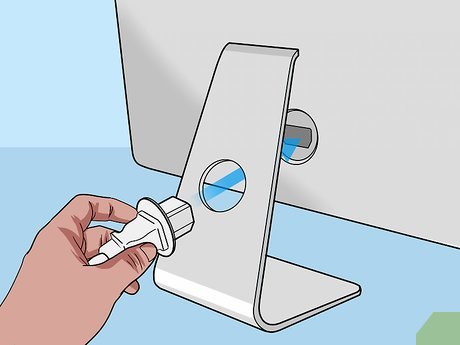 Plug your iMac into a power source. Your iMac must be connected to a functional power outlet to turn on.
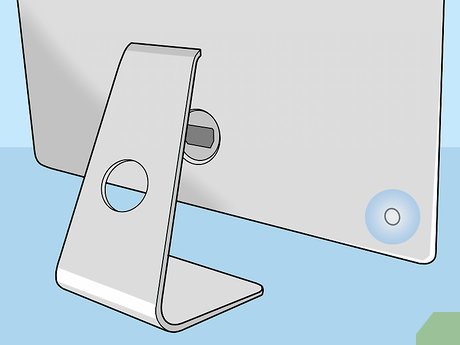 Locate the Power button
 . It's a round button that's labeled with the "Power" icon, which is an open circle containing a vertical line, and located on the back of the computer at the bottom-right corner.
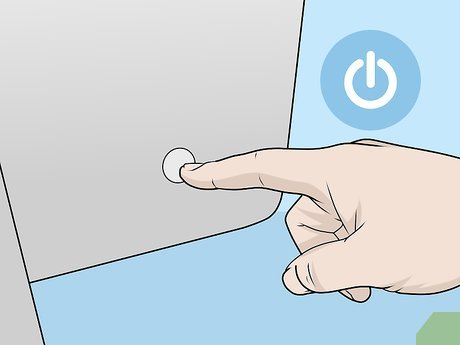 Push the Power button. You may have to hold it down for a few seconds. A chime will sound on a successful power-up. EXPERT TIP
 General Manager of macVolks, Inc. Chiara Corsaro is the General Manager and Apple Certified Mac & iOS Technician for macVolks, Inc., an Apple Authorized Service Provider located in the San Francisco Bay Area. macVolks, Inc. was founded in 1990, is accredited by the Better Business Bureau (BBB) with an A+ rating, and is part of the Apple Consultants Network (ACN).
 Chiara Corsaro General Manager of macVolks, Inc.
Check the outlet and cords if your Mac isn't turning on. If either the plug or the cable is damaged, then your computer might not turn on no matter what you try to do. Try restarting the outlet or plugging the cord into a different one and ensure that the power cords are properly connected to the computer before doing anything else.
Method 3of 4:
Mac Pro Desktop
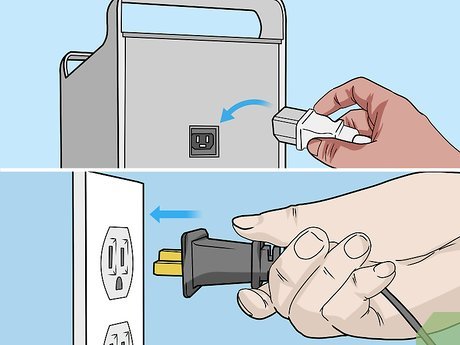 Plug your Mac Pro into a power source. Your Mac must be connected to a functional power outlet to turn on.
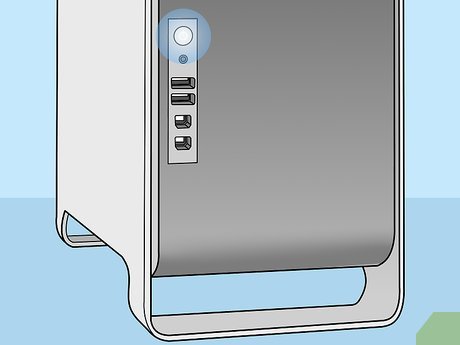 Locate the Power button
 . It's a round button that's labeled with the "Power" icon, which is an open circle containing a vertical line. If you're using a 2019 Mac Pro, it'll be on the top of the tower. On earlier Mac Pros, you'll find the button on the rear side of the tower.
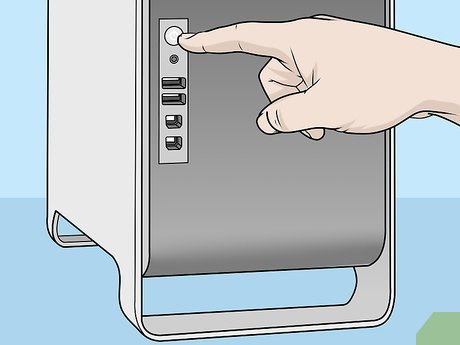 Push the Power button. The Mac will power on or wake from Sleep mode. A chime will sound on a successful power-up.
Method 4of 4:
Mac Mini
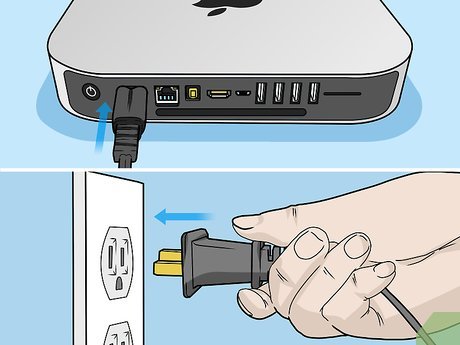 Plug your Mac Mini into a power source. Your Mac must be connected to a functional power outlet to turn on.
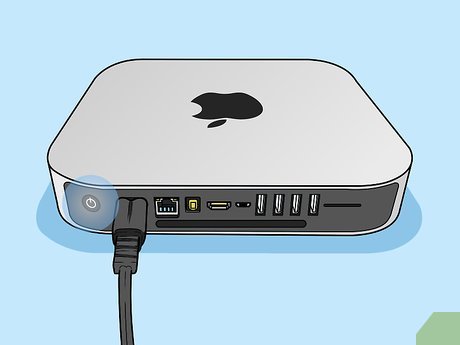 Locate the Power button
 . It's a round button labeled with the "Power" icon, which is an open circle containing a vertical line. You'll find it on the back of the Mac Mini on the far-left side.
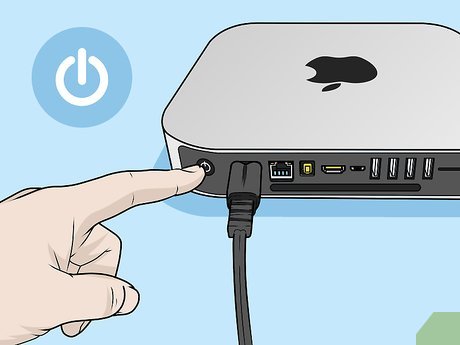 Push the Power button. The Mac will power on or wake from Sleep mode. A chime will sound on a successful power-up.
FAQ
What is Power: How to Turn on a Mac Computer about?
It provides a structured overview of power, explains the main context, and highlights practical takeaways for readers.
Why does this topic matter?
Understanding the main concepts helps readers evaluate the issue, avoid common mistakes, and make better-informed decisions.
How should readers use this information?
Use the guidance as a practical starting point, confirm details that may have changed, and follow current product, safety, or security recommendations.
Related Articles
 How to Fix the Computer Can Not Turn Off6 minutes read
 How to Force Shutdown a Mac Computer: Clear Instructions10 minutes read
 How to Turn Off Your Computer Quickly with a Keyboard on Windows4 minutes read
 How to Turn Off Computer Using Keyboard on Windows, MAC in a Snap5 minutes read
 How to Turn Off Windows 10 Computer Without Waiting for the6 minutes read
 Instructions for Scheduling a Windows 10 Computer Shutdown7 minutes read
Reader Comments 0
Sign in with email or Google to join the discussion.