Table of Contents
The first two Pokémon generations established the standard Poké Balls and introduced specialty balls for particular targets. A stronger ball is not always the best choice: Great Balls and Ultra Balls provide general capture bonuses, while Generation II's Apricorn balls work only when their specific conditions are met.
This guide covers the core-series games rather than Pokémon GO. Capture formulas, availability and a few ball effects have changed between games, so important generation-specific differences are noted below.
Poké Balls introduced in Generation I
Poké Ball
The standard Poké Ball is the baseline capture item. In most core-series explanations it has a 1× catch-rate modifier, meaning that it adds no special bonus. Its success still depends on the target species' catch rate, remaining HP, status condition and the formula used by the game.
Poké Balls are not limited to Pokémon within a particular level range. They can catch stronger targets, but a ball with a better modifier or a useful situational bonus usually offers better odds.

Great Ball
The Great Ball is a general upgrade over a Poké Ball. In modern core-series games it uses a 1.5× modifier. Generation I calculated catches differently, but the practical role was similar: it offered better odds than the standard ball without requiring a special condition.

Ultra Ball
The Ultra Ball is another general-purpose option and normally has a 2× modifier in the core series. It is useful when no specialty ball has a stronger applicable bonus. Its name is sometimes misspelled as “Utral Ball,” but Ultra Ball is the official English name.

Safari Ball
Safari Balls were originally supplied inside Safari Zone areas and could not be selected for ordinary encounters outside them. The number available and the capture system depended on the game. Later titles have handled Safari Balls differently, so there is no single modifier that accurately describes every appearance.
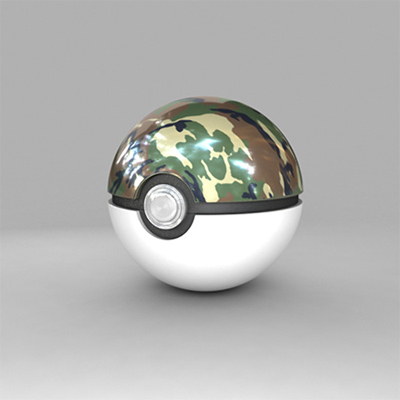
Master Ball
The Master Ball catches a wild Pokémon without failure in standard eligible encounters. Because players usually receive very few, it is commonly saved for a rare Pokémon that might flee, a difficult legendary encounter or another target the player does not want to risk losing. Scripted encounters and situations in which balls cannot be used remain exceptions.
Poké Balls introduced in Generation II
Most of the following balls were originally made from Apricorns in Pokémon Gold, Silver and Crystal. Remakes and later games retained their basic themes, but some modifiers, availability rules and early programming errors differ.
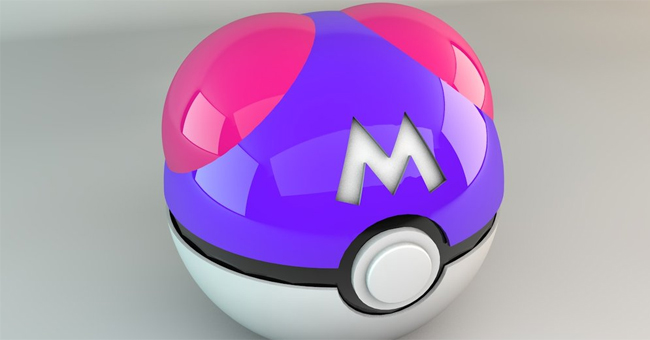
Level Ball
The Level Ball compares the level of the Pokémon currently battling with the level of the wild target. It receives a larger bonus as that level advantage grows: the familiar tiers are 2× when the user's level is higher, 4× when it is at least double and 8× when it is at least four times the target's level. If the user's Pokémon is not higher level, the ball has no bonus.
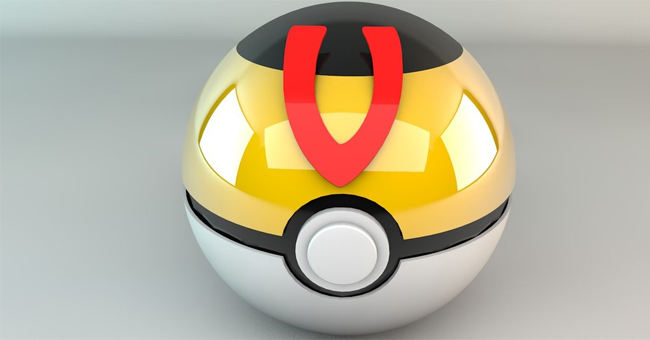
Lure Ball
The Lure Ball was designed to work better on Pokémon encountered through fishing. Outside the qualifying encounter it performs like a standard Poké Ball. Its exact bonus and the encounters that qualify have varied, and one remake had an implementation problem, so check the rules for the specific game rather than assuming every Water-type receives the bonus.

Moon Ball
The Moon Ball is intended for Pokémon from evolutionary families that use a Moon Stone. In games where the effect works as intended, it provides a strong bonus for those species and no bonus for unrelated Pokémon. The original Generation II implementation contained an error, so the ball did not apply its intended modifier there; later games corrected the behavior.

Friend Ball
The Friend Ball normally catches at the same rate as a standard Poké Ball. Its benefit is the captured Pokémon's starting Friendship, which is set to a higher value than usual. Exact Friendship values have changed across generations, but the purpose remains useful for Friendship-based evolution and related mechanics.

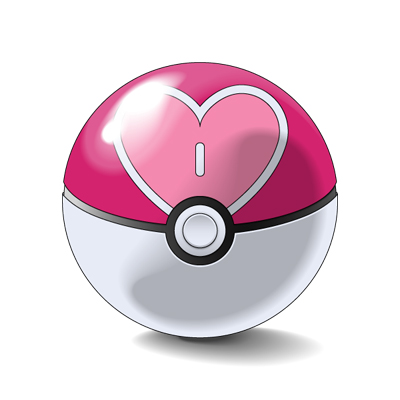
Love Ball
The Love Ball's intended condition is more specific than “same type.” It receives its large bonus when the wild Pokémon is the same species as the player's active Pokémon and is the opposite gender. Genderless Pokémon and targets that do not meet both requirements receive no bonus. The original Generation II games had a gender-check error, while later implementations use the intended condition.
Heavy Ball
The Heavy Ball adjusts the catch calculation according to the target's weight rather than multiplying the rate by one fixed number. It is more useful for very heavy Pokémon and may be worse than a standard ball for light targets. Weight thresholds and the size of each adjustment differ between generations, so old pound-based tables should not be applied to every game.

Fast Ball
The modern Fast Ball is effective against species with a high base Speed, commonly using 100 or more as the qualifying value. It does not check the target's current in-battle Speed after stat changes. The original Generation II version was affected by a programming error and applied its bonus only to Magnemite, Grimer and Tangela, which explains some older descriptions of those three species.

Sport Ball
Known as the Park Ball in the original English versions of Gold, Silver and Crystal, this ball was supplied during the Bug-Catching Contest. Later games use the name Sport Ball. In contest appearances it is tied to that activity; when obtainable as a normal ball in newer titles, it generally has the same basic catch modifier as a Poké Ball.

How to choose among these balls
- Use an Ultra Ball when you want a dependable general bonus.
- Use a Level Ball when your active Pokémon greatly outlevels the target.
- Choose a Moon, Love, Fast or Heavy Ball only after confirming its condition.
- Use a Friend Ball when starting Friendship matters more than capture odds.
- Reserve a Master Ball for an encounter where eliminating the risk of failure is worth its rarity.
Specialty balls reward matching the ball to the encounter. If no condition applies, compare the ball's ordinary modifier with a Great Ball or Ultra Ball instead of judging it by appearance or generation number.
Related Articles
 25 Interesting Things About Hard Drives You May Not Know12 minutes read
 10 Things You Must Check Before Signing up for a Online Yoga9 minutes read
 What Is VGA? Some Common Types of VGA Today4 minutes read
 5 Things You Can Do with Fire TV Without Ads: Explained7 minutes read
 Distinguishing the Most Popular Types of Headphones6 minutes read
 Network Basics: Part 14 -- Security Groups9 minutes read
Reader Comments 0
Sign in with email or Google to join the discussion.