Table of Contents
This guide provides a practical overview of Rotate 3D Graphs, including its main features, benefits, limitations, and important considerations.

For example, the following chart needs to be shot in 3D:
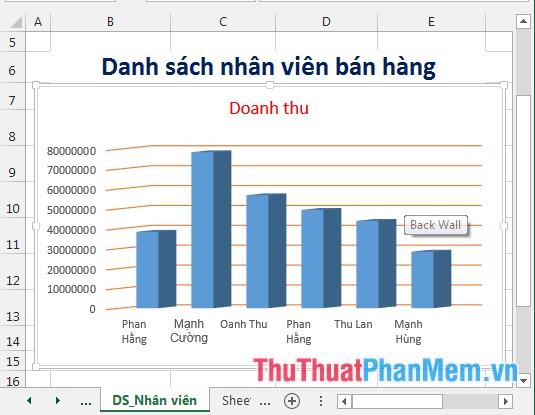
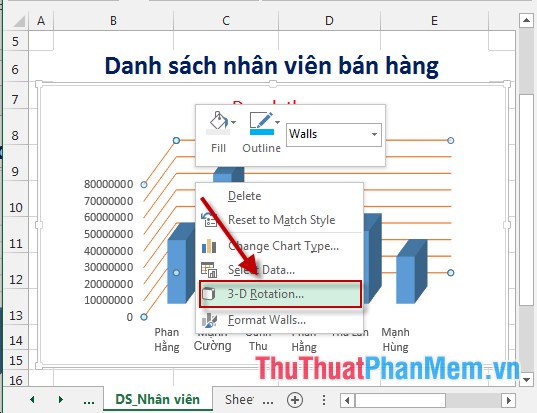
Step 1: Right-click the object in the chart -> 3-D Rotation.
Step 2: The Format Chart Area dialog box appears -> scroll down to 3-D Rotation to enter the following data:
+ X Rotation : Enter the rotation angle for the X axis.
+ Y Rotation : Enter the rotation angle for the Y axis.
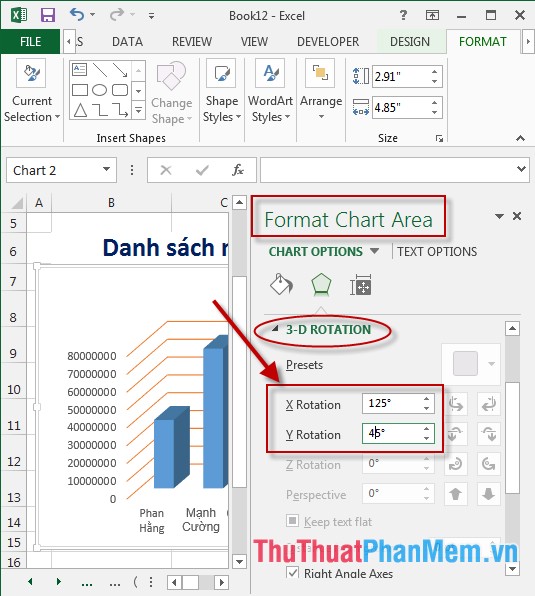
Step 3: After entering the values of the graph automatically rotate according to the entered data -> results:

- Similarly, you can rotate 3-D Rotation with other objects in the chart. For example, with the content on the Y axis -> right click and choose 3-D Rotation:

- A dialog box appears that selects the rotation angle:
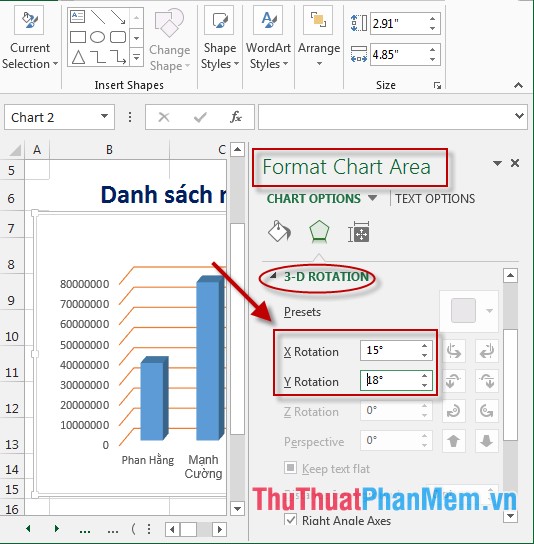
- Similarly perform 3-D Rotation with the rest of the chart objects -> get the results:

The above is a detailed guide on how to rotate 3D graphs in Excel 2013.
Good luck!
FAQ
What should I know about Rotate 3D Graphs?
Focus on the key features, requirements, limitations, and practical use cases explained in this guide.
How do I get the best results with Rotate 3D Graphs?
Follow the recommended steps, use current software or information, confirm compatibility, and review settings before major changes.
Are there any risks or limitations?
Potential limitations depend on compatibility, data quality, cost, privacy, support, and how the product or method is used.
Related Articles
 How to Draw Charts in Excel: Create Excel Charts7 minutes read
 How to Rotate Text in Excel: Rotate the Word on Excel4 minutes read
 How to Rotate Paper Size in Excel: How to Rotate Excel Paper Size4 minutes read
 Types of Data Hiding in Excel - Hide Pictures, Graphs, Rows5 minutes read
 Create Excel Charts: How to Graph Functions in Excel4 minutes read
 How to Rotate Images Backwards, Horizontally on Computers Without4 minutes read
Reader Comments 0
Sign in with email or Google to join the discussion.