Table of Contents
This guide provides a practical overview of Guide to Backup and Restore Device Drivers in Windows, including its main features, benefits, limitations, and important considerations.
It's a good idea to back up your device drivers before performing a clean install to make it easy to restore any of these drivers if needed later.
This guide will show you how to back up and restore all 3rd party device drivers on a Windows 10 PC.
Note : You must be logged in as an admin to be able to back up and restore the driver.
Backup all device drivers in Command Prompt
Step 1. Open Command Prompt with admin rights.
Step 2. Type one of the two commands below that you want to use into the Command Prompt and press Enter.
dism /online /export-driver /destination:"full path of folder"Or:
pnputil /export-driver * "full path of folder"Replace with the full path of the actual existing directory (eg F: Drivers Backup ) where you want to export all the third-party device drivers. If this directory does not currently exist, you will need to create it before running the command. For example:
dism /online /export-driver /destination:"F:Drivers Backup" Enter the command into the Command Prompt
Step 3. When the export is finished, you can close the Command Prompt if you want.
Step 4. Device drivers will now be exported to the specified folder location, acting as the backup.
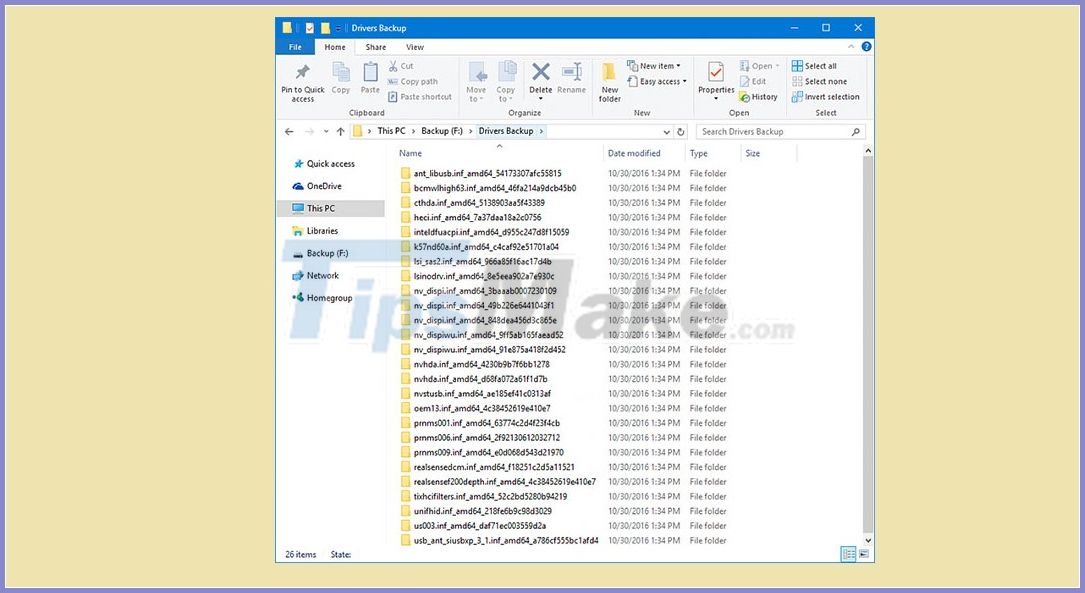 The device drivers will be exported to the specified folder location
Backup all device drivers in PowerShell
Step 1. Open PowerShell as admin.
Step 2. Type the command below into PowerShell and press Enter.
Export-WindowsDriver -Online -Destination "full path of folder"Replace with the full path of the actual existing directory where you want to export all the third-party device drivers. If this directory does not currently exist, you will need to create it before running the command. For example:
Export-WindowsDriver -Online -Destination "F:Drivers Backup" Enter the command into PowerShell
Step 3. When the export is finished, you can close PowerShell if you want.
Step 4. Now, the device drivers will be exported to the specified folder location for the backup role.
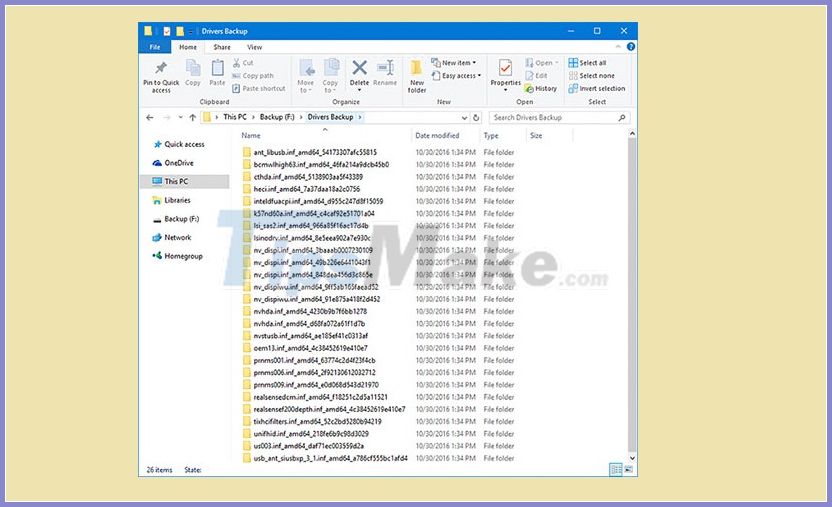 The device drivers are in the specified directory
Restore device driver backup in Device Manager
Step 1. Open Device Manager.
Step 2. Right-click or press and hold on the device (eg Intel (R) RealSense (TM) 3D Camera (Front F200) Depth ) where you want to restore the driver backup and select Update driver.
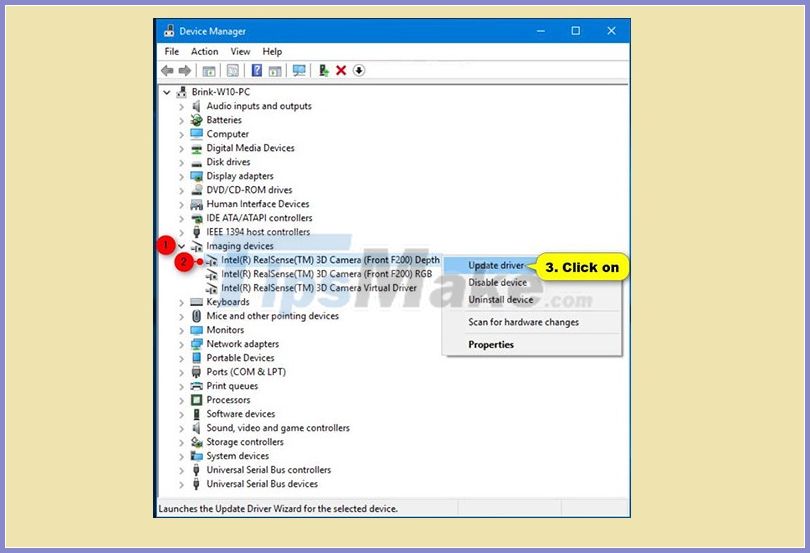
Step 3. Click Manually install a driver .

Step 4. Follow the steps below to select the folder containing the device driver backup above.
- Click the Browse button .
- Navigate to and select the folder containing the device backups.
- Click OK.
- Check the Include subfolders box .
- Click Next.
 Select the folder that contains the device driver backup
Step 5. Device Manager will now search for and install the device driver if it's newer than what is currently installed.
Step 6. Once you're done restoring the driver backup, you can close Device Manager if you want.
Restore all device drivers in the Command Prompt
Step 1. Open Command Prompt with admin rights.
Step 2. Type the command below that you want to use into the Command Prompt and press Enter.
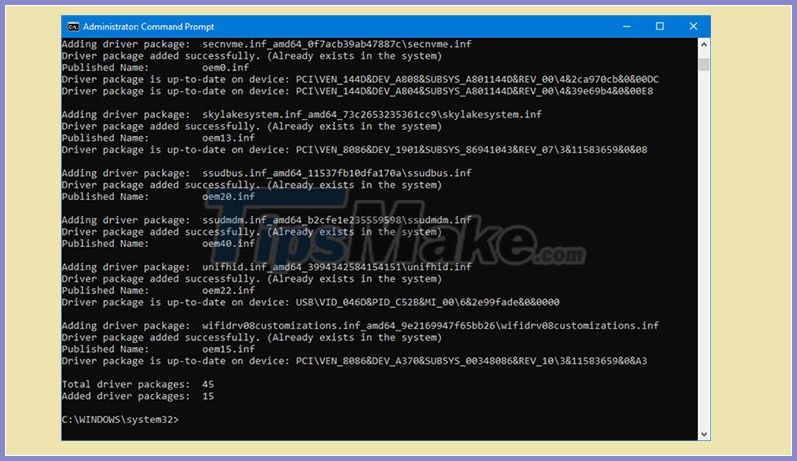
pnputil /add-driver "full path of folder*.inf" /subdirs /install /rebootReplace with the full path of the actual folder where you exported all the third-party device drivers. For example:
pnputil /add-driver "E:Drivers Backup*.inf" /subdirs /install /rebootThe / reboot option in the command will automatically restart your computer if needed to complete the driver import operation.
Make sure you save and close everything that is open before running this command.
Step 3. When the import finishes, you can close the Command Prompt if you want.

Good luck!
FAQ
What should I know about Guide to Backup and Restore Device Drivers in Windows?
Focus on the key features, requirements, limitations, and practical use cases explained in this guide.
How do I get the best results with Guide to Backup and Restore Device Drivers in Windows?
Follow the recommended steps, use current software or information, confirm compatibility, and review settings before major changes.
Are there any risks or limitations?
Potential limitations depend on compatibility, data quality, cost, privacy, support, and how the product or method is used.
Related Articles
 How to Use Backup and Restore on Windows 7?6 minutes read
 How to Back up and Restore Drivers in Windows 10, Backup and Restore4 minutes read
 How to Backup and Restore Drivers on Windows 105 minutes read
 Configure the System Restore Feature in Windows 109 minutes read
 Complete How to Use All Backup and Restore Tools on Windows 1012 minutes read
 Steps to Backup and Restore Windows 10 Driver with 1 Command7 minutes read
Reader Comments 0
Sign in with email or Google to join the discussion.