Table of Contents
This guide provides a practical overview of Data Filtering (Data Filter), including its main features, benefits, limitations, and important considerations.

1. Simple data filtering 1 condition.
Step 1: Select the data you want to filter -> Data -> Filter -> data column appears arrow containing the options:
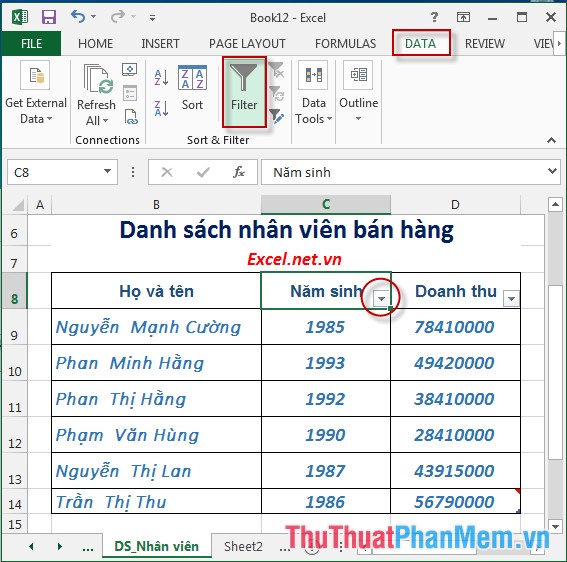
Step 2: If you want to filter by a certain value, do the following: Uncheck Select All and select the value to be filtered, for example, here filter the employees born in 1987 -> OK:

- Data of employees with 1987 birth year are displayed:

- If you want to display all data -> click the arrow -> select Select All -> OK:

- After clicking OK the results:

2. Filter data by multiple conditions.
For example, want to filter employees with sales greater than or equal to 43915000 and greater than 74810000.
Step 1: Click the arrow -> drop down box -> click Custom Filter.

Step 2: The Auto Fillter dialog box appears, enter the values as shown -> OK:
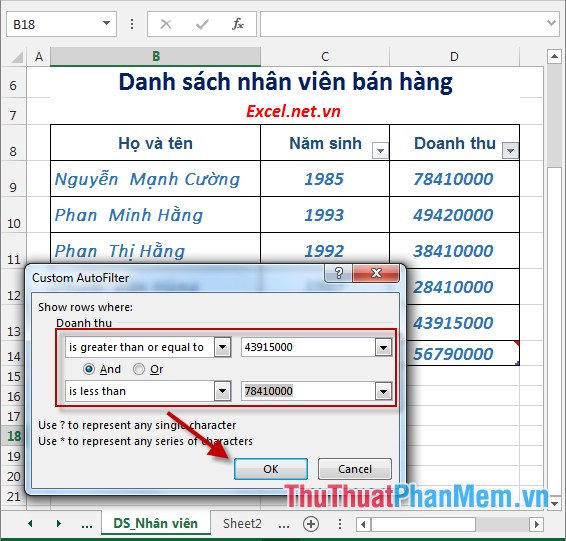
- In case you want to display all data -> click the arrow -> click Select All:
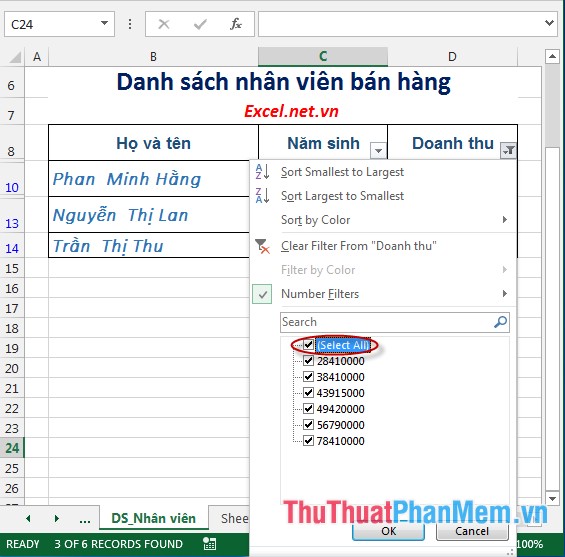
The above is a detailed guide on how to filter data in Excel 2013.
Good luck!
FAQ
What should I know about Data Filtering (Data Filter)?
Focus on the key features, requirements, limitations, and practical use cases explained in this guide.
How do I get the best results with Data Filtering (Data Filter)?
Follow the recommended steps, use current software or information, confirm compatibility, and review settings before major changes.
Are there any risks or limitations?
Potential limitations depend on compatibility, data quality, cost, privacy, support, and how the product or method is used.
Related Articles
 MS Excel 2007 - Lesson 8: Sort and Filter: Excel Data Filtering3 minutes read
 Advanced Data Filtering in Excel3 minutes read
 How to Use Advanced Filter to Filter Data on Excel5 minutes read
 How to Remove Duplicates in Excel: Filtering Excel Data5 minutes read
 Excel 2019 (Part 19): Filtering Data11 minutes read
 Filter Data in Excel with Advanced Filter5 minutes read
Reader Comments 0
Sign in with email or Google to join the discussion.