Table of Contents
This updated guide examines Alt ++ Tab Shortcuts: Trick to Use Alt ++ Tab on Windows 10 and organizes the essential facts, background, and practical takeaways in clear American English.
People often use the standard Alt + Tab key by pressingAlt+Tab, holding down theAltkey and then continuing to press theTabkey to move through open windows. Release the key when you go through the window you want to display.
1. Convert windows in the opposite direction
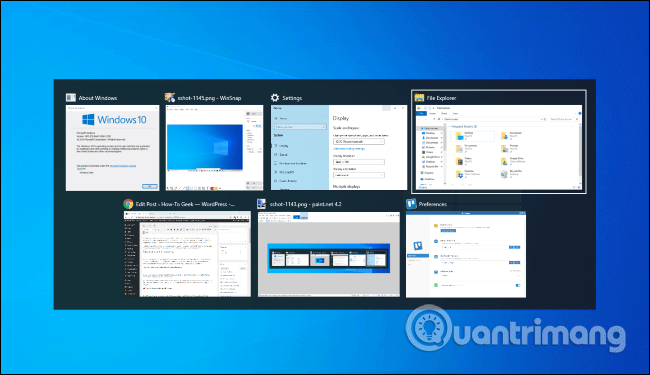
Alt + Tab shortcuts often move forward, left to right. If you miss the window you want to display, you need to pressTabto complete the list again to get to that window. This is a bit time-consuming especially when you have multiple windows open.
Fortunately, another way you can use it is to pressAlt+Shift+Tabto move through the windows in the opposite direction. If you are pressingAlt+Taband going through the window you want, press and hold theShiftkey while still pressing theAltkey, then pressTabto return to the left.
2. Select the window with the arrow keys
You can select the windows in Alt + Tab with the arrow keys. PressAlt+Tabto open the converter and continue holding theAltkey. Instead of pressingTab, use the arrow keys on the keyboard to select the window you want, then release theAltkey, press Enter or the spacebar.
3. Use the mouse to switch and close the window
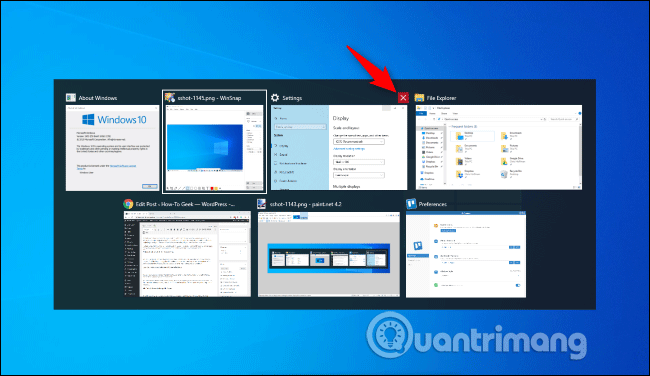
You can also use the mouse with Alt + Tab converter. PressAlt+Tab, continue holding downAltand click on the window you want to switch to.
While using the mouse, you will see an x appear in the top right corner of the minimized window when hovering over. Click x to close the application window. This is a quick way to close multiple windows.
4. Use Alt + Tab without holding the Alt key
Alt + Tab converters often close when you release the Alt key. But, if you want to use Alt + Tab without holding the Alt key, you can do that. PressAlt+Ctrl+Tab, then release all three keys. The Alt + Tab converter will remain open on your screen.
You can use the Tab key, arrow keys or mouse to select the window you want. Press Enter or space to display the selected window.
5. Close the Alt + Tab converter without displaying the window
You can close the Alt + Tab converter at any time by releasing the Alt key, but it will switch to the window you are selecting. To close the Alt + Tab converter without displaying the window, press theEsckey on your keyboard.
6. Activate the old Alt + Tab converter
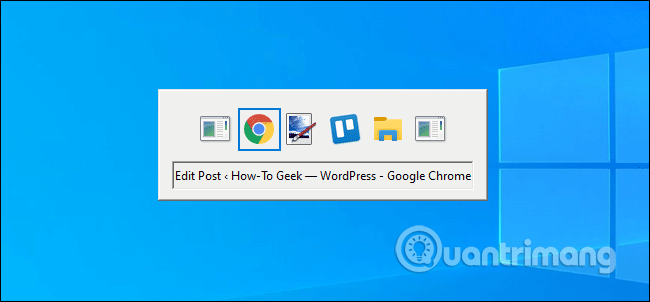
Do you remember the old Windows XP Alt + Tab converter? It does not have any thumbnail preview of the window, only the icon and window title on the gray background. You can still see this Alt + Tab converter on Windows 10 for compatibility reasons while playing certain games.
You can also open the old Alt + Tab converter with a hidden shortcut. While pressing and holding the left or rightAltkey, press and release anotherAltkey on the keyboard, then press theTabkey. You will see the old converter appear but the next time you press Alt + tab, you will see the new converter. If you want the old converter you need to do the same thing as above.
With the classic converter you can't use the mouse or the arrow keys. However, it supports Ctrl + Shift + Tab to move tabs in the opposite direction and press Esc to close it.
If you like this old Alt + Tab converter, you can change the AltTabSettings value in the Windows Registry so that it appears every time you press Alt + Tab.
7. Switch between tabs instead of windows
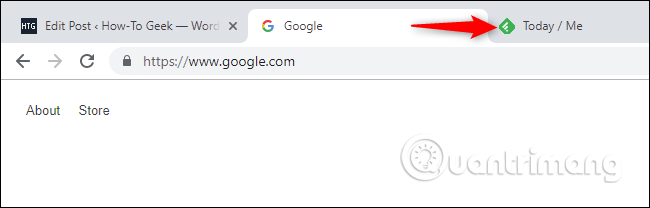
In most applications that provide integrated tabs, you can use Ctrl + Tab to switch between tabs, just like when using Alt + Tab to switch between windows. Hold down theCtrlkey and then press theTabrepeatedly to switch to the right tab.
You can even convert tabs in the opposite direction (right to left) by pressingCtrl+Shift+Tab.
8. Use Task View with Windows + Tab
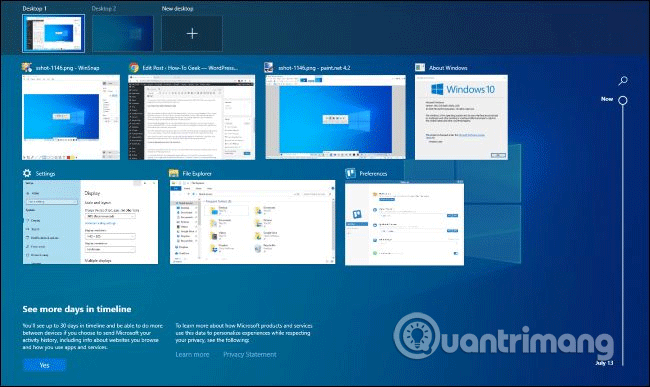
Windows + Tab is a shortcut similar to Alt + Tab. It opens the Task View interface, provides a thumbnail view of open windows and even multiple desktops to organize them on it. It also includes Windows Timeline, but you can turn it off if you want.
After pressingWin+Tab, you can drop both keys and use the mouse or arrow keys to select the window. To move a window to another virtual desktop, drag it to the desktop icon at the top of the screen with your mouse.
This is the same interface that opens when you click the Task View button to the right of the Cortana icon on the taskbar. However, the shortcut will be more convenient.
9. Install Alt + Tab converter instead
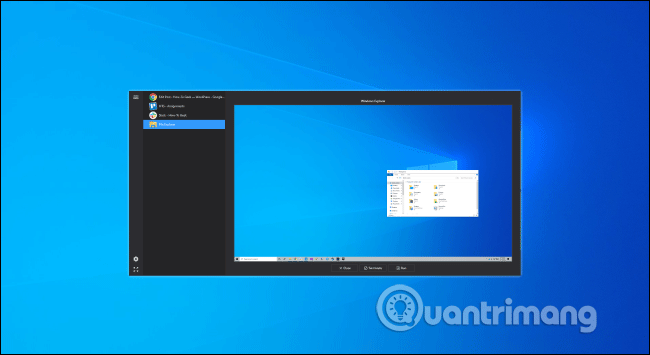
You can also replace the integrated Windows Alt + Tab converter with a third-party Alt + Tab replacement. For example, NTWind's free Alt + Tab provides a more powerful, customizable Alt + Tab converter. It has larger window previews and an integrated Terminate function to close improper applications.
FAQ
What is Alt ++ Tab Shortcuts: Trick to Use Alt ++ Tab on Windows 10 about?
It provides a structured overview of alt + tab shortcuts, explains the main context, and highlights practical takeaways for readers.
Why does this topic matter?
Understanding the main concepts helps readers evaluate the issue, avoid common mistakes, and make better-informed decisions.
How should readers use this information?
Use the guidance as a practical starting point, confirm details that may have changed, and follow current product, safety, or security recommendations.
Related Articles
 The Trick to Help Windows XP Continue to Be Updated3 minutes read
 Turn the Word Start on Windows XP Into a Custom Name9 minutes read
 Check the Version of Windows 10 Installed on Your Computer4 minutes read
 How to 10 Cool Ways to Trick Your Phone's Step Counter (Without Walking)9 minutes read
 This Man Easily Fooled Google Maps with 99 Phones3 minutes read
 Former Microsoft Engineer Explains the Old 'Super-fast' Windows Restart Trick: Interesting but Full of Bugs6 minutes read
Reader Comments 0
Sign in with email or Google to join the discussion.