Table of Contents
This updated guide examines This Man Easily Fooled Google Maps with 99 Phones and organizes the essential facts, background, and practical takeaways in clear American English.
Although current positioning technology has made great progress, but not without gaps.
A man living in Berlin named Simon Weckert recently conducted a fun test, but at the same time deceived the most popular real-time map navigation application currently used: Google Maps. Simon Weckert placed 99 smartphones simultaneously on a wheelbarrow and walked around the streets of Berlin. All of these phones have GPS enabled and use Google Maps. With this very simple test, Simon fooled Google Maps into seeing a sudden increase in the number of vehicles on the routes he traveled. In addition, because the trolley is going quite slowly, Google Maps also thinks that there is a serious traffic congestion.
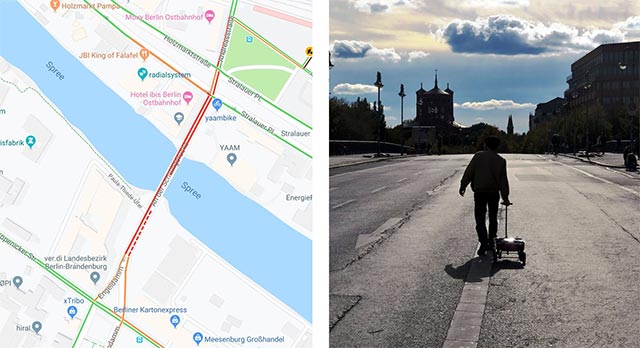
The reason for this confusion is because Google Maps uses real-time data collected on Android smartphones to identify traffic activities. When it detects a large number of smartphones gathered in a particular area, regardless of whether they are standing still or moving slowly, the application will automatically understand that there is traffic congestion in that area..
You might think that a large company like Google has to take certain measures to identify such tricks, but it is not and this has been confirmed by a software engineer. premium Google Maps. This is at the same time a common weakness of current positioning technology.
Google Maps or any other current mapping application sometimes relies on publicized data to give you information, and this may be inaccurate. So you should only use Maps as a guide to explore new places, do not depend entirely on it.
FAQ
What is This Man Easily Fooled Google Maps with 99 Phones about?
It provides a structured overview of deceive Google Maps, explains the main context, and highlights practical takeaways for readers.
Why does this topic matter?
Understanding the main concepts helps readers evaluate the issue, avoid common mistakes, and make better-informed decisions.
How should readers use this information?
Use the guidance as a practical starting point, confirm details that may have changed, and follow current product, safety, or security recommendations.
Related Articles
 How to Send Google Maps Routes from PC to Phone6 minutes read
 Useful Features on the Google Maps App That You Don't Know Yet7 minutes read
 How to Add Places to Google Maps3 minutes read
 How to Find the Way to Google Maps for Motorcycles5 minutes read
 How Does Google Maps Work?: Why Google Created Google Maps12 minutes read
 Tips for Using Google Maps on Android11 minutes read
Reader Comments 0
Sign in with email or Google to join the discussion.