Table of Contents
This guide provides a clearer, better-organized overview of The Simplest Way to Show and Hide Folders on Windows 10. It focuses on the essential facts, practical steps, and common questions readers are most likely to have.
Your computer stores important personal data that you do not want others to access. Next, we will help you hide that data using the utility available on Windows 10. Please
Instructions for Hiding and Showing Files on Windows 10
In addition, you can also download Hide Folders, Folder Lock . and many other specialized software to hide or lock that folder. Protecting folders is to protect your important data and also protect the safety of users' computers
* Download Hide Folders * Download Folder Lock
How to Hide and Show Folders/folders in Windows 10
Step 1: Right-select the folder you want to hide and select Properties

Step 2: At the General Tab, select Hidden Then choose Ok

Step 1: Access " This PC ", in the View Tab, select Options , then choose " Change folder and search options "

Step 2: At the F Older Options Window, select " Show hidden files, folders, and drives " then choose Ok .
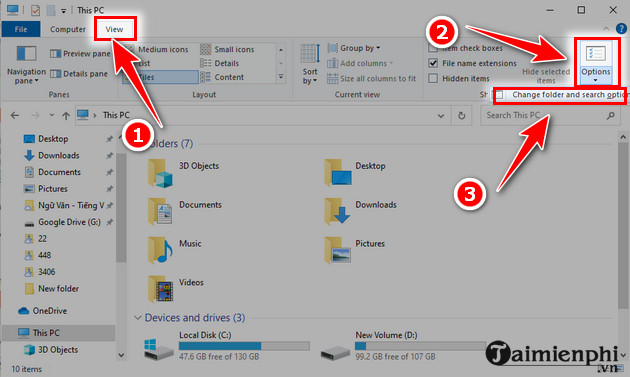
So with the above instructions, you can easily and quickly adjust the hiding and showing of folders on Windows 10. However, with this method, you will encounter many folders that you have never seen before, such as the $GetCurrent and $SysReset folders, these are 2 folders that appear when you install Windows and Refresh the system., to learn more, you can use the article about $GetCurrent and $SysReset To gain more knowledge.
FAQ
What is the main point of The Simplest Way to Show and Hide Folders on Windows 10?
Your computer stores important personal data that you do not want others to access.
Why might the details change over time?
Software versions, prices, policies, services, and product availability can change. Check the official source before making a purchase or changing important settings.
How can I use this information safely?
Follow official instructions, verify downloads and claims, back up important data, and avoid sharing passwords or sensitive account information.
Related Articles
 How to Completely Hide a Folder with a Single Command on Windows5 minutes read
 Free Hide Folder: Hide and Protect Folders on Windows4 minutes read
 How to Show Hidden Files, Hidden Folders in Windows 10, Windows 73 minutes read
 How to Hide 6 Folders in This PC on Windows 106 minutes read
 Hide the Windows Folder in a Professional Way3 minutes read
 How to HIDE / SHOW Files and Folders by CMD Command on Win6 minutes read
Reader Comments 0
Sign in with email or Google to join the discussion.