Table of Contents
This guide provides a practical overview of Instructions on How to Format Data, including its main features, benefits, limitations, and important considerations.
1. Format text.
1.1 Font format, type, font size:
- Select the data to format -> Home -> Font -> quickly select the font, font size, type as shown:
Inside:
+ B (Bold): bold type.
+ I (Italic): italic type.
+ U (Underline): underlined font
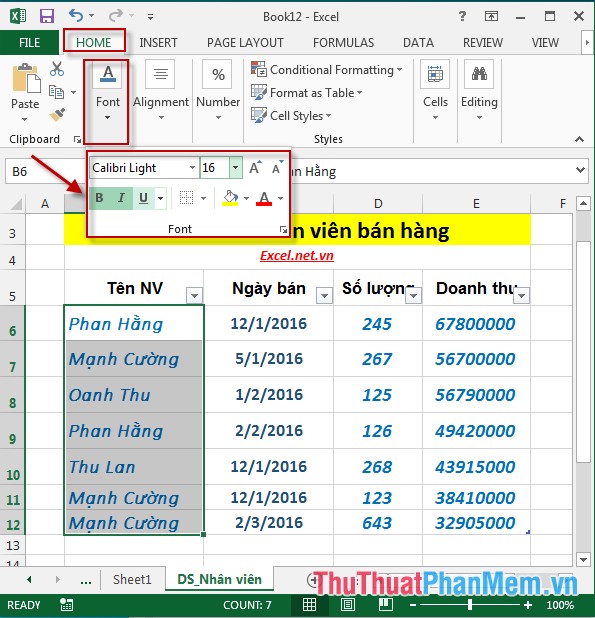
- Or to detail Font dialog box, click the arrow below Font -> Format Cells dialog box appears, select the format for the text -> click OK to finish.

1.2 Border format, text color.
1.2.1 Select text color and background color:
- Select the text area to create colors -> Click Home -> Font -> select the Font Color icon -> dialog box appears -> choose the color for text:
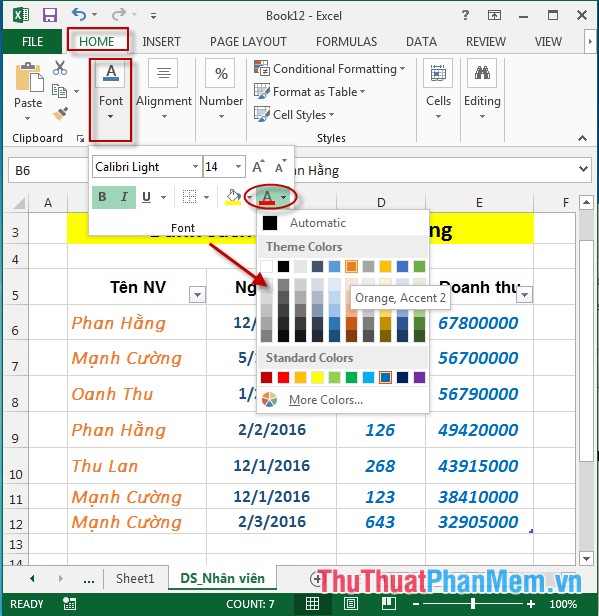
- Select background color for text:
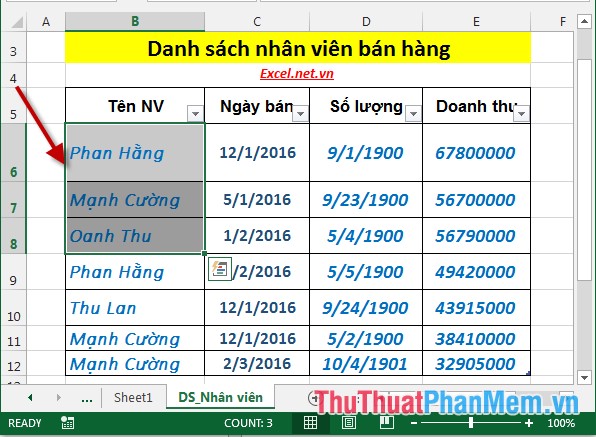
Select the text area to create background color -> Click Home -> Font -> select the Fill Color icon -> dialog box appears -> select the color as the background color for the text:

- Result:
1.1.2 Create borders for text:
Click Home -> Font -> select Border icon -> dialog box appears -> choose the border style for the text:
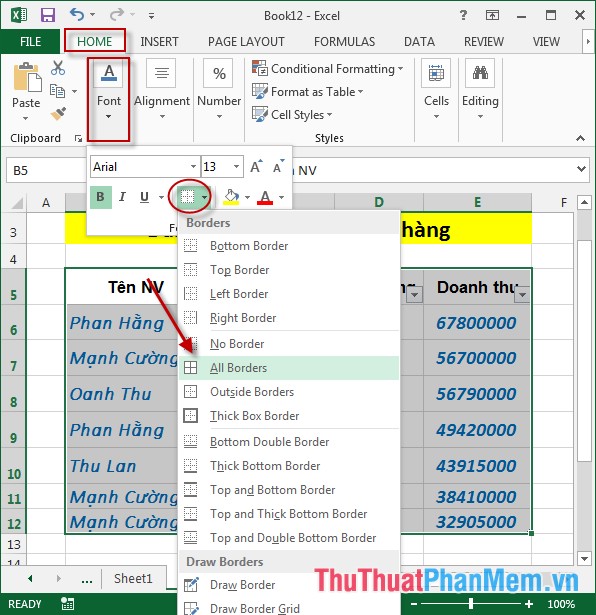
- The result of the entire text has been created contour:
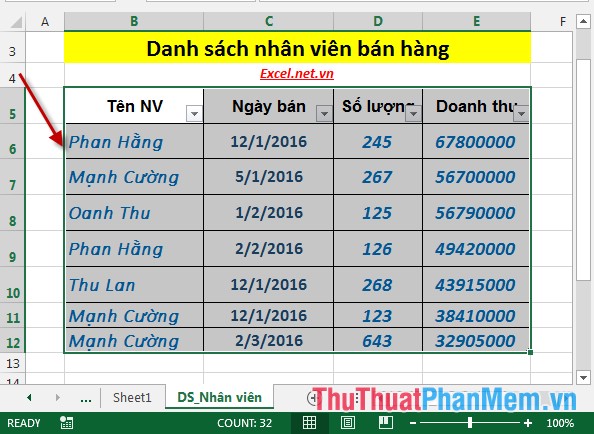
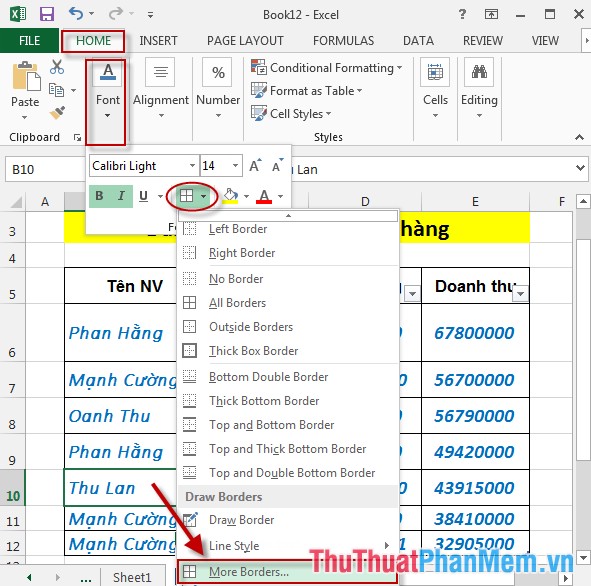
- If you want to create a border as you like Click Home -> Font -> select Border icon -> dialog box appears -> More Border:
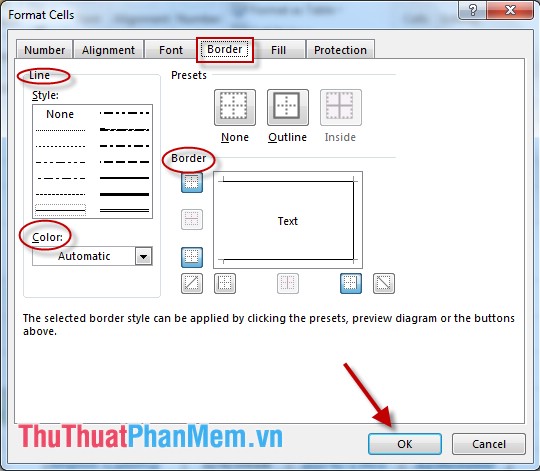
- The dialog box appears selecting the type of border, colors as shown -> click OK:
2. Align, customize position, text direction.
2.1 Alignments.
- Select text area to be aligned -> Click Home -> Alignment -> choose alignment:
 : Aligns the left.
 : Align justify sides.
 : Right alignment.

2.2 Customize text position in cell.
- If the data cell is too wide for the text to align the text so that it is in the middle and proportional to the data cell -> align the position of the text in the cell, there are options such as the figure:
 : The order in turn is: Align the text adjacent to the top of the cell (top), center the cell, and the text position at the end of the cell.
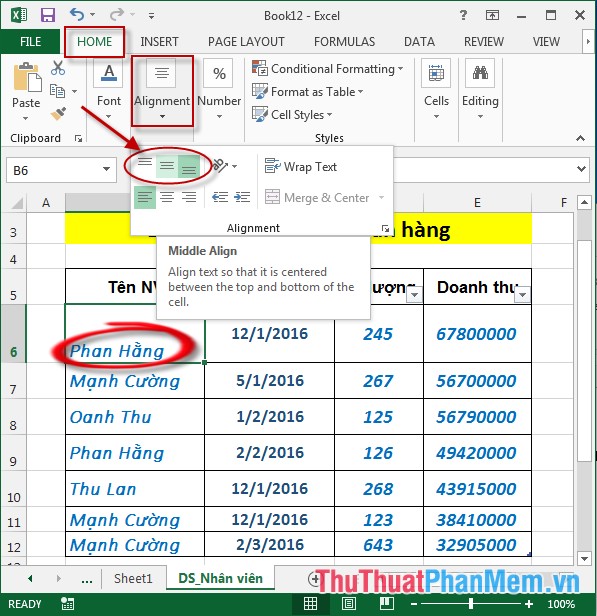
- Or you can align in the Format Cells dialog box :

- Click OK to get the results: The text in the middle of the cell is very balanced.
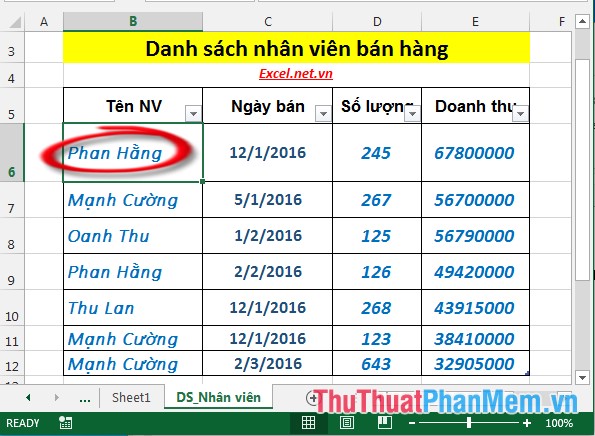
2.3. Customize the text direction.
- Select the text to create text direction -> Click Home -> Alignment -> Orientation -> select text direction as required.

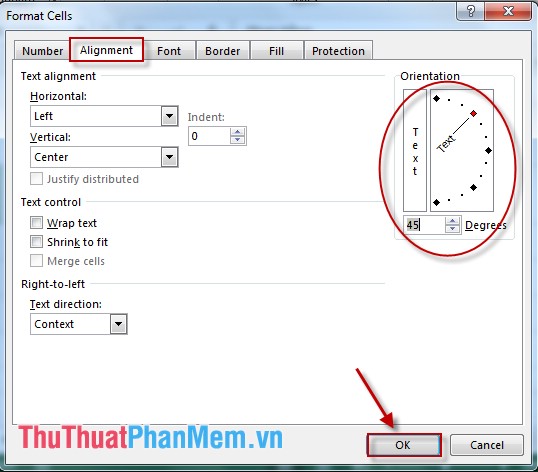
- Or change the text direction in the Format Cells dialog box in the Alignment tab :
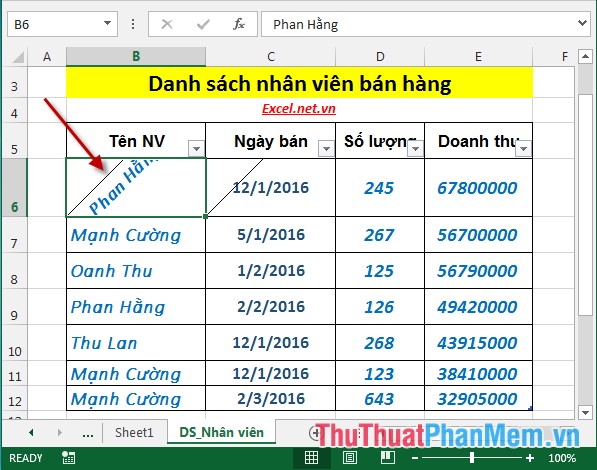
- Results after creating the letter direction:
3. Format the data type.
- For example, you want to format the column number data type to date data type:

- Right-click the column of quantities -> Format Cells:
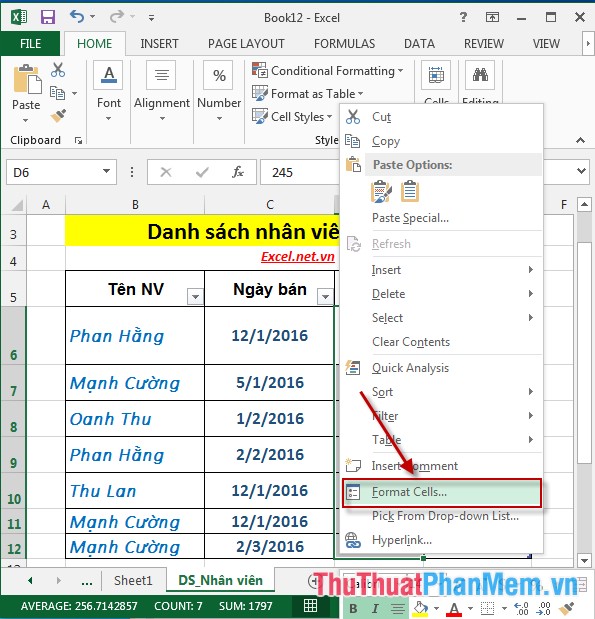
- The Format Cells dialog box appears in the Number tab, selecting the Date data type .

- Result of the column of the converted date data type:

The above is a detailed guide on how to format data in Excel 2013.
Good luck!
FAQ
What should I know about Instructions on How to Format Data?
Focus on the key features, requirements, limitations, and practical use cases explained in this guide.
How do I get the best results with Instructions on How to Format Data?
Follow the recommended steps, use current software or information, confirm compatibility, and review settings before major changes.
Are there any risks or limitations?
Potential limitations depend on compatibility, data quality, cost, privacy, support, and how the product or method is used.
Related Articles
 MS Excel 2003 - Lesson 3: Manipulating Data in Spreadsheets5 minutes read
 How to Formatting Data in Excel: Step-by-Step Guide4 minutes read
 MS Excel 2003 - Lesson 2: Format Spreadsheet Data8 minutes read
 Guide to Full Excel 2016 (Part 8): Learn About Number Formats11 minutes read
 How to Copy Data from Excel to Word Retain the Format3 minutes read
 How to Format Numbers in Excel4 minutes read
Reader Comments 0
Sign in with email or Google to join the discussion.