Table of Contents
This guide explains how to use MSConfig in Windows to Fix Problems, with clear steps, practical tips, and important checks before you begin.
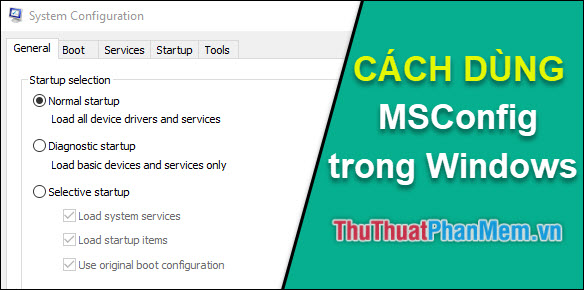
First, to open the MSConfig utility:
(1) Press Windows + R keys to open the Run dialog box
(2) Then type msconfig . Choose OK .

Then the System Configuration window appears. Its interface consists of 5 tool tabs. These tools will help you change and configure your system startup, diagnose Windows to find problems. It also has a number of options to help you turn off and restrict various services. Here is a closer look at the tool tabs to help you better understand the use of MSConfig.

1. General
General tab shows boot options, here are 3 modes:
- Normal Startup (Normal startup)
This is the default boot mode for Windows. The Supported operating systems will load all locally installed drivers and programs, default drivers, and system services.
- Diagnostic Startup (Diagnostic Startup)
The mode is similar to when you boot in Safe Mode - safe mode. You can use it to find problems and to check for errors on your computer. When booted in this mode, the computer will only load basic, default services and drivers. Remove programs, services, third-party drivers and locally installed programs.
- Selective Startup (Selective Startup)
You will have 3 other small options that help you switch to the various startup programs and services you want to run through the startup services and tabs.
Load system services : Download system services .
Load startup items : Load startup items .
Use original boot configuration : use the original boot configuration .
2. Boot
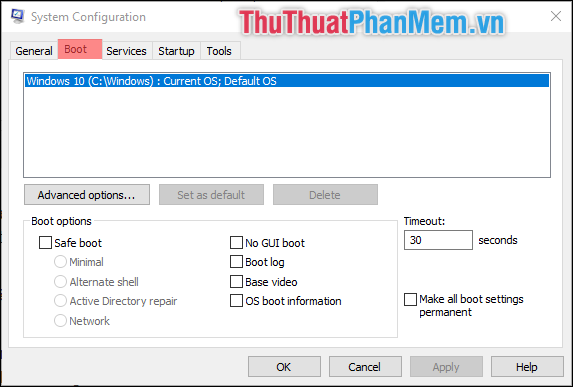
This is the tools tab that controls computer startup settings. It includes various options and items that help set up the Windows boot process. It also has advanced options to help you control system hardware issues.
- In the Boot tab will display a list of current operating systems installed in the computer.
- Under Boot options , you can start Windows in 4 different safe modes.
- The Timeout section specifies the time to wait for Windows in the Boot menu before starting to reload to the default Supported operating systems.
- Also in the Advanced options section to help you get more advanced options.
3. Services
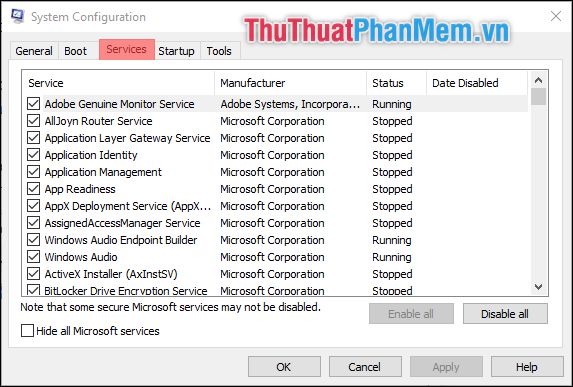
The Services tab displays all services that will start at the system. You can hide Microsoft default services to make it easier to find third-party services by checking Hide all Microsoft services . This will help you find the cause of the problem from the 3rd party. You can also disable all services by clicking Disable all .
4. Startup
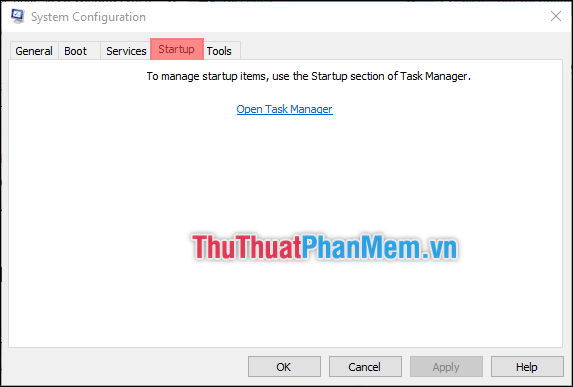
Startup tab you will be redirected to Startup section in Task Manager.

Here you can enable or disable the programs that will start with the system.
5. Tools
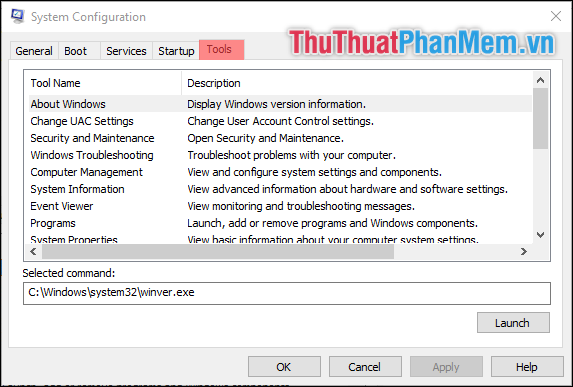
The Tools tab displays various utilities and tools that you can launch directly from MSConfig. Find and select tools and Launch to launch them.
After you have made your changes, click Apply and then click OK to complete. Windows will restart and apply the settings you just changed. Thank you for watching the article!
FAQ
What should I know about MSConfig in Windows to Fix Problems?
Focus on the key features, requirements, limitations, and practical use cases explained in this guide.
How do I get the best results with MSConfig in Windows to Fix Problems?
Follow the recommended steps, use current software or information, confirm compatibility, and review settings before major changes.
Are there any risks or limitations?
Potential limitations depend on compatibility, data quality, cost, privacy, support, and how the product or method is used.
Related Articles
 Fix Windows Problems with Msconfig13 minutes read
 8 Ways to Open Msconfig in Windows 118 minutes read
 Open and Use MSConfig on Windows 10: Step-by-Step Guide7 minutes read
 20 Useful Troubleshooting Tools for Windows 1014 minutes read
 How to Fix Problems with Windows 8/8.14 minutes read
 How to Fix Common Windows 10 Problems with Windbg11 minutes read
Reader Comments 0
Sign in with email or Google to join the discussion.