Table of Contents
How to Turn on HDR on Windows 10 is easier to understand when the core ideas are paired with practical examples. The sections below explain the topic clearly, highlight useful steps, and point out details that can prevent common errors.
Although HDR technology is available on most TVs over the past 3 years, it has only recently appeared on computer screens.Perhaps the reason is because until May 2010, Windows still did not support HDR display technology.Now users can experience this technology on Windows to see colors with greater depth and authenticity.
First make sure your device supports HDR
Not all Windows machines can display HDR content.HDR only runs through DisplayPort 1.4 cable or HDMI 2.0a cable.These are the requirements that the screen must meet to be able to display HDR content on Windows 10.
- HDR screen or TV supports HDR10 and DisplayPort 1.4 or HDMI 2.0 or more.Recommended screen is certified DisplayHDR.
- Windows 10 must have a graphics card that supports PlayyReady 3.0 DRM (for protected HDR content).Probably the following cards: NVIDIA GeForce 1000 Series or more, AMD Radeon RX 400 Series or more, Intel UHD Graphics 600 Series or more.It is recommended to use a graphics card that supports decoding 10-bit hardware acceleration for HDR video codecs.
- Windows 10 PC must install codecs to decode 10-bit video (eg HEVC or VP9).
- Encourage the use of the latest WDDM 2.4 drivers on Windows 10. Check the Windows Update section in Settings or check the manufacturer's website.
Activate HDR on Windows 10
If computers, monitors and cables all meet the requirements and the updated PC to the latest Fall Creator's Update release at the end of 2017, you are well prepared to proceed.To turn on HDR on Windows, open Start and go to Settings.
 Open the Settings application in the Start menu
From here, click Display, you'll see a toggle button under the Night Light option that says 'HDR and WCG'.
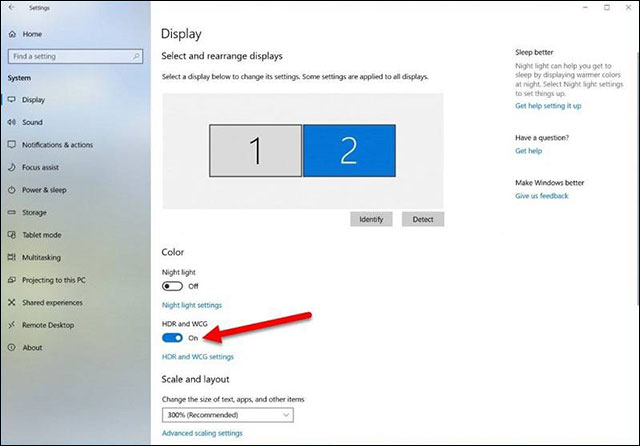 Feature switch button named HDR and WCG
- Users can already experience HDR of Netflix on Windows 10
- Officially released HDMI 2.1 standard that supports 10K video and Dynamic HDR
- Sony's 4K 2018 TV focuses on OLED screens, HDR mode and Android platform
FAQ
What is How to Turn on HDR on Windows 10?
How to Turn on HDR on Windows 10 refers to the core ideas, tools, or processes explained in this guide. Understanding the basics makes the more advanced details easier to apply.
Why is How to Turn on HDR on Windows 10 important?
A clear understanding of How to Turn on HDR on Windows 10 helps you make informed decisions, avoid common mistakes, and use the relevant tools or techniques more effectively.
How should beginners approach How to Turn on HDR on Windows 10?
Start with the fundamental concepts, follow the examples step by step, and test each change in a safe environment before applying it to important systems or data.
Related Articles
 Turn Off the Windows Firewall 11: Complete Guide6 minutes read
 Steps to Turn Off Windows 11 Update, How to Stop Updating5 minutes read
 Turn Off Windows 10 Firewall: Complete Guide6 minutes read
 How to Turn Off, Turn on Windows Defender in Windows 104 minutes read
 How to Turn on / Off Volume in Windows 10: Step-by-Step5 minutes read
 How to Turn on AHCI in Windows 8 and Windows 10 After Installation4 minutes read
Reader Comments 0
Sign in with email or Google to join the discussion.