Table of Contents
This guide explains how to send Commands Ctrl-Alt-Delete in Remote Desktop, with clear steps, practical tips, and important checks before you begin.
1. Send commands in Remote Desktop with Ctrl + Alt + End
Instead of using Ctrl + Alt + Delete in Remote Desktop, Microsoft allows us to use the alternative combination is Ctrl + Alt + End on keyboard with the same function as normal Ctrl + Alt + Delete .
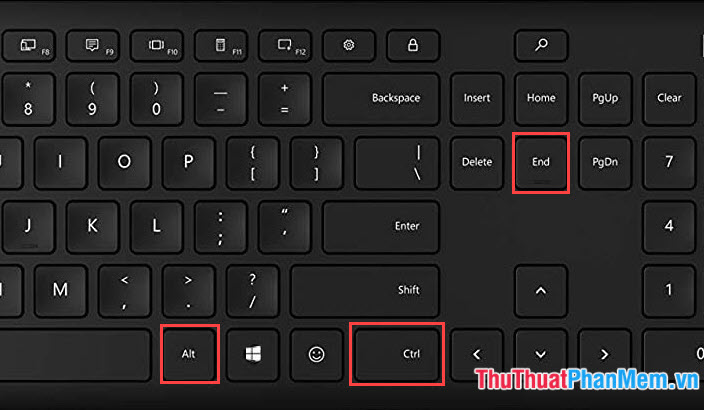
And after using Ctrl + Alt + End , the multi-function management screen is shown as shown below. You can operate such as opening Task manager, shutdown, changing accounts.

2. Send command Ctrl + Alt + Delete via virtual keyboard.
A very interesting way to send Ctrl + Alt + Delete commands to the Remote Desktop is to use the virtual keyboard (On-screen keyboard). Proceed as follows:
Step 1: Go to Start (1) => search with the keyword osk (2) => click on the osk application (3) . For Windows 10, press the Windows + S keyboard shortcut to open the search tool and select the On-Screen Keyboard application .

Step 2: You press the key combination Ctrl + Alt above your real keyboard. You keep the same combination and click on the Del key in the virtual keyboard. So we have successfully created the key combination Ctrl + Alt + Del in Remote Desktop.

After doing the above, the " Ctrl + Alt + Delete " screen will display as usual. Once done, you can exit the virtual key to manipulate other functions more easily.

After reading this article, you see sending commands Ctrl + Alt + Delete in Remote Desktop is simple and easy right? Good luck!
FAQ
What should I know about Send Commands Ctrl-Alt-Delete in Remote Desktop?
Focus on the key features, requirements, limitations, and practical use cases explained in this guide.
How do I get the best results with Send Commands Ctrl-Alt-Delete in Remote Desktop?
Follow the recommended steps, use current software or information, confirm compatibility, and review settings before major changes.
Are there any risks or limitations?
Potential limitations depend on compatibility, data quality, cost, privacy, support, and how the product or method is used.
Related Articles
 Learn About the Keyboard Shortcut Ctrl ++ Alt ++ Delete, the3 minutes read
 The Difference Between Remote Desktop (RDP) and VPN7 minutes read
 Instructions for Activating and Using Remote Desktop on Windows6 minutes read
 Troubleshoot Remote Desktop Problems13 minutes read
 6 Ways to Disable Remote Desktop on Windows 118 minutes read
 How to Enable and Use Remote Desktop on Windows 116 minutes read
Reader Comments 0
Sign in with email or Google to join the discussion.