Table of Contents
This updated guide examines How to Rotate Images in Microsoft Word and organizes the essential facts, background, and practical takeaways in clear American English.
Method 1
Rotating with the Mouse
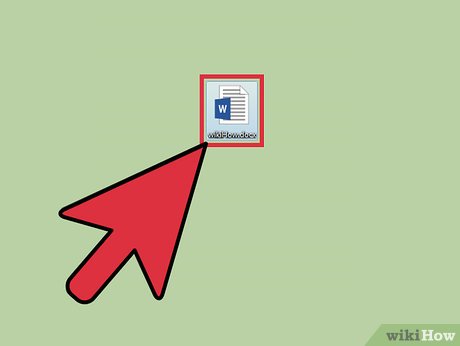 Open your document. This guide will assume that you already have an image inserted somewhere in your document. If you need help with that, read our article about how to insert an image into Microsoft Word.
 Click the image. You will see an outline appear around the edges of the image, with boxes on the corners and midpoints of the outline. You will also see a circular arrow at the top of the image. This is what you will be using to rotate the image.
 Rotate the image. Click on the circular arrow above the picture and drag in the direction that you would like to rotate the image. Move the mouse as if you were rotating a piece of paper on a table. The picture will rotate following your cursor.
- Rotate the picture by increments of 15 degrees by holding⇧Shiftwhile rotating.
 Stop rotating. Stop rotating the picture by simply releasing your click-hold on the circular arrow.
- Rotating the image to a precise orientation will be harder to accomplish with the mouse. If you need to orient your picture to an exact degree, read the method about rotating your picture by degrees.
Method 2
Rotating by Degrees
 Select the image. Click on the desired image and you will see a slight outline appear around the image. Any degree changes you make will be applied to the outlined image.
 Select the Format tab. From the ribbon of options on the top of the Word window, select the tab that says Format. It should be the furthest right tab.
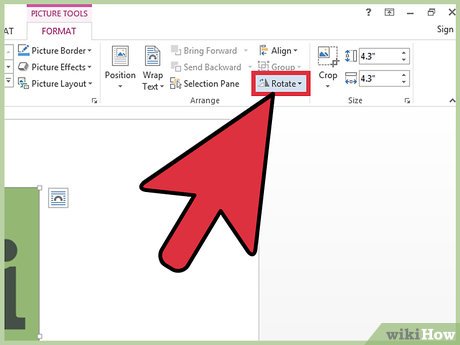 Click the Rotate icon. In the third group of icons called "Arrange," click the icon that looks like two triangles next to each other. A drop down menu will appear.
- If you have trouble finding the Rotate icon, hover over each icon in the Arrange group to reveal a text box explaining what the icon is.
 Rotate the image by preset angles. In the drop down menu you will see 4 different basic options: Rotate Right 90, Rotate Left 90, Flip Vertical, and Flip Horizontally.
- Flip Vertical will essentially mirror the image along the X-axis.
- Flip Horizontal will essentially mirror the image along the Y-axis.
 Rotate the image by exact angles. From the same drop down menu, click More Rotation Options. Look for "Rotation." Specify the degree you would like to rotate the image by pressing the up and down arrows or by entering in a number. Positive numbers will rotate the image to the right and negative numbers will rotate the image to the left.
- Any degree greater than 360 degrees will be unnecessary since rotating the picture 360 degrees will only return the picture back to its original orientation.
- Press OK when you are done to apply the rotation.
Method 3
3-D Rotation (Word 2007 & up)
 Right-click on the image and select "Format Picture". You will see a new panel open up either on the right side of the window or on the top of the window.
 Select "3-D Rotation". Depending on your version of Word, it will be in different place in the list. If you are using Word 2013, the most recent version, it will be the last option.
 Select a preset. Word includes quite a few different preset options for 3-D rotation. Scroll through the list by clicking on the icon next to "Presets."
 Manually enter in the degrees. Either press the arrows or manually enter in the desired degree in the input fields next to X-Rotation, Y-Rotation, and Z-Rotation.
- X-Rotation will rotate the image up and down, as if your were flipping an image away from you.
- Y-Rotation will rotate the image side to side, as if you were turning an image over.
- Z-Rotation will rotate the image clockwise, as if you were moving an image around on a table.
FAQ
What is How to Rotate Images in Microsoft Word about?
It provides a structured overview of image, explains the main context, and highlights practical takeaways for readers.
Why does this topic matter?
Understanding the main concepts helps readers evaluate the issue, avoid common mistakes, and make better-informed decisions.
How should readers use this information?
Use the guidance as a practical starting point, confirm details that may have changed, and follow current product, safety, or security recommendations.




Reader Comments 0
Sign in with email or Google to join the discussion.