Table of Contents
This updated guide examines How to Convert HTML to Word and organizes the essential facts, background, and practical takeaways in clear American English.
Method 1
On Windows
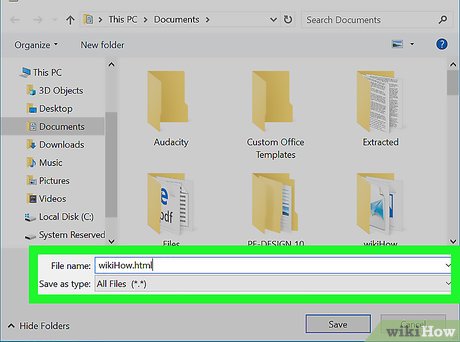 Convert your HTML file to plain text if necessary. If you saved your HTML file as an RTF (rich text format) file—especially if you copied it from the internet—it may have retained some of its formatting; if so,Word may not format the page for you when you open the HTML file. You can ensure that your HTML file uses plain text format by doing the following:
- Open Notepad by typingnotepadinto Start and then clicking Notepad .
- Paste your copied HTML into Notepad by pressingCtrl+V.
- Click File .
- Click Save As... .
- Click the "Save as type" drop-down box.
- Click All Files .
- Type a file name followed by.htmlinto the "File name" text box.
- Click Save .
 Open Microsoft Word. Click or double-click the Word app icon, which resembles a white "W" on a dark-blue background. This will open the Microsoft Word launch page.
 ClickOpen Other Documents. It's a link in the bottom-left corner of the window.
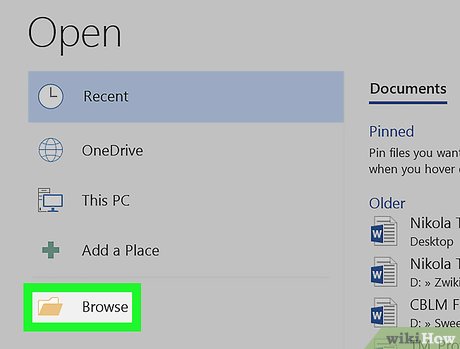 ClickBrowse. This folder-shaped option is at the bottom of the page. Doing so opens a File Explorer window.
 Select your HTML document. Go to the location in which you've stored your HTML document, then click the HTML document.
 ClickOpen. It's in the bottom-right corner of the window. This will open the HTML document in its formatted form in Microsoft Word.
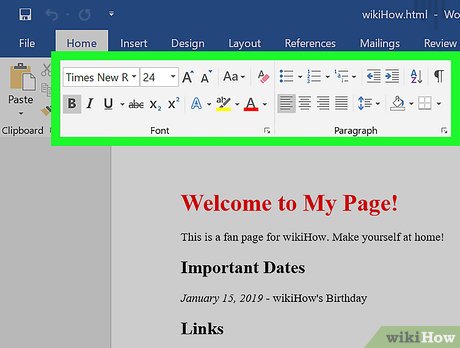 Make any necessary changes. While Word should format your document exactly as it appears on the internet page, you may need to clean up the formatting by ensuring that headings are bolded, images are centered, and so on.
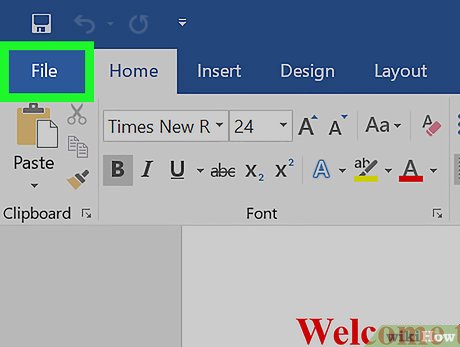 ClickFile. It's in the top-left side of the Word window.
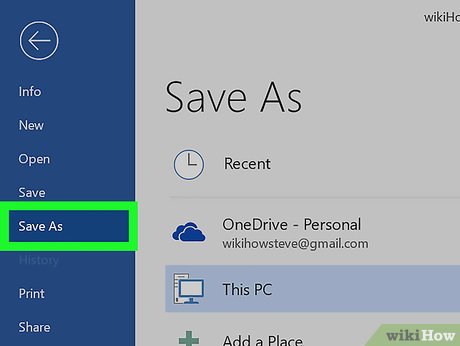 ClickSave As. You'll find this option on left side of the window.
 Double-clickThis PC. It's in the middle of the page. Doing so prompts a pop-up window to appear.
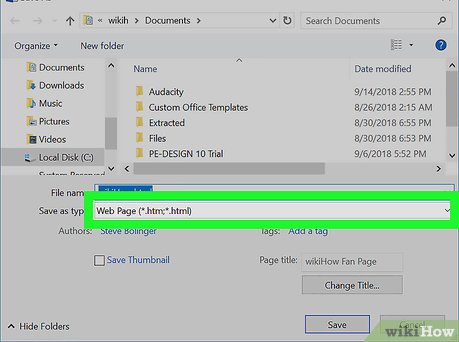 Click the "Save as type" drop-down box. This option is at the bottom of the pop-up window. A drop-down menu will open.
 ClickWord Document. It's near the top of the drop-down menu.
- You can also enter a new name for your Word file in the "File name" text box if need be. You can also choose a new save location (e.g., the Desktop) by clicking a folder in the left-hand sidebar.
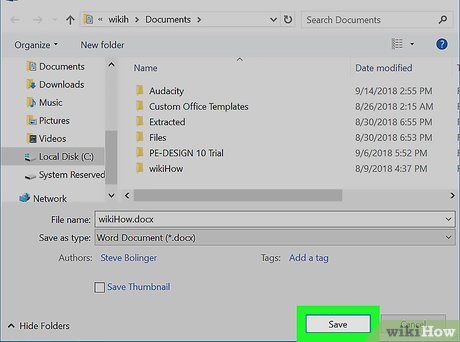 ClickSave. This option is in the bottom-right corner of the window. Doing so will save a Word copy of your HTML file.
Method 2
On Mac
 Convert your HTML file to plain text if necessary. If you saved your HTML file as an RTF (rich text format) file—especially if you copied it from the Internet—it may have retained some of its formatting; if so, your Mac's Microsoft Word won't convert it into a document. You can remove formatting by doing the following:
- Open TextEdit by typingtexteditinto Spotlight and then double-clicking TextEdit .
- Click New Document when prompted.
- Click File .
- Click Make Plain Text .
- Paste in your HTML file's text.
- Press⌘Command+S.
- Select Web Page from the "File Format" drop-down box.
- Click Save .
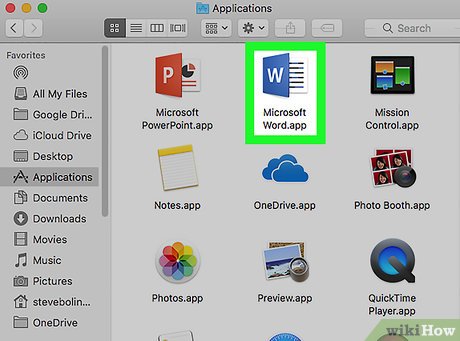 Open Microsoft Word. Click or double-click the Word app icon, which resembles a white "W" on a dark-blue background.
 ClickFile. It's a menu item in the upper-left side of the screen. A drop-down menu will appear.
 ClickOpen…. This is in the drop-down menu. Doing so opens a Finder window.
 Select your HTML document. Go to the location in which your HTML document is stored, then click it once.
 ClickOpen. It's a blue button in the bottom-right corner of the window.
 Make any necessary changes. While Word should format your document exactly as it appears on the internet page, you may need to clean up the formatting by ensuring that headings are bolded, images are centered, and so on.
 ClickFile. It's in the top-left corner of the screen. This prompts a drop-down menu.
 ClickSave As…. This option is in the drop-down menu. Doing so opens the Save As window.
 Click the "File Format" drop-down box. It's near the bottom of the window. This will prompt a drop-down menu with different file formats listed.
 ClickWord Document. You'll find this near the top of the drop-down menu.
- You can also change the name of the file by typing a new name into the "Name" text box, or select a new save location by clicking a folder on the left side of the window.
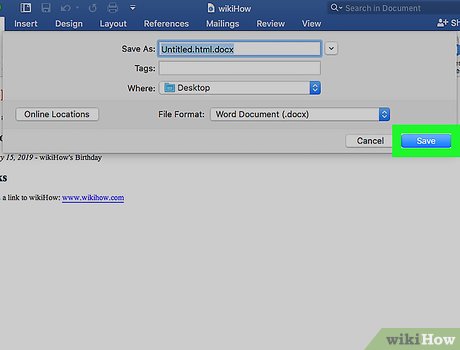 ClickSave. It's at the bottom of the window. Doing so will create a Word copy of your HTML document.
FAQ
What is How to Convert HTML to Word about?
It provides a structured overview of click, explains the main context, and highlights practical takeaways for readers.
Why does this topic matter?
Understanding the main concepts helps readers evaluate the issue, avoid common mistakes, and make better-informed decisions.
How should readers use this information?
Use the guidance as a practical starting point, confirm details that may have changed, and follow current product, safety, or security recommendations.


Reader Comments 0
Sign in with email or Google to join the discussion.