Table of Contents
This updated guide examines How to Create a Form Using a Word Processor and organizes the essential facts, background, and practical takeaways in clear American English.
Part 1
Displaying the Developer Tab
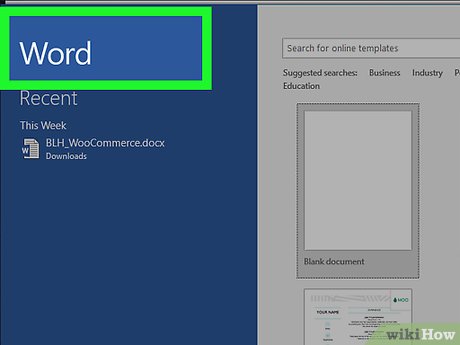 Open Microsoft Word. It's a blue app with a white "W" on it.
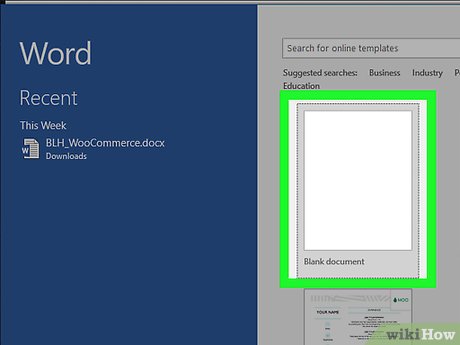 Open a new document. To do so, first click the File tab, then click New Document .
- In Word 2016, you may instead click Blank Document on the right side of the page. On Mac, you'll first need to click New .
 ClickFile. It's in the top-left corner of the Word window.[1]XResearch source
- On Mac, click Word in the top-left corner of the menu bar.
 ClickOptions. You'll find it near the bottom of the left-hand pane.
- On Mac, click Preferences near the bottom of the drop-down menu.
 ClickCustomize Ribbon. This option is on the left side of the pop-up window.
- On Mac, you'll instead click View beneath the "Authoring and Proofing Tools" heading.
 Click theDevelopercheck box. It's in the "Main Tabs" pane on the right side of the window.
- On Mac, instead click the Show developer tab box that's beneath the "View" heading.
- If this box has a check mark in it, the Developer tab is already enabled.
 ClickOK. Doing so will save your changes and return you to your Word document.
Part 2
Creating a Form
 Type in your prompts. These might be questions, categories of information, or essay instructions.
- For example, you might write "Name:", "Date of Birth:", and so on.
- You might consider making your prompts bold by highlighting them and pressingCtrl+B(or⌘Command+B) to make them stand out.
 Click theDevelopertab. It's in the row of tabs in the blue ribbon that's at the top of the Microsoft Word window.
 Click a space to the right of a prompt. This will place your mouse cursor here, thereby indicating the place in which your text box will be inserted.
- If you're creating essay questions, perhaps click below the prompt instead.
 Click the "Text Box" button. It resembles a non-bold Ab on PC and ab| on Mac. Doing so will insert a text box next to your selected prompt.
- You can also click other options in the "Controls" section to insert a check box, a drop-down list, etc.
 Insert a text box for each prompt. On PC, you can add a Date Picker box if your form has a date section.
Part 3
Restricting Your Form
 Click theReviewtab. It's a couple of tabs left of the Developer tab.
 ClickRestrict Editing. Doing so will prompt a pop-out window on the right side of the page.
- On Mac, click Protect , then click Protect Document in the drop-down menu.
 Click the check box below the "Editing restrictions" heading. This check box has "Allow only this type of editing in the document:" written next to it.
- On Mac, instead click the "Protect document for:" check box below the "Protection" heading.
 Click theNo changes (Read only)box. It's below the check box here. Doing so will invoke a drop-down menu.
- Skip this step on a Mac.
 ClickFilling in forms. This option is near the bottom of the drop-down menu.
- On Mac, click Forms .
 ClickYes, Start Enforcing Protection. It's at the bottom of the right-hand pane.
- Skip this step on Mac.
 Enter a password (optional). If you decide to apply a password to this document, you'll need to enter it to edit the document later.
 ClickOK. This will confirm your password (or your lack thereof) and apply restrictions to your Word document. People to whom you send the document will only be able to fill out the text box areas.
FAQ
What is How to Create a Form Using a Word Processor about?
It provides a structured overview of click, explains the main context, and highlights practical takeaways for readers.
Why does this topic matter?
Understanding the main concepts helps readers evaluate the issue, avoid common mistakes, and make better-informed decisions.
How should readers use this information?
Use the guidance as a practical starting point, confirm details that may have changed, and follow current product, safety, or security recommendations.
Related Articles
 How to Create Resume in Microsoft Word: Create Word Resume10 minutes read
 How to Create a Google Form Form on Google Drive7 minutes read
 Create Forms That Can Be Filled in Word4 minutes read
 Squeeze Squares in Word and Print Word Cups: Word Processor5 minutes read
 How to Create a Form in a Spreadsheet7 minutes read
 Form - Form in CSS: A Practical Guide7 minutes read
Reader Comments 0
Sign in with email or Google to join the discussion.