Table of Contents
This updated guide examines How to Add a Border to Word and organizes the essential facts, background, and practical takeaways in clear American English.
Method 1
Adding a Border to Content
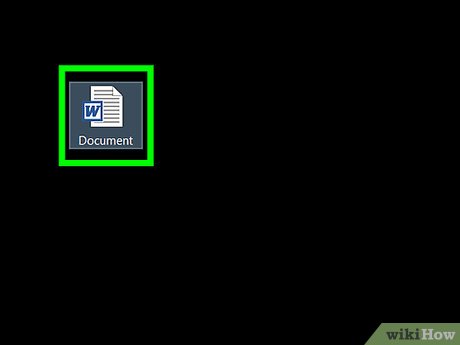 Open your Word document. Double-click the Word document to which you want to add borders. This will open the document in Microsoft Word.
- If you haven't yet created your Word document, open Word, click Blank document , and create the document as needed before proceeding.
 Click theHometab. It's at the top of the Word window. Doing so will open the correct toolbar here.
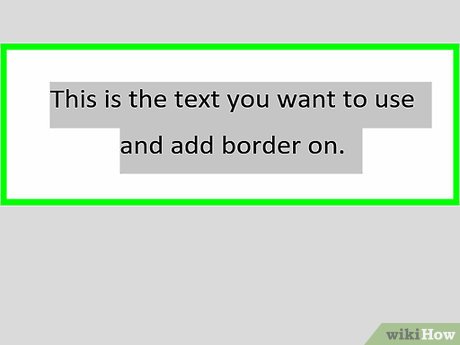 Select content. Click and drag your mouse across the text or image(s) around which you want to place a border.
 Find the "Borders" button. This button resembles a square divided into four smaller squares; you'll find it in the "Paragraph" section of options in the toolbar, just right of the paint bucket icon.
- Skip this step on a Mac.
 Click
Click next to the "Borders" button. This downward-facing arrow is to the right of the "Borders" button. Clicking it prompts a drop-down menu.
- On a Mac, click the Format menu item at the top of the screen instead.
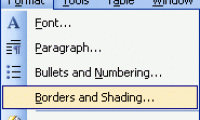
 ClickBorders and Shading…. It's at the bottom of the drop-down menu.
- On a Mac, you'll find this option in the middle of the Format drop-down menu.
 Select a border setting. In the left-most column, click the border option that you want to use.
- For example, if you want a simple border to go all the way around your text, you would click Box here.
 Select a border style. In the "Style" column, scroll down until you find the border style you want to use, then click the style.
- If needed, you can also change the border's color and width from the "Color" and "Width" drop-down menus, respectively.
 ClickOK. It's at the bottom of the window. Doing so will apply your border to the selected text or picture.
Method 2
Adding a Border to a Page
 Open your Word document. Double-click the Word document to which you want to add borders. This will open the document in Microsoft Word.
- If you haven't yet created your Word document, open Word, click Blank document , and create the document as needed before proceeding.
 Position your cursor to create a new section. If you don't want to add a border to every page in the document, place your mouse cursor at the bottom of the page that comes before the page on which you want to add the border.
- If you want to apply the border to every page in the document, skip this step and the next one.
 Create a new section. This will ensure that your border isn't applied to the whole document:
- Click the Layout tab.
- Click Breaks in the "Page Setup" section.
- Click Next Page in the resulting drop-down menu.
 Click theDesigntab. This option is at the top of the Word window.
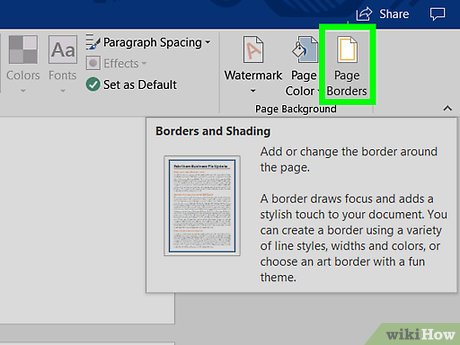 ClickPage Borders. It's on the far-right side of the Design toolbar. Doing so opens a pop-up window.
 Select a border setting. In the left-most column, click the border option that you want to use.
- For example, if you want a simple border to go all the way around your text, you would click Box here.
 Select a border style. In the "Style" column, scroll down until you find the border style you want to use, then click the style.
- If needed, you can also change the border's color and width from the "Color" and "Width" drop-down menus, respectively.
 Select pages to use. If you created a new section earlier in this method, click the "Apply to" drop-down box, then click the section to which you want to apply the border in the resulting drop-down menu.
- To apply the border to the first page of your section, for example, you'd click This section - first page only in the drop-down menu.
 ClickOK. It's at the bottom of the page. This will apply the border to your document's specified page(s).
FAQ
What is How to Add a Border to Word about?
It provides a structured overview of click, explains the main context, and highlights practical takeaways for readers.
Why does this topic matter?
Understanding the main concepts helps readers evaluate the issue, avoid common mistakes, and make better-informed decisions.
How should readers use this information?
Use the guidance as a practical starting point, confirm details that may have changed, and follow current product, safety, or security recommendations.
Related Articles
 Beautiful Border Frames on Word: Word Border Frame3 minutes read
 How to Make a Border Frame in Word4 minutes read
 Border CSS: Border in CSS5 minutes read
 Create a Border (Border) Around the Text3 minutes read
 Beautiful Frame Templates in Word1 minutes read
 Word Tables: How to Create a Table Border in Word5 minutes read
Reader Comments 0
Sign in with email or Google to join the discussion.