Table of Contents
This updated guide examines Notebook: How to Change the Tab Colors in Onenote 2013 and organizes the essential facts, background, and practical takeaways in clear American English.
Method 1
For a Notebook
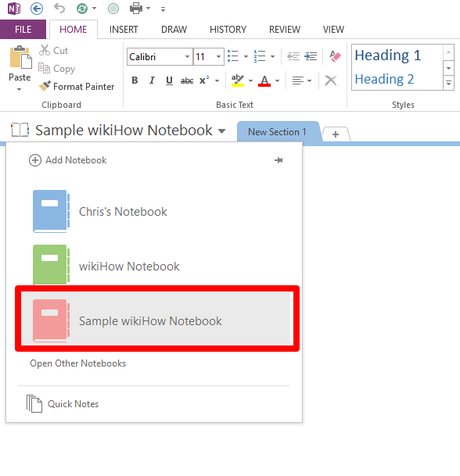 Open the OneNote notebook switcher and hover over the name of the notebook you'd like to switch the color to. Although it matters whether a notebook is open or not on your device, for those notebooks already present on your device, as long as it's on the list, it's considered to be "open" and active and that's what you want!
 Right click the OneNote notebook name you'd like to change and left-click "Properties".
 Double-check the notebook name is the one you'd like to change the color of based on the name given in the "Display name" box.
 Click the "Color" drop-down box just below "Display name". At first you'll see it's former color, but momentarily, you'll be able to make the change.
 Click the new color choice out of the available options. For notebook colors, you're limited to those colors you'll see the sixteen available colors on the drop-down box. Try not to make the notebook color the same as any other notebooks in your notebook list.
- Although not named on the list until you hover over each color, all sixteen notebook colors correspond to those colors used for notebook folders which include: blue, yellow, green, red, purple, cyan, orange, magenta, blue mist, purple mist, tan, lemon lime, apple, teal, red chalk and silver. However, there needs to be a color for the notebook, for the notebook to exist, and unlike the folders, you won't see a None selection choice here.
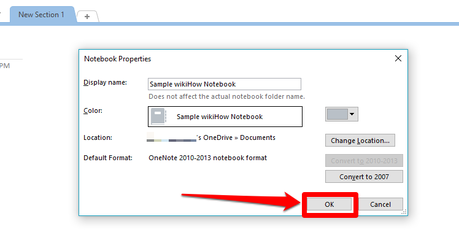 Click the "OK" button to save.
 Confirm your notebook is now colored better in the list. Open the notebook's drop-down list and look at the said notebook's new color.
Method 2
For a Notebook's Section
 Locate the OneNote notebook section you want to color-change. If the notebook is already open, great. If not or you need to switch to another notebook in your program, get to this folder.
- Right-click the notebook section you'd like to re-color and click "Section color".

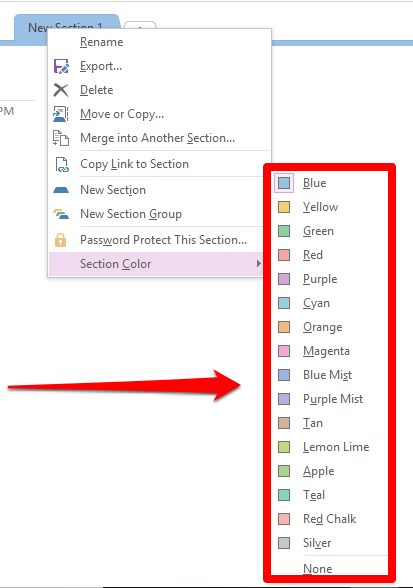 Click your new section color. With folders, you have sixteen color choices including: blue, yellow, green, red, purple, cyan, orange, magenta, blue mist, purple mist, tan, lemon lime, apple, teal, red chalk and silver. If you don't want a color to be applied to the section, there is a "None" selection, but it will look silver once applied to the section.
- Try not to make this section's color the same as any other section on the list.
 Verify this color is the color you'd like the section to be. You can always change it again.
FAQ
What is Notebook: How to Change the Tab Colors in Onenote 2013 about?
It provides a structured overview of notebook, explains the main context, and highlights practical takeaways for readers.
Why does this topic matter?
Understanding the main concepts helps readers evaluate the issue, avoid common mistakes, and make better-informed decisions.
How should readers use this information?
Use the guidance as a practical starting point, confirm details that may have changed, and follow current product, safety, or security recommendations.
Related Articles
 How to Use Onenote Template10 minutes read
 Why Should I Switch from Onenote 2016 to Onenote for Windows 10?12 minutes read
 The Best Microsoft Onenote Download Sites: Onenote Templates7 minutes read
 Top 5 Sites to Download Free OneNote Templates6 minutes read
 Steps to Use Feeds in Onenote4 minutes read
 How to Change Colors for Photos in Photoshop: How to Use Photoshop5 minutes read
Reader Comments 0
Sign in with email or Google to join the discussion.